Profit upgrade triggers Kingfisher share surge
Shares in the B&Q and Screwfix owner have rallied following its latest half-year results. ii's head of markets runs through the numbers.
22nd September 2026 08:25
by Richard Hunter from interactive investor
Kingfisher (LSE:KGF) has had a number of false starts over recent times, with generally pedestrian rather than transformational progress, although a profit upgrade forecast has broken through some of the clouds which have tended to overhang the stock.
- Our Services: SIPP Account | Stocks & Shares ISA | See all Investment Accounts
The first quarter update was something of a mixed bag, although there were some extenuating circumstances such as a late start to spring which impacted footfall, and some strong comparatives. For the half-year there are again some conflicting signs, although overall there is a notable improvement in some of the key metrics. Total sales were up by 1.6% to £6.86 billion in the six months ended 31 July, in line with expectations, with adjusted pre-tax profit of £404 million up by 9.9% and comfortably ahead of the estimated £372 million.
As such, the outlook for the full year was upgraded by the group, with adjusted pre-tax profit expected to fall within a range of £595-635 million (previously £565-625 million) and free cash flow of £480-520 million (previously £450-510 million). The drivers behind this better-than-expected performance were chiefly a continued range of cost controls and an improvement to the gross margin to 38.4% from a previous 37.7%, underlining the group’s focus on profit discipline.
- Two housebuilder stocks, one warning from macro
- eyeQ: AstraZeneca, Deutsche Boerse, Taylor Wimpey, Barclays
Retail profit of £489 million was ahead by 8.2% and better than the £461 million expected, but the like-for-like (LFL) numbers reveal a mixture of levels, excluding Screwfix, long since the jewel in the group’s crown. Overall underlying LFL sales were up by 0.3% (including a positive 5.6% contribution from Screwfix), but by product and geography the stories differ.
Core categories, which account for 63% of overall sales, grew by 0.7% on a LFL basis, although Big-ticket (14% of overall sales) suffered by 4.5%, while Seasonal (23%) added 1.3%, with a generally strong kitchen performance could not arrest the slide in the bathroom category, where a range review is planned this year. There were also issues in France, which have laboured under the weight of economic indifference and where the recent heatwave reduced footfall to its stores. Core sales were down by 2.4% LFL, and Big-ticket by 8%, although a 2.3% gain in Seasonal undid a small part of the damage.
The long-suffering Castorama and Brico Depot units remain in focus as the group simplifies and modernises the store estate and increases the reliance on e-commerce sales, although this restructure is a slow burner. Sales were up by 2.2% in Poland, with strong showings in trade and e-commerce.
- Insider: massive buying at FTSE 100 giant and a recovery play
- 10 hottest ISA shares, funds and trusts
The usually reliable UK operations were something of a mixed bag. LFL sales for core rose by 1.3%, although there was a decline of 2.9% in Big-ticket. Revenues at B&Q fell by 3% and by 4.1% LFL against some strong comparatives, although e-commerce was a bright spot with an increase of 16% in sales.
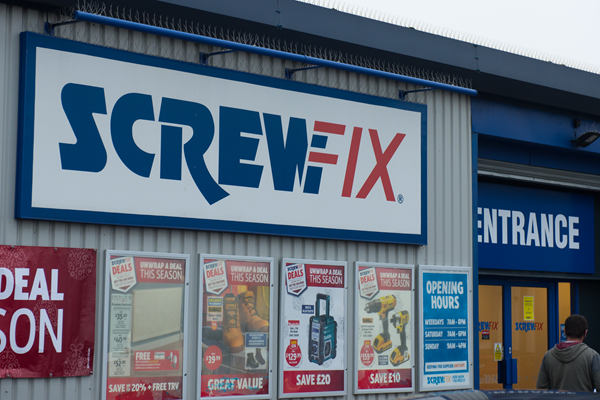
At Screwfix, long since Kingfisher’s jewel in the crown, the unit continued to hold its own against ever stronger comparatives and is finessing its optionality, with 75% of sales now coming from trade and 60% from e-commerce and an ambitious medium-term target of £5 billion of sales in place (currently £2.1 billion). Excluding Screwfix, there were decent showings in e-commerce and trade sales, which both grew by 16%, while the increasing penetration of Own Exclusive Brand (OEB) products could provide a further springboard.
Nonetheless, challenges remain. Increased taxes in both the UK and France are a burden on the group, while big ticket and seasonal sales expose Kingfisher to both cyclical pressure via housing markets as well as unpredictable weather. In addition, the current conflict in Iran has pushed energy costs higher, while the consumer could also retrench, quite apart from the fact that the housing market is yet to show any signs of a sustained recovery.
- Fund Focus: the names on Artemis Global Income's heels
- Sign up to our free newsletter for investment ideas, latest news and award-winning analysis
Perhaps understandably, the shares have fallen by 4% so far this year given the difficult economic backdrop, although they have managed a gain of 22% over the last 12 months, as compared to a rise of 16% for the wider FTSE100. Even so, the challenges remain clear, with the price 17% lower than the highs reached during the DIY boom of the pandemic, and are 27% down from the previous peak reached in 2014.
There is further relief from shareholder returns, where a dividend yield of 4.1% and the ongoing £300 million share buyback programme are price supportive. Set against an undemanding valuation, the profit upgrade has stolen the show and the shares have risen sharply at the open as a result. Whether this is sufficient to entice investors back into the fray remains to be seen over coming quarters although the market consensus of the shares as a hold – recently improved from a sell – may well stay in place for the time being.
These articles are provided for information purposes only. Occasionally, an opinion about whether to buy or sell a specific investment may be provided by third parties. The content is not intended to be a personal recommendation to buy or sell any financial instrument or product, or to adopt any investment strategy as it is not provided based on an assessment of your investing knowledge and experience, your financial situation or your investment objectives. The value of your investments, and the income derived from them, may go down as well as up. You may not get back all the money that you invest. The investments referred to in this article may not be suitable for all investors, and if in doubt, an investor should seek advice from a qualified investment adviser.
Full performance can be found on the company or index summary page on the interactive investor website. Simply click on the company's or index name highlighted in the article.