International investing
Global investing. Direct access. Better value.
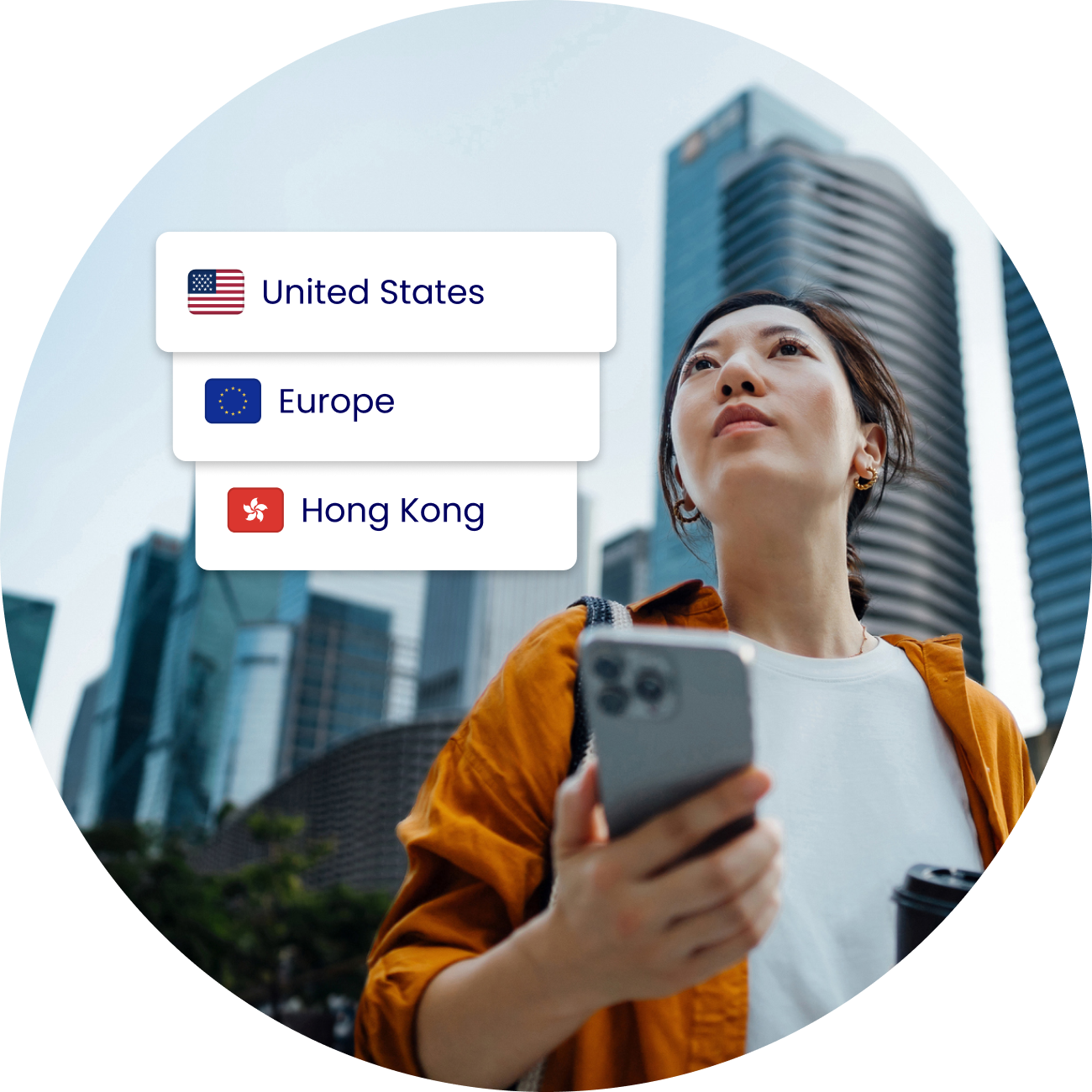
Invest across 17 global markets, hold multiple currencies and stay in control of your international investments.
Important information: As investment values can go down as well as up, you may not get back all of the money you invest. Currency changes affect international investments, and this can decrease their value in sterling. If you’re unsure if an investment account is right for you, please speak to an authorised financial adviser. Tax treatment depends on your individual circumstances and may be subject to change in the future.
What is international investing?
“International investing is a great way to diversify your portfolio outside of the UK market.
“It gives you the chance to get a slice of the world’s biggest brands like Tesla and Nvidia and discover new opportunities in emerging markets.
“Having global shares in your portfolio helps to spread your investment risk as you won’t be tied to the fortunes of a single market. And you may be better placed to reach your financial goals.”
Why choose ii for international investing?
Investing internationally isn't just about which markets you can access – it's about how you access them. It determines how much control you have and the costs you save.

Keep up with the latest market moves
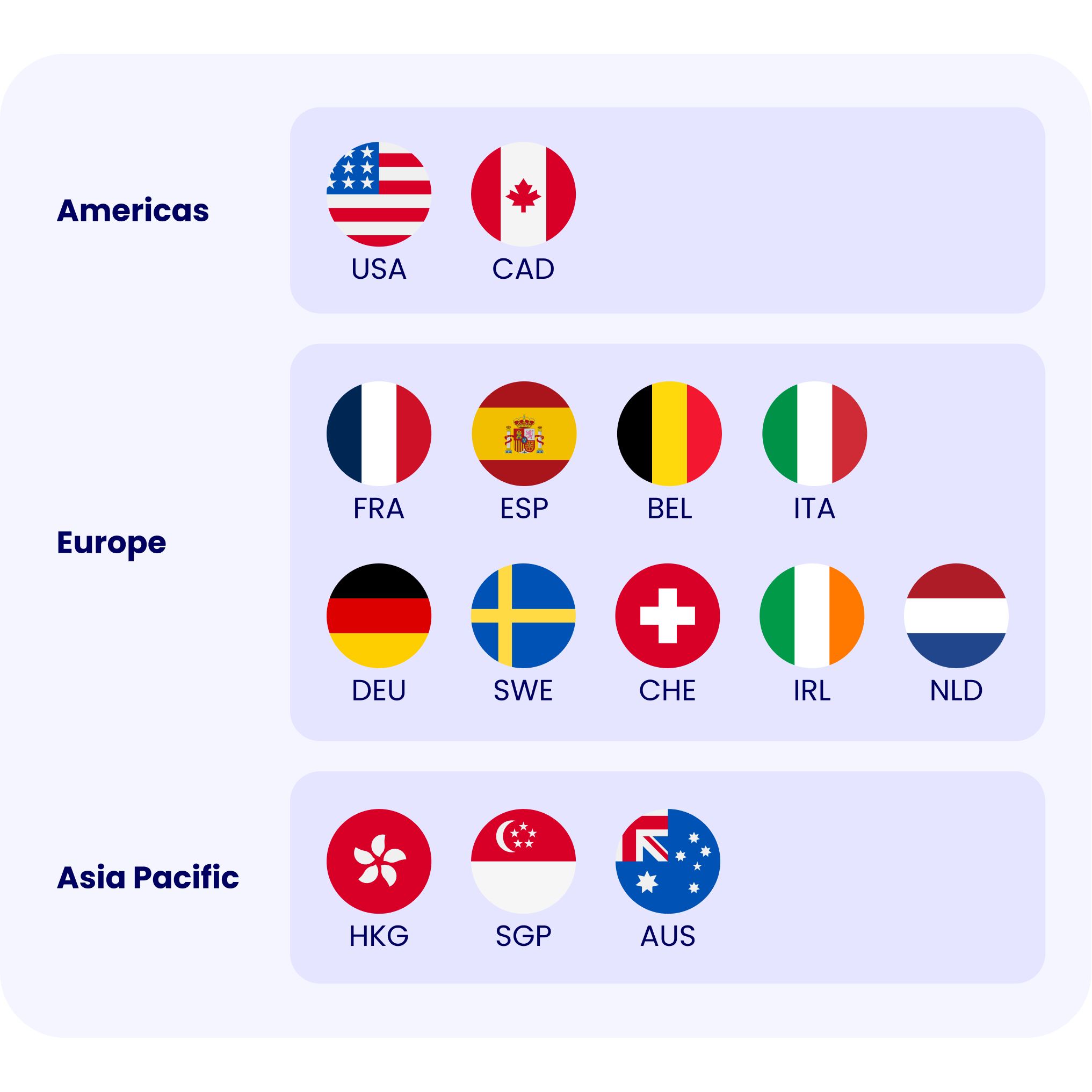
You get direct access to leading stock exchanges in the US, Canada, Europe, Australia and Asia. This means you can take advantage of full trading hours, real-time prices and get access to IPOs and share splits when they happen.

Save on FX fees with multi-currency
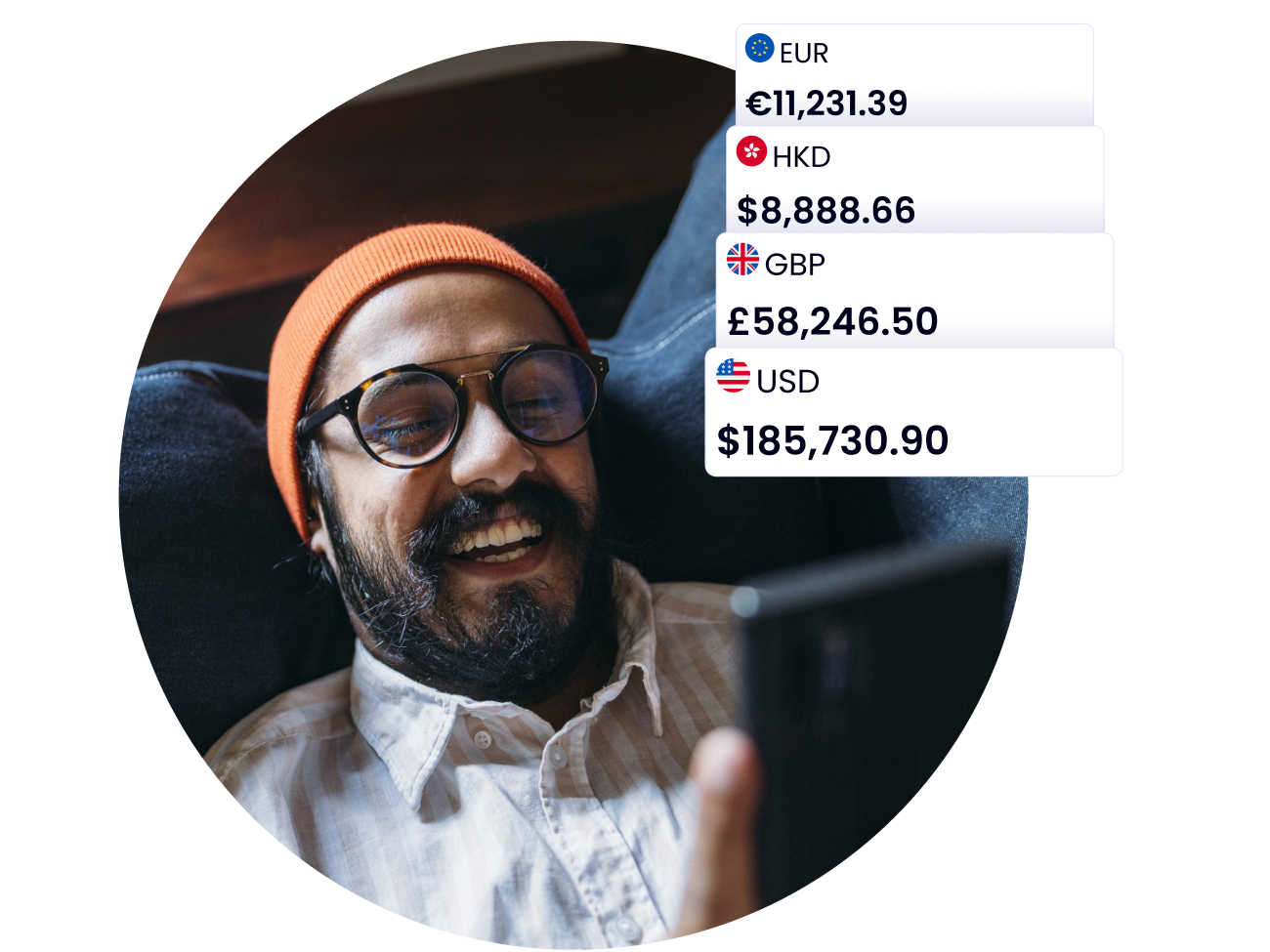
Hold and invest with up to 9 different currencies in your Personal Pension (SIPP) or Trading Account. Control when to convert, save on FX fees and take home interest from your GBP, EUR and USD balances.

Secure investments at the price you see
Another benefit of direct access to international markets? There’s no more middleman or mark-ups. You get the price you see: it’s real-time, transparent and better value for you.
Get the flexibility to invest globally with a trusted platform
Competitive FX rates and the ability to trade directly with global markets make it easier — and more cost-effective — to invest globally and build long-term wealth.
We’re one of the few leading, established investment platforms to offer UK-based support and the option to hold multiple currencies for a low flat, monthly fee.
International investing is different with ii
| Feature | ii | Hargreaves Lansdown | AJ Bell | Fidelity |
| Direct market access | ✔ | ✗ | ✗ | ✗ |
| Multi-currency investing | ✔ | ✗ | ✗ | ✗ |
Direct market access is not just about live pricing
When you trade directly on an exchange, your order goes straight to the underlying market rather than through an intermediary.
- Pay the market price: Investing directly via the exchange means you bypass the middle man. Most providers lets you trade in international investments through CREST Depository Interest (CDI) - and these usually have additional mark up costs.
- Lower the chance of re-quotes: Trades are instantly matched to the underlying market, so you’re less likely to face rejection or getting a re-quote at a different price.
- Know how your order is executed: Your order is sent directly to the exchange where the shares are listed, giving you greater transparency over how it's priced and executed.
ii gives you direct access to the following exchanges:
North America
Europe
- London Stock Exchange
- Euronext Dublin
- Deutsche Börse Xetra, part of the Frankfurt Stock Exchange
- Euronext Paris
- The Bolsa de Madrid
- Brussels Stock Exchange
- Milan Stock Exchange
- Amsterdam Stock Exchange
- Nasdaq Stockholm
- SIX Swiss Exchange
Asia-Pacific
You can start investing in these markets through our Personal Pension (SIPP), ISA and Trading Account.
As well as direct access to the above exchanges, we also offer Japanese, Indian and Chinese shares in the form of American Depositary Receipts (ADRs). This means those international shares are available via US stock exchanges.
For the full list of available markets, dealing methods and charges, visit our international markets page.
Don’t let FX fees eat into your international investments
When investing in international shares, it’s a good idea to keep an eye on how much you’re paying in foreign exchange (FX) fees. This is the fee you pay each time you convert pounds sterling into another currency to buy an investment.
And if you’re a regular international investor, these costs can mount up.
In our Personal Pension and Trading Account, we offer multi-currency investing where you can convert and hold up to 9 currencies.
Multi-currency investing gives you more control over your international investments. You can convert currency in advance, and hold it until you’re ready to invest - saving you from having to repeatedly convert back and forth.
Global investing at great value
Investing in international markets is simple with our flat-fee plans — and great value, too. Our pricing is clear and transparent, so you know what you're paying.
- Buy and sell US shares for just £3.99 a trade
- Enjoy FX rates as low as 0.25% on Premium, but never more than 0.75%
- Avoid FX fees with our multi-currency wallet in our Personal Pension and Trading Account
- Trade at live prices with no mark-ups thanks to direct market access

Why Bobby chose ii for international investing
Bobby wanted more investment options for his pension and access to tools to easily find new investment opportunities.
“The investment options with ii are probably best in class. I can make international trades whenever the markets open and convert currency very easily.
"It’s really nice to see everything in one place. It gives me full control of my money. That’s why I’m with ii."
How to invest internationally with ii
You can trade international shares in our Personal Pension (SIPP), ISA and Trading Account.
The process is quick and easy. Just complete our Exchange Agreement for access to live market prices. Then, if you have a Trading Account or Stocks & Shares ISA, submit a W-8BEN form. This lets you invest in US stocks at a lower rate of tax.
Research is key to successful international investing. Always make sure you’ve done yours before placing any orders.
Looking for international investing inspiration? Our experts keep a close eye on the world’s markets so you don’t have to. Discover the latest international market news.
Risks to keep in mind when trading international shares
Investing beyond the UK market does have its risk. And that risk depends on what you invest in, not just where it’s listed.
Any investment can go up or down in value. As always, it’s important to research investments and consider diversification across regions and investment options.
Currencies can go up as well as down
The money you exchange could increase or decrease in value when converted back to pounds.
Political and economic risk
Any changes to a specific country’s government policy or regulations, or major event like a recession or natural disaster as well as geopolitical tensions can all affect investment return.
Different markets have shareholder rights
Each overseas market may have its own set of rules and shareholder rights. It’s worth getting to know what these are for each market you’d like to buy shares in.
Get started with international investing

Explore markets and share ideas

Other ways you can get a slice of international markets
Choosing which international shares to invest in can take time and confidence. But there are easier ways to add global diversification to your portfolio and help spread your risk.
Global funds, Exchange Traded Funds (ETFs) and investment trusts can all give you exposure to international markets. These investments are typically managed by experts or designed to track a market index.
Global funds
These are looked after by fund manager who pool money from many investors to invest across a range of markets. Some funds focus on a specific sector or region, while others spread investments more broadly across different countries.
ETFs
ETFs give you exposure to a basket of shares or indices. They work similarly to funds but usually track the performance of an index or underlying assets. They’re often cheaper than actively managed funds.
Investment trusts
Also known as closed-ended funds, these have a fixed number of shares listed on the stock market. Their share price can trade at a premium or a discount of the Net Asset Value (NAV), and they can depend on demand and performance.
International investing FAQs
International market hours vary by exchange and region. And they can differ due to daylight saving time and local market holidays.
- North America - 2:30pm to 9:00pm GMT / BST
- Europe - 8.00am to 4.30pm GMT / BST
- Hong Kong - 1.30am to 8:00am GMT / 2.30am to 9.00am BST
- Australia - 11.00pm to 5am GMT / 1.00am to 7.00am BST
- Singapore - 1.00am to 9.00am GMT / 2.00am to 10.00am BST
Direct access means you can trade shares on their home exchange (such as the New York Stock Exchange or NASDAQ), rather than through UK-listed Crest Depository Instruments (CDIs). And this matters because you get:
- More direct pricing: You trade directly with the exchange, rather than through CDIs, which can include additional costs in the spread.
- Faster reflection of market events: Corporate actions like stock splits or new share issues are reflected on the day they happen.
- Greater control when trading: Orders go straight to the exchange, helping you access the best available price at the time.
While international investing can help you diversify your portfolio, there are some risks to keep in mind.
- Currencies can go up as well as down: The money you exchange could increase or decrease in value when converted back to pounds
- Understand the rules: Each oversea market may have its own set of rules and investor protections. It’s worth getting to know what these rules are
- Economic and political risk: Local events or policy changes can affect the overall value of currency of a country or region
- Spreading your risk: Investing in a small number of international shares can increase risk - known as concentration risk - if your portfolio isn’t diversified
Investing beyond the UK market does have it’s risk. And that risk depends on what you invest in, not just where it’s listed. Any investment can go up or down in value. As always, it’s important to research investments and consider diversification across regions and investment options.
When you invest in international shares, your returns are affected by both the share price and currency movements.
So if the foreign currency strengthens against the pound, your investment value can increase when converted back to GBP. But if it weakens, your investment value can fall, even if the share price hasn’t changed in its local currency.
A W-8BEN form is a US tax document used to confirm you are not a US taxpayer.
If you invest in US shares, completing this form can help ensure you pay the correct rate of withholding tax on certain income, such as dividends.
ii may require you to complete a W-8BEN form before you can trade US-listed investments.
International shares are publicly listed companies you can invest in via overseas stock exchanges.
Global funds pool money from many investors and invest it across a wide range of companies in different countries and sectors.
CDIs (CREST Depository Interests) and ADRs (American Depositary Receipts) are both ways to invest in overseas companies without holding the underlying shares directly. But they both work in different ways.
A CDI represents ownership of shares held on your behalf and allows overseas shares to be settled and traded through the UK's CREST system. While convenient, trading via a CDI may involve additional costs and potentially not have access to direct pricing.
An ADR is a certificate issued by a US depositary bank that represents shares in a non-US company. ADRs trade on US stock exchanges in US dollars, making it easier for investors to access international companies through the US market.
One advantage of ADRs is that they can provide access to companies from markets that may otherwise be harder for UK investors to reach directly. ii offers ADRs for selected companies from India, China and Japan, helping you invest in businesses from these markets through a US stock exchange.
Before investing, it's worth remembering that ADRs can be subject to depositary bank fees and may carry different rights and tax considerations compared with holding shares directly.
Yes, you can take part pre-opening and closing auctions. These are times when prices are set.
Payment for Order Flow (PFOF) is when a broker sends your order to a third party to execute your trade on their behalf, instead of sending it directly to the stock exchange. The third party then pays the broker a fee for sending them the order.
Some brokers use PFOF to help keep their trading costs down. But it can create a conflict of interest as some brokers may be incentivised to send your order to whoever pays them the most, rather than whoever gives you the best price.
ii doesn't use PFOF. Eligible international orders are routed directly to the underlying exchange, so there's no third party involved and no hidden incentive at play. You can see exactly how your order is being handled.
Important information: We may receive two parts of commission for international investing - trading commission and our foreign currency exchange charge. Please see our rates and charges for full details of the costs. Exchange rates can create risk to international investment if a market’s currency rises against sterling. On the other hand, if a market’s currency falls against sterling, this can increase returns. Please be aware that we have a revenue sharing agreement for the foreign currency exchange charge with a third party. If you require further information, please contact us.