Why Ocado shares just crashed to 13-year low
Interim results from the grocery technology company have not gone down well with investors, condemning shares to double-digit losses. ii's head of markets explains the negative reaction.
16th July 2026 08:30
by Richard Hunter from interactive investor
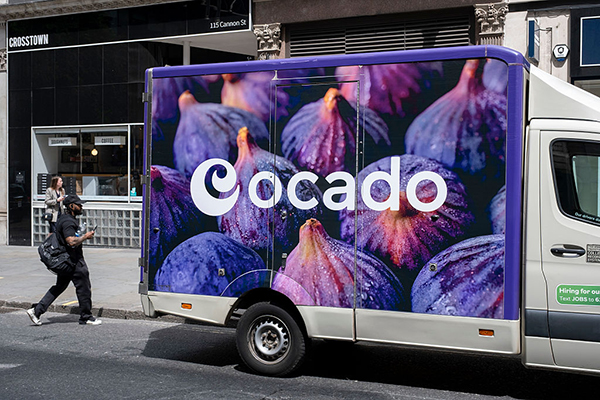
These are relatively noisy half-year numbers from Ocado Group (LSE:OCDO) which reveal that, while there is much activity under the bonnet, actual progress is pedestrian at best.
- Our Services: SIPP Account | Stocks & Shares ISA | See all Investment Accounts
Unfortunately investors have long since lost patience with the company, which has become known as a perennial “jam tomorrow” stock. There is little doubt that the underlying robotic technology for packing shipping orders is cutting-edge, impressive and efficient, with automated bots scuttling seamlessly within a preset grid. However, rolling out this CFC (Customer Fulfilment Centre) offering to partners has brought its own challenges, with the international expansion on which the group was relying failing to materialise in a meaningful enough way.
In terms of this update for the 26 weeks ended 31 May, the numbers are confused by a one-off boost to revenues resulting from the partial withdrawal of two of Ocado’s partners. This results in non-recurring income of £354 million, which comprises £327 million from Kroger (a £260 million termination fee and £67 million accelerated recognition of advance receipts) and £27 million from Sobeys’ Calgary CFC (£18 million and £9 million). In any event, adjusting accounting costs for these items led to an overall pre-tax loss of £33 million for the period, compared to a profit of £605 million the year previous. It is therefore more fruitful to consider Ocado’s performance excluding this impact.
- Funds and trusts four pros are buying and selling: Q2 2026
- DIY Investor Diary: shifting from 25 holdings to 50
As such, group revenue grew by just 1% to £684 million, while adjusted earnings fell by 12% to £81 million. Within the headline number, the Technology Solutions business saw a decline of 8% in revenues to £256 million. A further layer of complexity is that results from the group’s joint venture with Marks & Spencer Group (LSE:MKS), Ocado Retail, are reported separately. Nonetheless, this is an area where Ocado can point to some real progress.
The JV benefits from the quality of M&S products, which is a clear temptation for investors. Over the half-year, revenues increased by 15.1% to £1.76 billion, adjusted earnings were positive to the tune of £73 million compared to £33 million the previous year, leading to an adjusted pre-tax profit of £12 million, which is a noticeable improvement on the £17 million loss in the corresponding period.
Higher volumes and productivity improvements were sufficient to offset additional costs, such as increased National Insurance contributions. More broadly, customer acquisition, increasing order frequency led to an increase of 10.6% to average active customers.
- Barratt Redrow swaps dividends for share buybacks
- Revealed: extreme portfolio positions of global fund managers
The group as a whole is working hard to broaden its offering and reach and is in discussions with retailers across some of the world’s largest grocery markets, and the US in particular. Ocado’s technology offering is constantly evolving, giving the twin benefit of existing customers upgrading as well as providing a more attractive overall offering to potential new clients. At the same time, the group is battening down the hatches with a cost savings aim of £150 million on track, while in terms of the outlook, a high priority is to turn cash flow positive by the end of the year and then maintain this momentum throughout the entirety of next year.
Elsewhere, there have been some positive developments, such as in late May when the group announced a deal to develop the online business of Asda using the Ocado Smart Platform, with an aim of going live in early 2027. With international partners such as Kroger and Sobeys having dialled back on their full commitment, with consumer demand having proved weaker than expected in many of the relevant regions, further growth is increasingly essential.
- Why Europe’s biggest stock just got even bigger
- Sign up to our free newsletter for investment ideas, latest news and award-winning analysis
From an investment perspective, there remains a mountain to climb. Recent news that the CEO will be departing, albeit not until a replacement is found in time for the beginning of fiscal year 2028, adds another level of uncertainty which could exempt even more investors from entering the fray.
The frustration at the lack of progress has been reflected in another punishing reaction to the numbers in opening exchanges, which exacerbates a share price which has fallen by 24% over the last year, as compared to a gain of 8.6% for the wider FTSE250. Meanwhile, the 94% decline since the peak in January 2021 looks increasingly irreversible. The market consensus of the shares as a hold seems to be set in stone until such time as some meaningful and sustained progress emerges.
These articles are provided for information purposes only. Occasionally, an opinion about whether to buy or sell a specific investment may be provided by third parties. The content is not intended to be a personal recommendation to buy or sell any financial instrument or product, or to adopt any investment strategy as it is not provided based on an assessment of your investing knowledge and experience, your financial situation or your investment objectives. The value of your investments, and the income derived from them, may go down as well as up. You may not get back all the money that you invest. The investments referred to in this article may not be suitable for all investors, and if in doubt, an investor should seek advice from a qualified investment adviser.
Full performance can be found on the company or index summary page on the interactive investor website. Simply click on the company's or index name highlighted in the article.