ii view: weak vaccine sales overshadow GSK earnings beat
With an accelerated drug discovery programme under way and funded by cost cuts, plus an attractive dividend yield. Buy, sell, or hold?
28th October 2026 11:12
by Keith Bowman from interactive investor
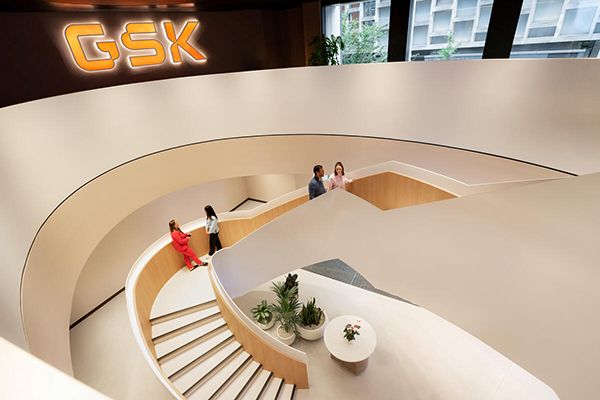
The London headquarters of the firm. Credit: GSK.
Third-quarter results to 30 September
- Currency adjusted sales rose 5% from a year ago to £8.9 billion
- Currency adjusted core earnings up 1% to 54.6p per share
- A quarterly dividend of 17p per share, unchanged from Q2
Guidance:
- Continues to expect growth in currency adjusted full-year revenues of between 3% and 5%
- Continues to expect growth in currency adjusted full-year earnings of between 7% and 9%
Chief Executive Luke Miels said:
“GSK has delivered another strong quarter, with our key growth drivers and new launches performing well. We remain focused on operational delivery, execution and accelerating R&D.
"Over recent months we have received 3 new specialty medicine approvals in the US: Hibsago, which has the potential to transform the treatment of chronic hepatitis B; Jideytro in non-small cell lung cancer; and Jemperli in rectal cancer. More broadly, in the late-stage portfolio, we are on track to start 22 phase III trials this year.”
- Our Services: SIPP Account | Stocks & Shares ISA | See all Investment Accounts
ii round-up:
GSK (LSE:GSK) today detailed above-forecast adjusted earnings, although headline profits fell due to cost saving initiatives and restructuring costs.
Third-quarter currency adjusted sales rose 5% from a year ago to £8.9 billion, driving core earnings up 1% to 54.6p per share. Analysts had forecast earnings of 50.3p. Cancer treatment sales rose 23% to £622 million, missing estimates of £626 million. Currency adjusted Vaccine sales also missed, falling 2% to £2.58 billion, below the £2.62 billion pencilled in by analysts.
Shares in the FTSE 100 company fell 5%, having come into this latest news up by the same amount so far in 2026. The FTSE 100 index is up 8% year-to-date. Rival AstraZeneca (LSE:AZN) has fallen by 7%.
GSK operates across the three areas of Speciality Medicines, including those for HIV and cancer, Vaccines, covering shingles and meningitis, and General Medicines.
Sales were led by Specialty Medicines, rising 15% to £3.9 billion, aided by a 10% increase in HIV sales to £2.1 billion. General Medicines was flat at £2.4 billion.
GSK reaffirmed its full-year 2026 guidance for turnover and core operating profit growth of 3-5% and 7-9% respectively, at constant exchange rates. A quarterly dividend of 17p leaves it on track for an already guided 70p annual payment.
Geographically, US and European sales rose 10% and 3% on a currency adjusted basis, while those for the rest of the world fell 3%.
Fourth-quarter and full-year results are scheduled for 3 February.
ii view:
Formed in 2000 via a merger of Glaxo Wellcome and SmithKline Beecham, GSK today employs over 65,000 people. Speciality drugs including those for HIV and cancer generated most sales in 2025 at 41%. That was followed by General Medicines including those for Respiratory conditions at 31%, with Vaccines for things like shingles and meningitis the balance of 28%.
Geographically, the US made most sales in 2025 at 52%, with Europe coming in at 23% and the rest of the world the balance of 25%.
For investors, pending patent losses for the shingles vaccine in 2029 and HIV treatments between 2028 and 2030 raise the need to replenish the group’s drug storeroom. Drug development generally remains a risky and expensive business. Acquisitions, such as the recent purchase of US biotech Nuvalent to help in the pursuit of cancer treatments, are not without risk, while litigations for drug side effects and government investigations are now common for the pharma industry.
- Insider Interview: we have the most resilient dividend in the sector
- 10 hottest ISA shares, funds and trusts
- US midterms 2026: what election could mean for your portfolio
More favourably, GSK’s push to accelerate growth under relatively new CEO Luke Miels continues, with accelerated drug development funded from cost cuts. Acquisitions are expected to aid sales and profits going forward. A deal with the US government regarding drug sale prices and trade tariffs was previously agreed, while developments in AI could reduce R&D spend and accelerate new drug discovery.
For now, pressure to develop new blockbuster drugs persists. That said, ongoing management confidence in achieving sales of more than £40 billion by 2031 versus £32.7 billion in 2025, plus a forecast dividend yield of around 3.5%, will likely convince many investors to remain patient.
Positives
- Defensive qualities. Consumers need medicines even in a recession
- Artificial Intelligence or AI could favourably impact future drug development
Negatives
- Generic competition
- Currency movements can hinder
The average rating of stock market analysts:
Strong hold
These articles are provided for information purposes only. Occasionally, an opinion about whether to buy or sell a specific investment may be provided by third parties. The content is not intended to be a personal recommendation to buy or sell any financial instrument or product, or to adopt any investment strategy as it is not provided based on an assessment of your investing knowledge and experience, your financial situation or your investment objectives. The value of your investments, and the income derived from them, may go down as well as up. You may not get back all the money that you invest. The investments referred to in this article may not be suitable for all investors, and if in doubt, an investor should seek advice from a qualified investment adviser.
Full performance can be found on the company or index summary page on the interactive investor website. Simply click on the company's or index name highlighted in the article.