Tough times for Barratt Redrow but shares bounce on results day
There's lots going on at the housebuilder which is struggling along with the rest of the sector, although there are positive building blocks. ii's head of markets explains.
16th September 2026 08:24
by Richard Hunter from interactive investor
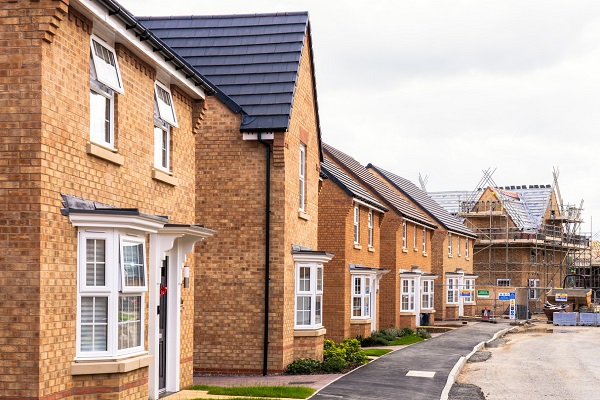
A detailed trading statement in July laid the groundwork for these full-year numbers which, as expected, continue to reflect the difficulties within the housing sector. Barratt Redrow (LSE:BTRW) is, of course, no exception and it has refined its strategy to fit the weak backdrop it is currently facing with some determination.
- Our Services: SIPP Account | Stocks & Shares ISA | See all Investment Accounts
There had, for example, been some shareholder pressure on Barratt to deploy its capital more effectively, and the company responded with a new £400 million programme which will comprise a share buyback scheme of £386 million alongside a nominal 1p per share dividend payment totalling £14 million. While the yield will therefore plummet to 0.4% from its current level of 6.2%, the buyback should prove to be price supportive and in addition reflect the group’s currently gaping discount to its net asset value per share.
The move is an example of Barratt’s ability to move the levers under its control within an incredibly challenging environment. The group had previously announced that one of its strategic options would be to reduce land spend to protect profitability and financial strength, and a spend of £625 million compares to £862 million the previous year and is much lower than the £700 to £800 million recently guided.
- New targets for S&P 500, earnings forecasts, rate hikes and AI
- Why fund managers are building up their cash piles
This has also at a stroke improved the group’s net cash position, which stands at £773 million, in excess of the £550 to £650 million it expected when reporting in April. This may change in the coming year as the group estimates £800-900 million cash spend on land, reducing the year end net cash position to between £400 million and £500 million. Elsewhere, the use of incentives, which includes but is not limited to a successful part exchange programme, is an effort to maintain buying interest but inevitably puts pressure on the adjusted gross profit margin, which has fallen from 17.4% to 15.3% as a result.
Within this context, any gains have been hard won. Revenues rose by 6.6% in the 52 weeks ended 28 June to £6.06 billion and, although ahead of the expected £560 million, adjusted pre-tax profit of £572.8 million was 7.1% lower than the previous year. Home completions were 5% higher at 17,667, where the average selling price rose by 2.2% to £352,000. The underlying net private reservation rate was effectively unchanged at 0.55, although currently trading at 0.62 which is a cautiously promising start to the new financial year.
The Redrow integration is now complete, with £73 million of the £100 million targeted cost synergies now achieved and more broadly there is some other incremental progress. The current forward order book comprises 11,200 homes, up by 5.7% on the corresponding period, at a value which has increased by 3.6% to £3.38 billion, which provides some visibility on earnings for the current year. However, the general outlook is cautious and the estimated range of home completions between 17,700 and 18,200 has been reduced to 17,500 to 17,900, largely due to ongoing delays in the planning process.
Indeed, in the current environment it is difficult to envisage a significant rerating of the sector, which inevitably leads to there being a cap on any share price appreciation. The spring and summer selling season was relatively lacklustre, with mortgage approvals down, stifled demand from stamp duty changes and the uncertainty surrounding the housing policy of the new Prime Minister, let alone the unknowns of the upcoming Budget.
The latest thorn in the sector’s side was an announcement at the end of June that a class action seeking £4.5 billion compensation from seven housebuilders including Barratt was being launched, over claims that anti-competitive behaviour among those firms had led to higher prices for new builds between October 2015 up to June this year.
In addition, higher global energy prices and potential supply chain disruption resulting from the conflict in the Middle East has led Barratt to estimate build cost inflation next year of between 3% and 4%, while the impact the war could have on general consumer propensity to buy given the likelihood of higher for longer interest rates.
More positively, and seen through the prism of the long term, there are any number of positive building blocks which should serve the sector, and in turn Barratt, well. There remains a supply imbalance for homes in the UK which will ensure ongoing demand, the government is looking to ease planning regulations and at some point the estimated trajectory for interest rates will be revised downwards, which should also encourage new buyers. In the meantime, Barratt remains a well-run and well-regarded company.
- The Great British Retirement Survey: key findings and retirement insights
- Sign up to our free newsletter for investment ideas, latest news and award-winning analysis
Unfortunately this has not been enough to arrest a share price slide which has seen a fall of 25% over the last year, significantly missing out on the 16% rally of the wider FTSE100, despite a bounce of 10% over the last three months. The two- and five-year performance is even more galling with declines of 46% and 58% respectively, showing the level of recovery required.
By the same token this leaves an undemanding valuation and it seems that investors retain a conviction to look through the more immediate challenges and concentrate on the possibilities of a recovery for the economic cycle, reflecting the group’s prospects as a longer-term play. As such, the market consensus of the shares as a strong buy and an appreciative opening reaction to the numbers suggests that investors are standing by the group despite its challenges.
These articles are provided for information purposes only. Occasionally, an opinion about whether to buy or sell a specific investment may be provided by third parties. The content is not intended to be a personal recommendation to buy or sell any financial instrument or product, or to adopt any investment strategy as it is not provided based on an assessment of your investing knowledge and experience, your financial situation or your investment objectives. The value of your investments, and the income derived from them, may go down as well as up. You may not get back all the money that you invest. The investments referred to in this article may not be suitable for all investors, and if in doubt, an investor should seek advice from a qualified investment adviser.
Full performance can be found on the company or index summary page on the interactive investor website. Simply click on the company's or index name highlighted in the article.