AGM alert: AB Foods, Bellway, Renishaw
AB Foods will create another FTSE 100 company when it demerges Primark next year, but there's an AGM vote to hold first. Graeme Evans has the details.
13th November 2026 09:18
by Graeme Evans from interactive investor
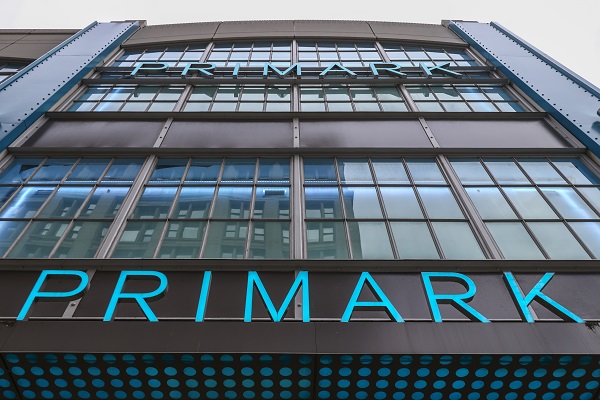
Preparations for the demerger of Primark from Associated British Foods (LSE:ABF) will be in the spotlight when the FTSE 100 conglomerate holds its annual general meeting next month.
- Our Services: SIPP Account | Stocks & Shares ISA | See all Investment Accounts
The gathering in London will be the first by shareholders since an in-depth strategic review, which AB Foods announced before last year's AGM, gave the green light for a split.
It is expected that both entities will be large enough for inclusion in the FTSE 100 index when the separation takes place before the end of 2027.
AB Foods financed Primark's first store in Dublin in 1969 before founder Arthur Ryan expanded the footprint to 165 stores in six countries during 40 years as chief executive.
The retail arm now generates £9.8 billion of revenues from 508 stores, which compares with £9.3 billion from the 178 manufacturing sites of the remaining food-led operation.
AB Foods believes that Primark will benefit from its own governance and having the strategic flexibility to accelerate its growth agenda.
It also expects the move will drive greater investor understanding of the breadth and strengths of its differentiated portfolio, which spans ingredients, grocery, sugar and agriculture.
AB Foods said: “A demerger will deliver a number of benefits to each business - in particular, oversight by boards that are directly aligned to their respective industry dynamics, clearer investment propositions and accountability to shareholders specifically interested in either Food or Primark.”
The company said this year that the anticipated dis-synergies are expected to be below £45 million in aggregate, with one-off separation and transaction costs about £75 million.
The need for leadership continuity during the demerger process means that chair Michael McLintock will stay on the board for longer than the recommended nine years.
Associated British Foods
When: 11am, Friday 4 December.
Where: QEII Centre, Broad Sanctuary, Westminster, London SW1P 3EE.
How to participate: A live broadcast is available, although it will not be possible to ask questions or vote using this facility. The company will endeavour to respond to questions received by 20 November by the end of the following week. The deadline for the return of proxy voting instructions is 11am, Wednesday 2 December. More AGM details can be found here.
Who’s in the chair? Former M&G chief executive Michael McLintock has led the board since April 2018. He has been asked to continue until the completion of the demerger of Primark, even though this will take his tenure as a director beyond the recommended nine years. The board said stability and knowledge of both the Primark and Food businesses was important for successful delivery of the demerger and to maximise long-term shareholder value.
How did the company do in the year to 12 September? Revenues rose 1% to £19.58 billion as adjusted operating profit decreased 14% to £1.46 billion, primarily reflecting lower profit in Primark. Adjusted earnings per share decreased 11% to 156p, having benefited from the accretive impact of share buybacks. A final dividend of 42.3p a share is payable on 8 January, resulting in an unchanged total for the year of 63p a share.
What's happening with Primark? AB Foods said the most important strategic decision of the year was to demerge Primark from its Food business, which comprises the divisions Grocery, Ingredients, Agriculture and Sugar. ABF has been Primark's parent for almost 60 years. The demerger is expected to be completed in December 2027, when shareholders will hold shares in both entities and the companies should be large enough for FTSE 100 inclusion.
How have shares performed? Down 6% to 1,843.5p (2,006p on Thursday).
How much is the boss paid? George Weston's single figure remuneration for 2025/26 fell to £2.97 million from £3.6 million the year before. The total included cash and deferred shares worth £305,000 after the annual bonus scheme paid 12% of the maximum opportunity, plus £1.36 million from the full vesting of long-term incentives under the company's Restricted Share Plan. His base salary is due to increase next month by 3% to £1.33 million.
- AB Foods warns profits will fall again
- Must read weekly preview
What about the Primark boss? Eoin Tonge, who was permanently appointed to the role in March on a base salary of £1 million, got £2.27 million in relation to 2025/26. This included a bonus of £233,000 and long-term incentives worth £854,000.
How was variable pay determined? The thresholds in relation to financial performance, which accounted for 85% of the CEO's annual bonus scorecard, were not met.
How did last year's AGM go? The annual remuneration report was approved with 99.85% of votes in favour. The new three-year remuneration policy, which increased the maximum grant under the Restricted Share Plan from 125% of salary to 200%, got 98.57% support.
How diverse is the board? The percentage of female directors has increased from 56% at the end of the previous financial year to 60%. This follows the board appointment of chief financial officer Joana Edwards, who is one of two female senior post holders. The board also continues to meet its commitment to have at least one person from an ethnic minority background.
Bellway
When: 8.30am, Thursday 26 November.
Where: Woolsington House, Woolsington, Newcastle upon Tyne, NE13 8BF.
How to participate: Proxy voting instructions should be returned no later than 8.30am, Tuesday 24 November. More AGM details can be found here.
Who’s in the chair? Former Redrow chief executive John Tutte was appointed at Bellway (LSE:BWY) in April 2022.
How did the company do in the year to 31 July? Completions rose 10.8% to 9,695 homes, which together with a 2.5% increase in average selling price to £324,404 meant full-year revenues improved by 13.6% to £3.16 billion. The underlying operating margin fell 80 basis points to 10.1% but underlying profit improved 5.7% to £320.6 million. Earnings per share lifted 25.1% to 166.1p while the total dividend rose by 7.1% to 75p a share. This includes plans for the payment of 52p a share on 13 January.
How have shares performed? Down 20% to 1,988p (2,310p on Thursday).
How much is the boss paid? Jason Honeyman's remuneration of £2.9 million compared with £3.2 million the year before. The total included cash and deferred shares worth £930,904 after the annual bonus scheme paid 75.3% of the maximum, while the 65% vesting of long-term incentives contributed £1 million. His base salary increased on 1 August by 3% to £845,522.
- Nick Train: Diageo’s prospects and the firm I hope will quintuple in value
- Nick Train: performance, AI ‘victims’, and navigating a bear market
How was variable pay determined? The chief metric used in the annual bonus was underlying operating profit, which at £320.6 million scored 61.9% of the maximum. The other metrics of adjusted operating cash flow, land delivery and responsible business were between 86% and 100%. The vesting of long-term incentives was driven by total shareholder return (TSR) versus Bellway's housebuilding peer group, as well as targets in relation to strategic land, customer engagement and timber house construction. There was no vesting under the measures for relative TSR versus the FTSE 350 or underlying return on capital employed.
How did last year's AGM go? Anew remuneration policy was approved with 96.9% support. It reverted to the use of performance shares for long-term incentives, only a year after shareholders backed the use of Restricted Shares with greater certainty of vesting. Grants under the new scheme have returned to 200% of salary, with performance metrics closely tied to the delivery of objectives relating to the efficiency of the group’s balance sheet and pre-tax return on equity. The advisory vote on the annual remuneration report got 96.6% support.
How diverse is the board? Female representation was 40% at the end of the financial year but has since fallen to 33% due to recent board changes. One senior position is held by a woman and one director is from an ethnic minority background.
Renishaw
When: 10am, Wednesday 25 November.
Where: New Mills, Wotton-under-Edge, Gloucestershire, GL12 8JR.
How to participate: Proxy voting instructions should be returned no later than 10am, Monday 23 November. More AGM details can be found here.
Who's in the chair? David Grant joined the Renishaw (LSE:RSW) board in April 2012 and was its interim chair between June 2024 and April. He is set to remain chair until the company appoints a successor by 2028. Renishaw said: “The board considers that Sir David has consistently demonstrated the competencies and leadership required of the chair and his permanent appointment is in the best interests of the company and its shareholders at this time.”
How did the company do in the year to 30 June? Revenue growth of 14.4% to £815.8 million was aided by strong demand from customers in the semiconductor and the aerospace and defence sectors. Adjusted profit before tax lifted 32.1% to £168 million and earnings per share by 30% to 179.5p. A final dividend of 65.2p a share is payable on 3 December, lifting the total for the year by 5% to 82p. A special dividend of 70p a share is due to be paid on the same day.
How have shares performed? Up 79% to 5,120p (4,960p on Thursday).
How much is the boss paid? Will Lee's total remuneration for the year amounted to £2.3 million, up from £1.5 million the year before and the largest sum since he became chief executive in February 2018. The total included cash and deferred shares worth £1.48 million after the annual bonus scheme paid 95.5% of the maximum opportunity. His base salary of £787,470 is next due for review in January.
How was variable pay determined? Annual profit came in £8 million above the maximum target, meaning full vesting for the 80% of the bonus determined by this metric. Strategic goals including product innovation and operational excellence accounted for the rest.
- Why this investing strategy thrives in winter
- Sign up to our free newsletter for investment ideas, latest news and award-winning analysis
What's in the new remuneration policy? The main change involves the introduction of a long-term incentive plan for senior leaders. The proposed maximum headroom is 225% of salary, although the company intends to cap the CEO's current year grant at 200%. The maximum annual bonus opportunity will be reduced to 175% of salary from 225%, with an upper limit of 150% of salary in the current year. The CEO's maximum opportunity is £3.6 million, rising to £4.4 million with 50% share price growth. The changes increase the target reward position from below lower quartile against the comparator group to market median.
Why the changes? The current and previous policies reflected the fact that founders John Deer and the late Sir David McMurtry were executive directors with controlling shareholdings of the business. The remuneration committee said changes were necessary in order to encourage long-term decision-making in pursuit of shareholder value creation, and to ensure the policy is capable of securing and retaining the right calibre of talent for future success.
How did last year's AGM go? The annual remuneration report was backed with 95.57% of votes, while the remuneration policy was last approved at the 2023 AGM with 95.50% support.
How diverse is the board? Women hold 40% of roles and one senior position but the board does not have a director from a minority ethnic background.
These articles are provided for information purposes only. Occasionally, an opinion about whether to buy or sell a specific investment may be provided by third parties. The content is not intended to be a personal recommendation to buy or sell any financial instrument or product, or to adopt any investment strategy as it is not provided based on an assessment of your investing knowledge and experience, your financial situation or your investment objectives. The value of your investments, and the income derived from them, may go down as well as up. You may not get back all the money that you invest. The investments referred to in this article may not be suitable for all investors, and if in doubt, an investor should seek advice from a qualified investment adviser.
Full performance can be found on the company or index summary page on the interactive investor website. Simply click on the company's or index name highlighted in the article.