Chancellor Healey’s big tax and pension dilemma
Increasing the £12,570 tax threshold might be aspirational but comes with a wave of complications and considerations. Craig Rickman looks at the options.
22nd July 2026 10:51
by Craig Rickman from interactive investor
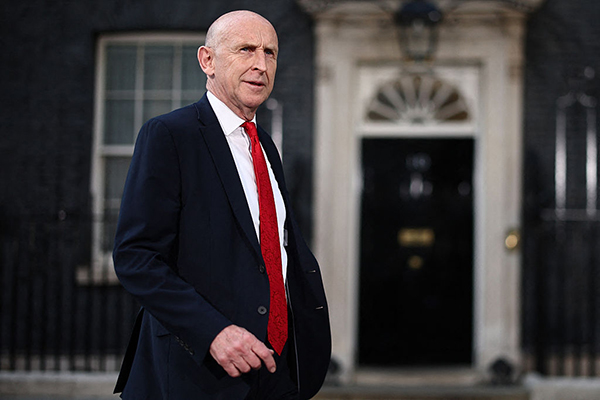
Chancellor John Healey at 10 Downing Street this week. Photo by Henry Nicholls/AFP via Getty Images.
New Prime Minister Andy Burnham’s cabinet reshuffle has raised plenty of eyebrows, none more so than John Healey’s appointment as chancellor.
Shabana Mahmood appeared set for the finance minister gig before Monday evening’s announcement, but the barrister will retain her role as home secretary, a position she’s held since 2025.
- Our Services: SIPP Account | Stocks & Shares ISA | See all Investment Accounts
Markets reacted positively to Healey’s appointment, an individual with a long-standing political history, holding senior positions in both the Blair and Brown governments. Most recently, he served as secretary of state for defence under Keir Starmer, and it’s believed his choice last month to quit that role accelerated the end of the former prime minister’s premiership.
The new chancellor is considered a safe pair of hands and fiscally prudent, something the new-look government desperately needs after a rocky 24-month stint for his predecessor, Rachel Reeves.
In an interview earlier this week with the BBC, Healey struck an encouraging tone, stressing that while maintaining fiscal stability was key, “it can and it has to drive economic growth, raise levels of productivity, support business competition, [and] investment for the future.”
The tightrope of cutting taxes
Operating a tight and steady ship and adhering to the government’s self-imposed fiscal guardrails, something both Burnham and Healey have promised to do, might not be easy – especially if the duo is targeting tax giveaways.
The prime minister has made tackling the rising cost of living an instant and central focus, pledging to give “breathing space” to households which have seen their finances squeezed by stubborn inflation. In the first of what we’re led to believe is a series of measures, the Makerfield MP axed the 5% VAT payable on electricity bills starting from 1 October, a move estimated to cost £850 million based on current energy prices.
In a press release issued early on Tuesday morning, the government claimed, “the cost of this immediate action for this financial year – taken now, before the next price cap – is being funded from the cancellation of the (£1.8 billion) Digital ID programme”.
- How to smoothly transition your investment portfolio into retirement
- Must read: drop in UK inflation could be temporary
Scrapping VAT on electricity bills will also help to reduce inflation, based on the consumer prices index (CPI), by around 0.1 percentage points, the government claims, although this may be countered by rising prices amid renewed tensions in the Middle East.
Burnham has also placed a £2 cap on single bus fares, starting on 1 January 2027.
Any further action to protect consumers from the cost of living will be announced at this year’s Autumn Budget, with the date yet to be confirmed, alongside an Office for Budget Responsibility (OBR) forecast. “All decisions at that point will continue to be funded and also consistent with the government’s fiscal rules,” it added.
The expense of thawing the deep freeze
So, what shape could these further measures take? In recent weeks and days Burnham has made no secret of his desire to find room in the income tax system to ease the burden on workers and pensioners. “One thing I heard the most on doorsteps in Makerfield was frustration about the personal allowance frozen at £12,570,” the prime minister said.
As Burnham notes, the personal allowance - the amount you can earn every year before income tax and national insurance kicks in – hasn’t budged since 2021-22, dragging more people into the tax net as their incomes naturally rise over time.
This threshold, together with the higher bands, are set to remain at current levels until 2030-31, after Reeves at last year’s Budget prolonged the deep freeze by three extra years.
While jacking up the personal allowance would find favour with taxpayers - and it could solve a looming headache for the government regarding the state pension which I cover below - there are several complications and sticking points.
Burnham has since conceded that any reform here would be “difficult given the financial circumstances in which we find ourselves”.
- Tax burden on pensioners surges: how to cut your bill
- Sign up to our free newsletter for investment ideas, latest news and award-winning analysis
The chief reason is because fiscal drag, as it’s known in economic jargon, is a lucrative way to raise tax revenues without touching the headline rates. Thawing the freeze would not come cheap. Maintaining tax bands is expected to net the Treasury around £55 billion by 2030-31, according to the OBR, while halting personal allowance increases alone is forecasted to create 5.2 million more taxpayers.
Increasing the tax-free threshold by £500 from April next year would cost the government around £6 billion, said renowned tax expert Dan Neidle in a post on social media site, X. And unless the chancellor has sufficient headroom against his fiscal targets, this gap will have to be plugged with tax hikes or spending cuts elsewhere.
Reports suggest that Burnham hasn’t ruled out raising the additional rate of tax from 45% to 50%, although such a move would break Labour’s election manifesto pledge, and either way he may be wise to avoid upsetting the apple cart so early into his tenure.
What about other thresholds?
We should also note that raising the personal allowance without reforming the other thresholds could create its own complexities.
That’s because the £12,570 figure is also relevant to the additional rate (45%) threshold, set at £125,140. While it hasn't always been the case - before 2023 the 45% band stood at £150,000 - it dovetails with the gradual withdrawal of the personal allowance once income exceeds £100,000. For every £2 you earn above £100,000, you lose £1 of your tax-free allowance, meaning it’s lost completely once income hits £125,140, creating an effective tax rate of 60% - or 62% if you pay national insurance (NI).
Presumably any decision to hike the personal allowance would mean also ticking up the 45% band to retain the relationship between the two. Unless, of course, Healey and Burnham choose to reform the highly controversial and punitive 60% tax trap, but this seems unlikely given it impacts people whose earnings far outstrip the average wage.
All that said, increasing the personal allowance could potentially address one looming problem for the government. The full state pension currently pays £12,547 a year, only £23 below the £12,570 tax-free figure. Given the triple lock mechanism – which uprates the state pension annually by the higher of inflation, wage increases or 2.5% - the full amount will become taxable from April next year.
At last year’s Budget, Reeves said anyone whose retirement income is derived solely from the state pension would not have to pay tax on it. The then-chancellor, however, failed to explain how such a policy would work and anyway has now been relieved of the responsibility, with Healey taking the baton.
It will be interesting to see how the new chancellor approaches this delicate area. Protecting some low earners from a tax bill and not others, risks obvious accusations of unfairness.
- Is the state pension triple lock on borrowed time?
- How much do you need to secure a comfortable retirement?
Aside from this dilemma, the outcome of which we’ll learn about at this year’s Budget and maybe sooner, there are other ways the government could deliver tax cuts to workers without lifting the thresholds.
Neidle claims that while cutting the main rate of employee NI by one percentage point also costs around £6 billion, it would save the median full-time worker £250 annually – £110 more than raising the personal allowance.
A glaring point of contention here is that reducing employee NI would only help employed workers, unless the self-employed rate was cut too, and wouldn’t benefit retirees. NI is only charged on earnings and profits and stops once an individual reaches state pension age even if they’re still working.
Such a policy may also aggrieve employers, who’ve been on the wrong side of NI changes in recent years. Rates of employer NI increased last year, widening the gulf between what businesses and staff pay. Only a few years ago, employers paid 13.8% NI, while the main rate for employees was 12%. But after measures unveiled at several fiscal events, the rate for employers and the main rate for employees now stand at 15% and 8%, respectively.
As things stand, any tax giveaways at Burnham and Healey’s inaugural fiscal event seem improbable. Income tax and NI thresholds must increase again at some point, but the nation’s precarious finances mean any government present or future may stick to the current schedule. The big dilemma is the full state pension becoming taxable next April, and whether the government will take action to address it. The new chancellor doesn’t have much time to decide.
These articles are provided for information purposes only. Occasionally, an opinion about whether to buy or sell a specific investment may be provided by third parties. The content is not intended to be a personal recommendation to buy or sell any financial instrument or product, or to adopt any investment strategy as it is not provided based on an assessment of your investing knowledge and experience, your financial situation or your investment objectives. The value of your investments, and the income derived from them, may go down as well as up. You may not get back all the money that you invest. The investments referred to in this article may not be suitable for all investors, and if in doubt, an investor should seek advice from a qualified investment adviser.
Full performance can be found on the company or index summary page on the interactive investor website. Simply click on the company's or index name highlighted in the article.