ii view: Wizz Air descends into quarterly loss
Shares have underperformed BA owner IAG year-to-date but the company is underseeing a major expansion of its aircraft fleet. Analyst Keith Bowman assesses prospects.
7th August 2026 12:19
by Keith Bowman from interactive investor
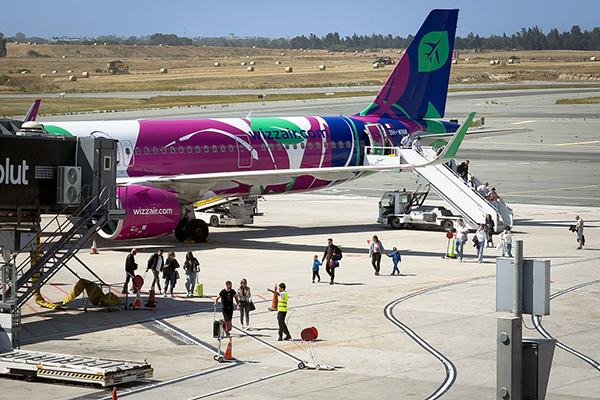
A Wizz Air aircraft at Larnaca International Airport in Cyprus. Photo: Mateusz Wlodarczyk/NurPhoto via Getty Images.
First-quarter results to 30 June
- Revenue up 5.5% to €1.51 billion (£1.3 billion)
- A net loss €198 million, down from a profit of €38 million
- Net debt up 3.9% to €5.13 billion
Guidance:
- Expects second-quarter Cost per Available Seat Kilometre (CASK) to rise by a mid-to-high single digits
Chief executive József Váradi said:
“We achieved some notable success in the quarter, with a 25% year-on-year increase in passengers carried, underlining the scale of our expanding network and the continued high demand for affordable, convenient air travel across Europe and beyond.
“Wizz Air is well positioned, with a strong liquidity position, a modern and efficient fleet, and a disciplined approach to capacity deployment. We will continue to manage the business for profitability while remaining ready to take advantage of market opportunities that may arise as supply and demand rebalance across Europe."
- Our Services: SIPP Account | Stocks & Shares ISA | See all Investment Accounts
ii round-up:
Wizz Air Holdings (LSE:WIZZ) reported a bigger-than-expected loss, with the Eastern Europe-focused carrier flagging ongoing headwinds for the current second quarter.
A loss of €198 million in the three months to late June compared with a profit of €38 million in Q1 last year. Analysts had a expected a loss of €180 million. Overall costs during the period rose 21%, including a 39% jump for fuel costs against the backdrop of a war in the Middle East. Wizz expects Cost per Available Seat Kilometre (CASK) for the second quarter to rise by a mid- to high-single digit.
Shares in the FTSE 250 company fell 3% in post results UK trading having come into these latest numbers down by around a tenth so far in 2026. Both British Airways owner International Consolidated Airlines Group SA (LSE:IAG) and the FTSE 250 index are up by around a tenth year-to-date.
Wizz operates a fleet of 269 Airbus A320 and A321 aircraft, and plans to grow that to 383 planes by the financial year 2033. Following the war in Iran in late February, the group suspended all Middle East flights, accounting for around 5% of total seating, but resumed flights to Tel Aviv in late May.
- Stockwatch: another shorted share now in a bull market?
- FTSE 100 and FTSE 250 winners and losers in July 2026
Planes grounded by Pratt & Whitney engine inspections totalled 27 in late June, down from 41 a year ago. The engine manufacturer continues to assess a previously identified technical fault. Between 15 and 20 planes are expected to remain grounded come March 2027, falling to zero by December 2027.
Wizz Air’s net debt as of late June rose 3.9% year-over-year to €5.13 billion. The airline highlighted June credit rating agency updates, with Fitch affirming a BB rating and stable outlook and Moody's lowering its rating to Ba3 from Ba2.
Broker UBS reiterated its ‘buy’ rating on the shares post the results, highlighting a price target of £16.05 per share. First-quarter results are scheduled for 6 August.
A capital markets day is scheduled for 17 September with first half results due on 12 November.
ii view:
Following the airline’s first flight in 2004, Wizz today employs around 9,000 people. Geographically, stand out markets over its last financial year to late March were Italy at 13% of sales, Romania 11% and both the UK and Poland at 10% each.
For investors, uncertainties regarding conflict in the Middle East and Ukraine continue to cloud the outlook. Group net debt of €5.13 billion (£4.41 billion) compares to a stock market value of £1.15 billion. Challenges for industry suppliers such as Pratt & Whitney, Airbus and Boeing are hindering efficient airline operations, while the many factors outside of management’s control such as the weather and air traffic control strikes cannot be overlooked.
- How I turbocharge 9.5% yielding portfolio
- Sign up to our free newsletter for investment ideas, latest news and award-winning analysis
On the upside, a one-quarter increase in passengers carried year-over-year points to robust consumer demand. An expansion of the group’s fleet and therefore potential profits continues to be pushed. Grounded aircraft due to challenges at Pratt & Whitney continue to decline, while actions to hedge against volatile fuel prices and currencies remain part of its overall strategy.
For now, and while an expanding fleet of more environmentally friendly planes offers appeal, a disappointing outlook for Q2 may keep more cautious investors on the sidelines for now.
Positives:
- Fuel and currency hedging initiatives
- Positive environmental credentials
Negatives:
- No dividend payment
- Many factors outside of management’s control
The average rating of stock market analysts:
Hold
These articles are provided for information purposes only. Occasionally, an opinion about whether to buy or sell a specific investment may be provided by third parties. The content is not intended to be a personal recommendation to buy or sell any financial instrument or product, or to adopt any investment strategy as it is not provided based on an assessment of your investing knowledge and experience, your financial situation or your investment objectives. The value of your investments, and the income derived from them, may go down as well as up. You may not get back all the money that you invest. The investments referred to in this article may not be suitable for all investors, and if in doubt, an investor should seek advice from a qualified investment adviser.
Full performance can be found on the company or index summary page on the interactive investor website. Simply click on the company's or index name highlighted in the article.