Three ways interest rate hike to 4% could affect your finances
Your mortgage, savings, and retirement income options could all be impacted by the first Bank Rate increase since August 2023.
5th November 2026 15:36
by Craig Rickman from interactive investor
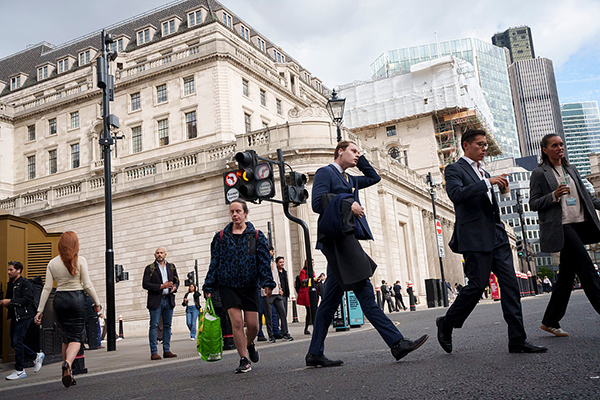
City workers walk past the Bank of England. Photo: Richard Baker/In Pictures via Getty Images.
The Bank of England at noon today hiked interest rates for the first time in more than three years as policymakers seek to tame elevated inflation which is expected to hit 5% by the middle of next year.
In a rare show of unison, all nine members of the Monetary Policy Committee (MPC) voted to raise the Bank Rate from its 3.75% level, with eight preferring a 0.25 percentage point increase to 4% and one, renowned hawk Catherine L Mann, believing a more aggressive hike to 4.25% was required.
- Invest with ii: SIPP Account | Stocks & Shares ISA | See all Investment Accounts
This marks a significant swing in sentiment from the previous MPC meeting in September, where six members voted to keep rates on hold against three who preferred an increase.
Since the last vote, the consumer prices index (CPI) – the UK’s main measure of inflation – has risen to 3.5%, its highest level in almost a year, largely driven by the energy shock triggered by the Iran war. Prices have accelerated for the past four months in a row.
MPC members expect prices to continue rising over the coming months. According to forecasts, CPI will reach around 4.5% in Q1 2027, roughly 1.25 percentage points higher than July estimates, and around 5% in Q2 2027 – two and a half times the Bank’s 2% target.
In the policy summary outlining today’s vote, policymakers said this will not necessarily mark the start of a rate-hiking cycle.
The likelihood of further increases in the short term will depend on how things unfold in the Middle East, with Bank Governor Andrew Bailey saying: “Without news which softens the risks to inflationary pressures, I can see the argument for a further increase in rates and thereafter taking a more conditional approach, dependent on the evidence on energy prices and inflation dynamics.”
Whenever interest rates rise, some areas of your finances may lose out, while others could benefit. Here are three ways today’s hike might impact your money.
1) Better returns for your savings
A positive outcome of rising interest rates is that returns on cash savings and cash-like investments should improve – although it can take a bit of time for banks and building societies to pass on the increase.
Savings rates have nudged up recently in response to anticipated rate hikes, with deals north of 5% available if you’re prepared to tie the money up for at least a year. Even some easy-access accounts are offering rates around the 4.5% mark, higher than current inflation.
Money market funds, a cash-like product that invests in a basket of low-cost bonds with short-term maturity dates, offer returns that are typically in-line with the Bank Rate and so should improve after today’s announcement.
Money market funds have enjoyed soaring popularity in recent years, with investors attracted by the prospect of beating inflation without taking on significant risks to capital.
- Autumn Budget 2026: Healey scraps planned ISA shake-up
- New tax raid on your savings: what you need to do now
- Top 10 most popular investments funds: October 2026
But with inflation set to hit 5% next year, your cash holdings could become more vulnerable to losing value in “real terms”, even after today’s rate hike.
Now is a good time to revisit your cash holdings and consider your purpose for the money. If you do indeed need the money to cover emergencies, fund key purchases in the next few years or provide a buffer from stock market funds wobbles, then make sure you’re getting the best available rate.
In addition, make use of any tax advantages and exemptions too, such as individual savings accounts (ISA) and your savings allowance, as it means you get to keep all your interest instead of handing some to HMRC, which could reduce your return below inflation. This task has become even more important with taxes on savings income rising four percentage points from April 2027.
On a positive note, the government’s decision to abandon its planned shake-up to the ISA landscape means under-65s can still shove £20,000 into the cash version every year from April 2027. The complex rules around tax charges on interest paid within stocks and shares ISAs and money market funds have also been scrapped.
However, for any money you don’t plan to use within the next five years, while the higher returns on cash may prove tempting, investing in the stock market should offer a better chance of beating rising inflation and improving your future financial security.
2) Mortgages to become more expensive
Today’s rate increase and the worsening inflationary outlook will be a blow to households whose finances are under strain from the rising cost of living. The “breathing space” measures announced at the Autumn Budget, which mainly focused on energy bills, will offer little more than marginal and temporary relief for many families.
The biggest monthly outgoing for most individuals and households are mortgage payments or rental costs, and both could tighten over the coming months.
If you’re on a variable rate mortgage, your monthly payment will instantly increase after today, while from April 2027 landlords will pay an extra four percentage points on rental income, a tax hike that may ultimately result in higher costs for tenants.
- Autumn Budget 2026: what it means for your money
- Sign up to our free newsletter for investment ideas, latest news and award-winning analysis
- Three key takeaways from the Autumn Budget 2026
For first-time buyers or those on fixed-term deals set to expire soon, the picture is a little bit more complicated. Standard practice is that when rates go up, borrowing becomes more expensive.
But the situation is a little different right now. Many lenders had already priced in today’s rate increase and some future ones, too. Encouragingly, earlier this week better deals entered the market despite expectations thar rates will go up.
With the housing market weighing under higher mortgage costs, a handful of big lenders such as Barclays, Halifax and Nationwide cut rates to below 5% to tempt potential buyers and stimulate activity.
3) Annuity rates could improve
One of the big winners of rising interest rates is people seeking to secure retirement income though an annuity.
This is a financial product where you trade some or all your pension savings for a guaranteed income for life or a set period, and rates typically improve when interest rates rise. That’s because standard annuity rates are priced using 15-year gilt yields, instruments that are sensitive to Bank Rate movements.
Annuity rates hit an 18-year high in the summer and have remained elevated since – with the income offered a far cry from the paltry amounts available between 2009 and 2021 when interest rates languished at rock-bottom lows.
But before rushing out to cash-in on the attractive rates, there are some key things to consider first. The product can offer some much-treasured certainty and security in later life, but a crucial drawback is that, unlike keeping your money invested and drawing income flexibly, they’re incredibly rigid.
- Can you gift your property or other possessions to reduce IHT?
- Solutions to the UK’s biggest pension problems
- Older generations accelerate financial gifts as IHT changes bite
Lifetime annuities normally don’t offer any lump sum benefits to leave a legacy and, once you’ve bought one, the terms chosen at outset are fixed for life – you can’t change your mind after the cooling off period has passed.
Furthermore, if you’re thinking about heading down the annuity route, make sure you consider the impact of inflation, especially with prices set to rise sharply.
You can choose for the annuity payments to either remain level throughout or rise annually to protect from the cost of living. The latter sounds the obvious pick, but bear in mind the starting income is much lower, so you may need to live for around 13 to 15 years to break even. Your personal circumstances including access to other income sources may inform the best course of action.
Given the size and irreversible nature of this decision, it’s worth getting regulated advice here from a qualified financial planner.
These articles are provided for information purposes only. Occasionally, an opinion about whether to buy or sell a specific investment may be provided by third parties. The content is not intended to be a personal recommendation to buy or sell any financial instrument or product, or to adopt any investment strategy as it is not provided based on an assessment of your investing knowledge and experience, your financial situation or your investment objectives. The value of your investments, and the income derived from them, may go down as well as up. You may not get back all the money that you invest. The investments referred to in this article may not be suitable for all investors, and if in doubt, an investor should seek advice from a qualified investment adviser.
Full performance can be found on the company or index summary page on the interactive investor website. Simply click on the company's or index name highlighted in the article.