Autumn Budget 2026: what it means for your money
The chancellor promised ‘breathing space for today, fresh hope for our future’ and delivered a smorgasbord of small measures to support his aim.
28th October 2026 15:26
by Craig Rickman from interactive investor
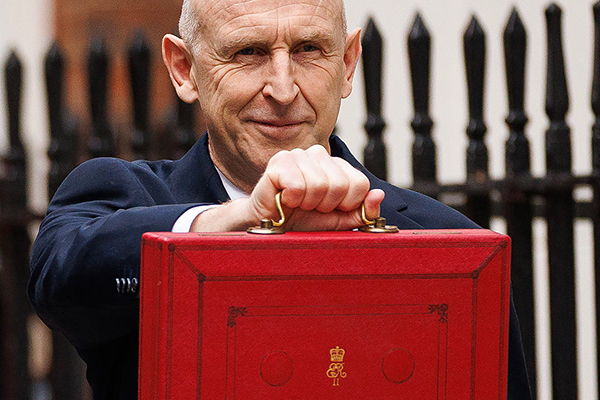
Chancellor John Healey leaves 11 Downing Street to present the Autumn Budget on 28 October. Photo: Dan Kitwood/Getty Images.
John Healey’s first Budget as chancellor was a stable affair compared to the first two fiscal events of this parliament.
That wasn’t the tallest of orders. Such was the heavy and sprawling nature of the hikes meted out in 2024 and 2025, collectively expected to raise around £66 billion, the assault on personal and business taxes had to ease at some point. This time around the tax increases totalled around £6 billion.
- Invest with ii: SIPP Account | Stocks & Shares ISA | See all Investment Accounts
Healey and Prime Minister Andy Burnham promised to give individuals and businesses “breathing room” from the ongoing financial squeeze, with household budgets tightening in response to economic effects from the Iran war. “This is a Budget for the working people of Britain, for businesses big and small. A Budget built on fiscal discipline,” the chancellor said.
The measures announced today will impact certain sections of society. But controversy wasn’t completely absent. We saw a dramatic U-turn on one of last year’s headline measures, there were tax increases for savers and landlords, and the tax-free personal allowance uplift for certain low-income pensioners will inevitably spark debate.
Let’s examine the key announcements affecting your money and round up the policies that didn’t happen.
Key manifesto pledges kept
Keeping the government’s election manifesto pledge not to raise taxes on working people, Healey left rates of income tax, national insurance (NI) and VAT unchanged. You could argue previous policies, notably the hike on employer NI and extended freeze on tax thresholds, already broke this commitment.
Healey is also bound by his party’s self-imposed fiscal rules. The main one, the stability rule, dictates that day-to-day spending must be funded from tax receipts by the end of parliament.
The government affords itself a £9.9 billion buffer, and in spring the headroom sat at £23.6 billion thanks to hikes at the 2025 Budget. But soaring borrowing costs triggered by the Iran war dwindled the figure to around £10 billion, accordingly to economists.
The chancellor said that the measures announced today will boost the headroom to £15 billion by 2029-30, rising to £22 billion the year after, according to Office for Budget Responsibility (OBR) forecasts.
Planned ISA shake-up axed
At the previous Budget, then-Chancellor Rachel Reeves announced the annual cash individual savings account (ISA) allowance will fall to £12,000 for under 65s from April 2027, as part of wider package of measures to transform more savers into investors and boost the domestic economy.
But in what would’ve been a candidate for this year’s “rabbit out the hat” if it hadn’t been leaked as dawn broke this morning, Healey reversed this policy.
- Autumn Budget 2026: Healey scraps planned ISA shake-up
- Autumn Budget 2026: how UK stocks reacted
- Find out the latest UK Budget news here
While some backed the previous chancellor’s ISA shake-up, many savers, investors and organisations will be relieved by this decision. It had garnered serious controversy, not least the messy anti-circumvention rules introduced to deter people from gaming the proposed system.
Healey made no mention of these today, so we’ll have to wait for confirmation that they too are scrapped. I would be surprised if they remain. One would hope from April 2027, investors will still be allowed to transfer holdings from stocks and shares ISAs and innovative finance ISAs to cash ISAs, and will avoid a tax charge on interest paid on uninvested cash held within a stocks and shares ISA.
The government’s stark U-turn may also pave the way to create a simpler ISA framework down the line, something many believe offers better odds of fostering an investing culture in the UK.
Reforms to Lifetime ISA and new first-time buyer ISA
Healey gave more detail about the new First-Time Buyer ISA arriving from April 2029.
Like the Lifetime ISA, the product it’s replacing, you’ll be able to contribute up to £4,000 a year and gain 25% government bonus. But in contrast, the bonus will be paid when funds are withdrawn for a qualifying first home purchase, avoiding the early withdrawal penalty.
In a blow to those campaigning for a loftier maximum home value to reflect house price growth since the Lifetime ISA was launched, this will remain at £450,000 for the First-Time Buyer ISA.
In better news, there will be no age cap for taking one out. You must take out a Lifetime ISA before you turn 40. Also, from tomorrow, the Lifetime ISA’s early withdrawal charge will reduce from 25% to 20%, “ensuring the value of individual contributions is protected if the value of the property is above the price cap”.
More help for budding homeowners
As announced by Burnham at the Labour Party Conference, the government is launching a new scheme to help first-time buyers on to the property ladder, offering a 20% equity loan.
According to the Budget document: “Participants will benefit from a reduced deposit requirement and a five-year interest free period, which will save the typical buyer hundreds of pounds a month.”
Triple lock increase rubber stamped
As expected, the government kept its election manifesto pledge to retain the triple lock for this parliament. From April 2027, the annual full state pension will rise by 3.9%, from £489 to £13,036, while the basic state pension (received by those who reached state pension age before 6 April 2016) will hike by £375 to £9,990, annually.
Under the triple lock mechanism, the state pension rises every year by the highest of inflation, wage growth or 2.5%.
Under plans announced by Burnham a few weeks ago, the triple lock will be “adjusted” from April 2030 to help fund a new national care service. Namely, the inflation and 2.5% elements will stay as they are, but the earnings part will be assessed over the long run.
“Adjusting the triple lock will generate significant savings and materially improve the certainty of the state pension spending trajectory. It removes the ‘ratchet’ effect, whereby the state pension rises ever higher relative to earnings,” it stated in the Budget red pages.
- Autumn Budget preview and triple lock change explained
- A compelling reason to own undervalued UK shares
- When will you get your state pension?
With some opposition parties pledging to keep the triple lock as it is, the birth of this policy may hinge on the outcome of the next election.
Also in the Budget document, we got a shred of extra detail about the link between the triple lock reform and free social care. “The prime minister has agreed with Baroness Casey that her Independent Commission on Adult Social Care will now report in 2027,” it said.
Personal allowance rise for pensioners
Last year Rachel Reeves pledged that from April 2027, anyone whose sole income is from the full or basic state pension will avoid a tax bill, in light of the full state pension set to exceed the tax-free personal allowance.
Healey vowed keep this commitment and today unveiled a new Pension Tax Allowance from April 2027. "Pensioners with incomes at or under the value of the full new state pension will not be brought into paying tax because of state pension uprating in this Parliament," according to the Budget document.
The government says that around 290,000 pensioners will not pay any tax due to the PTA, with around 500,000 in total benefitting from a tax reduction.
The value of this allowance is calculated by applying the basic rate of income tax (20%) to the difference between the full new state pension, which will be £13,036 from April, and the personal allowance.
The interesting aspect is here is that it doesn't matter where your income is from - it must be at or below the value of the full new state pension to fully qualify. Those with incomes just above the allowance will see the PTA gradually withdrawn through a taper. This system will apply from 6 April 2027 until 5 April 2030 and track state pension increases during this Parliament.
At first glance, it appears incredibly complicated, especially regarding the taper. But simply put, for every £3 of income above the £13,036 full new state pension, your PTA will reduce by £1, disappearing once income hits £13,020.
Support with energy bills
One of Healey’s big areas of focus to give people “breathing room” is utility bills.
Shortly after becoming prime minister, Burnham announced that VAT on energy bills would be scrapped from October. In recognition of the fact this will only go so far, especially with the energy price cap increasing, the chancellor went further today. Healey announced that gas standing charges, which are applied regardless of usage, will be scrapped from next year, saving households around £45 annually.
- Pensions dashboards are coming: what you need to know
- Solutions to the UK’s biggest pension problems
- How much do you need to secure a comfortable retirement?
The chancellor also announced that 20 million households in council tax bands A to D will receive a £100 payment to directly into their bank account – a £2.6 billion scheme. This will be funded by an increased bank surcharge (more on that below).
National living wage increase
As reported ahead of the Budget, the national living wage will increase 3.9% from £12.71 to £13.20 per hour for those 21 and over, and from £10.85 to £11.27 for 18 to 20-year-olds (NMW 18-20), starting in April 2027. Apprentices will see the minimum hourly amount hike from £8 to £8.31.
Extra tax hit on savers and landlords
At last year's Autumn Budget, a two-percentage point hike on savings interest and rental income was announced, due to kick in from April 2027. In a further blow for savers, Healey today confirmed the increase will now double, shunting the basic rate to 24%, and the higher and additional rates to 44% and 49%, respectively, from the new tax year.
For savers, these will apply on interest that exceeds your personal savings allowance which is £1,000 for most basic-rate taxpayers, and £500 for those in the higher-rate bracket. Additional rate taxpayers, those with taxable income above £125,140, don't get a savings allowance, so will pay 49% interest on any savings held outside tax-wrapped accounts.
New temporary surcharge on bank profits
In a widely rumoured policy, today the government announced the bank surcharge will rise from 3% to 6% starting in January for a period of 15 months.
As things stand, banks pay a 3% surcharge on profits above £100 million, in addition to 25% corporation tax. This figure stood at 8% when introduced in 2016 but was reduced by five percentage points in 2023 by then-Chancellor Jeremy Hunt to offset the top rate of corporation tax hiking from 19% to 25%.
While this tax increase lands squarely with banks, savers and borrowers could get caught by the ripples. That’s because banks may seek to protect margins by offering less generous interest rates and mortgage deals, or perhaps even jack up charges and fees.
Changes that failed to materialise
- Pension tax left untouched (for once)
When we polled ii Community members on what they’d most like to see at the Budget, the most popular vote went to leaving pension tax alone.
There was good news on this front. Unlike other Budgets during this parliament, the pension tax system saw no change – welcome news for savers and retirees who’d witnessed seismic upheaval. Reforms included bringing pensions the inheritance tax (IHT) net from 2027 and a £2,000 cap on salary sacrifice starting in 2029.
- What you need to know about upcoming salary sacrifice changes
- Sign up to our free newsletter for investment ideas, latest news and award-winning analysis
- How the experts would invest a SIPP at every life stage
In a much-needed shift, rumoured cuts to tax-free cash head of the Budget were light this time around, and Healey earlier this week reportedly ruled out change in this area – clearly, it would’ve helped savers worried about a potential slash if this assurance was communicated far sooner.
- Stamp duty on UK shares remains
Despite fierce campaigning from investment firms, there was no removal or cut to stamp duty on UK shares. This was a shame, as it’s viewed as one of the key levers to pull to help boost the domestic stock market.
As interactive investor's chief executive Richard Wilson said: “Stamp duty on shares is a globally uncompetitive and irrational tax that cuts the value of UK companies, which is why the good ones who can leave go elsewhere, and the good ones that don’t leave get bought anyway. To make matters worse, the burden increasingly falls on retail investors.
“At a time when policymakers want more people investing for the long term and more capital flowing into UK companies, stamp duty has the diametrically opposite effect. It has to go.”
- No changes to CGT
With Healey ruling out hikes to capital gains tax (CGT) rates ahead of this year’s event - largely due to fears it would trigger investors to hold on to assets rather than selling them, reducing rather than increasing Treasury revenue - it was no surprise the headline rates of this levy was left alone.
We should note that investors have been on the receiving end of punishing CGT changes in the past few years, with the headline rates increasing and the annual tax-free exemption gradually falling from £12,300 to £3,000.
- No increase to income tax thresholds
It was always a long shot, but at one point there was a shred of hope that the £12,570 personal allowance would rise for the first time since April 2021. All income tax and national insurance (NI) thresholds have been frozen for the past five tax years, and due to reforms unveiled at last year’s Budget, they’re not scheduled to increase until April 2031.
- Case study: managing a £1.25m pension and ISA portfolio in midlife
- Older generations accelerate financial gifts as IHT changes bite
This didn’t come to pass, with Burnham’s heady aspirations curtailed by the dwindling fiscal buffer. The tactic of keeping tax thresholds on hold, known in economic jargon as fiscal drag, is lucrative for the government, sneakily collecting billions of pounds as millions of people trip into higher thresholds as their incomes naturally rise.
Looking ahead
Investors may have escaped this Budget relatively unscathed but weren’t so lucky in previous events, and some of these measures are set to take effect from the new tax year: most pensions will become liable for IHT, and as Healey confirmed today tax rates on savings interest and property rents will rise four percentage points across all thresholds.
These articles are provided for information purposes only. Occasionally, an opinion about whether to buy or sell a specific investment may be provided by third parties. The content is not intended to be a personal recommendation to buy or sell any financial instrument or product, or to adopt any investment strategy as it is not provided based on an assessment of your investing knowledge and experience, your financial situation or your investment objectives. The value of your investments, and the income derived from them, may go down as well as up. You may not get back all the money that you invest. The investments referred to in this article may not be suitable for all investors, and if in doubt, an investor should seek advice from a qualified investment adviser.
Full performance can be found on the company or index summary page on the interactive investor website. Simply click on the company's or index name highlighted in the article.