ii view: IAG steers steady course despite stiff headwinds
A multi-branded airline offering flights across the price and destination spectrums. Analyst Keith Bowman assesses prospects.
31st July 2026 12:59
by Keith Bowman from interactive investor
Second-quarter results to 30 June
- Revenues up 0.2% to €8.9 billion (£7.7 billion)
- Adjusted operating profit down 16% to €1.41 billion
Guidance:
- Now expects flat full-year 2026 capacity, down from a gain of less than 3%
- Now expects annual fuel costs of up to €8.6 billion, down from a previous €9 billion
- Continues to expect to recover around 60% of the higher annual fuel cost via revenue and cost actions
Chief executive Luis Gallego said:
“With these results IAG has again demonstrated that its excellent fundamentals are supporting continued value creation for our shareholders, despite the impact of the crisis in the Middle East and wider geopolitical events.”
- Our Services: SIPP Account | Stocks & Shares ISA | See all Investment Accounts
ii round-up:
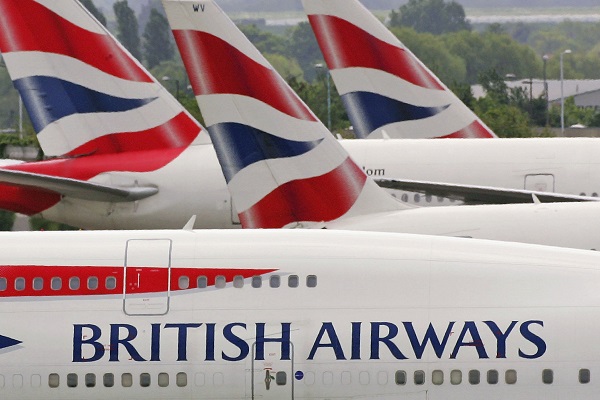
British Airways owner International Consolidated Airlines Group SA (LSE:IAG) today detailed quarterly profit that exceeded City forecasts as it largely maintained hopes for the year ahead.
Fuel costs up by close to 25% during the second quarter to late June cut adjusted profits for the period by 16% to €1.41 billion. Analysts had forecast €1.38 billion. The airline now predicts an annual fuel bill of up to €8.6 billion, although annual capacity growth is reduced to flat from previous expansion of under 3%.
Shares in the FTSE 100 company fell 1% in UK trading having come into these latest results up by 6% so far in 2026. That’s similar to rival Deutsche Lufthansa AG (XETRA:LHA) and only just behind a near 10% rise for the FTSE 100 index year-to-date.
IAG operates a fleet of around 600 aircraft across brands including British Airways, Iberia and Aer Lingus.
Management continues to expect to recover around 60% of the higher full year fuel cost via revenue and cost actions.
Capital expenditure or investment for the year of €3.4 billion is now down from a previous €3.5 billion. A total of 16 new aircraft are expected to be delivered during 2026, with some part of a switch for its short-haul Vueling business to Boeing 737’s and from Airbus planes.
Group net debt fell by just over a fifth to €4.7 billion. Around €800 million of a €1.5 billion share buyback programme announced in February has now been completed.
A final dividend recently paid took the full year 2025 payment to a total of €0.098 per share, a rise of 8.9% from the 2024 dividend. News regarding this year’s payment is expected to accompany third-quarter results due on 6 November.
ii view:
Formed via a merger between British Airways and Iberia in 2011, IAG today flies to 285 destinations in just over 90 countries. The multiple branded airlines employs around 75,000 people.
Geographically, the UK generated most revenue over its last financial year at 36%. That was followed by Spain at 19%, the USA at 16%, and the rest of the world the balance of 29%. Group rivals include Delta Air Lines Inc (NYSE:DAL), Air France-KLM (EURONEXT:AF) and budget airlines such as easyJet (LSE:EZJ) on many inter-European short-haul routes.
For investors, disruption to oil supplies in the Middle East continues to see a bigger annual fuel bill predicted than at the start of the year. Demand for flights within the Middle East region has suffered. The many different factors which can hinder airline performance such as air traffic control strikes and the weather cannot be forgotten, while a forecast price/earnings (PE) ratio above the three-year average may suggest the shares are not obviously cheap.
- FTSE 100 shares round-up: Rolls-Royce, BAE, Rio Tinto, Rentokil
- The most widely held global growth shares among fund managers
- Where to invest in Q3 2026? Four experts have their say
To the upside, demand for travel generally remains robust. Diversity of group brands, pricing segments and geographical hubs exists. Group net debt continues to fall following the industry’s pandemic shutdown. IAG’s fleet is being pushed towards more fuel efficient and climate friendly planes, while a forecast dividend yield of around 2.1% is not to be ignored.
On balance, and while the many factors which can hinder travel companies should not be forgotten, a consensus analyst estimate of fair value above 525p per share should see fans of this major airline stay aboard.
- Positives:
Diversity of brands - Industry consolidator
Negatives:
- Many factors outside of management control
- Industry wide climate change concerns
The average rating of stock market analysts:
Buy
These articles are provided for information purposes only. Occasionally, an opinion about whether to buy or sell a specific investment may be provided by third parties. The content is not intended to be a personal recommendation to buy or sell any financial instrument or product, or to adopt any investment strategy as it is not provided based on an assessment of your investing knowledge and experience, your financial situation or your investment objectives. The value of your investments, and the income derived from them, may go down as well as up. You may not get back all the money that you invest. The investments referred to in this article may not be suitable for all investors, and if in doubt, an investor should seek advice from a qualified investment adviser.
Full performance can be found on the company or index summary page on the interactive investor website. Simply click on the company's or index name highlighted in the article.