ii view: Tesla deliveries beat forecasts in Q3
Soaring pump prices help EVs and a share price that's outperformed rival German automakers year-to-date. Analyst Keith Bowman assesses prospects.
5th October 2026 15:28
by Keith Bowman from interactive investor
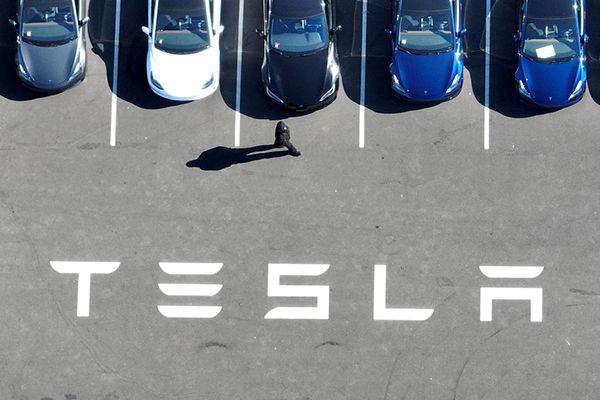
New Teslas in a parking lot at the factory in Fremont, California. Photo: Justin Sullivan/Getty Images.
Third-quarter deliveries and production to 30 September
- Deliveries of 486,532 vehicles, up from 480,126 in the previous quarter
- Total production of 464,391 vehicles, up from 451,758 vehicles in Q2
- Energy storage deployments of 13.7 GWh, up from 13.5 GWh in Q2
ii round-up:
Tesla Inc (NASDAQ:TSLA) has detailed quarterly vehicle deliveries (the nearest number it gives to sales) which topped Wall Street forecasts, likely aided by a backdrop of elevated fuel pump prices and an ongoing war in the Middle East.
Third-quarter deliveries to the end of September of 486,532 vehicles was up from 480,126 in the second quarter, beating analyst estimates of 461,100 vehicles. Energy storage deployments of 13.7 GigaWatt Hours (GWh) for the period improved from 13.5 GWh in Q2.
Shares in the Nasdaq 100 company rose 5% in US trading having come into this latest news down by around a fifth so far in 2026. German auto giants Bayerische Motoren Werke AG (XETRA:BMW) and Volkswagen AG (XETRA:VOW) have fallen by more than a third during that time. The Nasdaq 100 index is up by close to a fifth year-to-date.
- Invest with ii: Buy US Stocks from UK | Most-traded US Stocks | Cashback Offers
As well as electric vehicles (EVs), Tesla products include its self-driving robotaxi, a self-driving lorry cab known as the Tesla Semi, as well as a humanoid style robot called Optimus.
EV production of 464,391 vehicles during the quarter rose from 451,758 in Q2. Tesla makes its cars both in the US as well as in Germany and China.
The group’s budget ‘Model 3’ saloon and SUV ‘Y’ model continued to dominate, accounting for 98% of deliveries. No start of production date for its long awaited second generation Roadster model has been confirmed.
Third-quarter results are scheduled for 21 October.
ii view:
Started in 2003 by Martin Eberhard and Marc Tarpenning, Tesla is today headed by Elon Musk. Geographically, the US dominated in 2025 with 50% of all revenues, followed by China at 22% and other markets, including the UK and Europe, the balance of 28%.
For investors, rivals such as China’s BYD are now actively pushing their own competitively priced EV’s, with BYD sales in 2025 outpacing those of Tesla. Generating returns on expected annual 2026 capital expenditure of $25 billion via products including robotaxis and robots, now needs to be executed. An estimated price-to-net asset value (NAV) of almost 17 times compares to estimates for automotive rivals at under two times, suggesting the shares are not obviously cheap. Competition in the autonomous vehicles sector from the likes of Google owner Alphabet Inc Class A (NASDAQ:GOOGL)'s Waymo business is not the be ignored.
- Anthropic IPO: what UK investors need to know
- 10 tech fund winners that are leading the way in 2026
- Ian Cowie: the tonic to cure tech troubles
On the upside, Tesla summarises its ambition as revolutionizing transportation, energy and productivity with products such as self-driving taxis and robots, potentially generating significant profits going forward. Concerns about climate change have not gone away, with soaring energy prices following the war in the Middle East potentially underlining the cost benefits of EV ownership. Diversity of factories geographically and innovation in manufacturing techniques are aimed at reducing costs, while revenues away from selling cars of 27% during the second quarter was up from 14% in early 2023.
In all, intense EV competition and significant investment in areas yet to generate profits such as robots and robotaxis offers caution. That said, Tesla’s position as a key play on physical AI will likely please fans of this historically innovative company.
Positives:
- Climate change concerns persist
- Expanding network of superfast charging stations
Negatives:
- Rising competition from other manufacturers
- Potential regulatory hurdles for self-driving vehicles
The average rating of stock market analysts:
Strong hold
These articles are provided for information purposes only. Occasionally, an opinion about whether to buy or sell a specific investment may be provided by third parties. The content is not intended to be a personal recommendation to buy or sell any financial instrument or product, or to adopt any investment strategy as it is not provided based on an assessment of your investing knowledge and experience, your financial situation or your investment objectives. The value of your investments, and the income derived from them, may go down as well as up. You may not get back all the money that you invest. The investments referred to in this article may not be suitable for all investors, and if in doubt, an investor should seek advice from a qualified investment adviser.
Full performance can be found on the company or index summary page on the interactive investor website. Simply click on the company's or index name highlighted in the article.