Must read weekly preview: Sainsbury, AB Foods, Currys
Consumer behaviour will be front and centre next week with three key updates, writes ii’s head of markets.
26th June 2026 12:25
by Richard Hunter from interactive investor
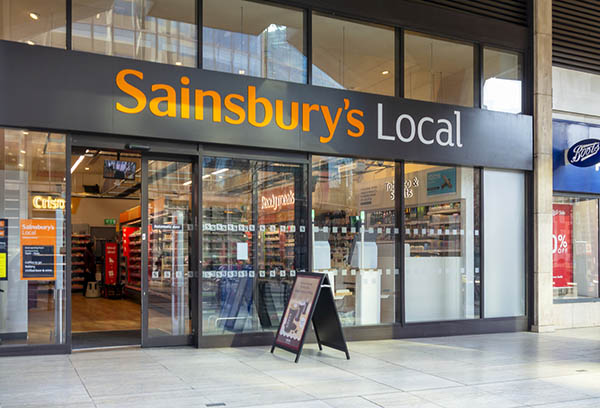
Sainsbury Q1 – Tuesday 30 June
There was more than a tinge of disappointment accompanying the full-year results in April, which came up against higher expectations leading into the numbers, quite apart from any potential impact of the Middle Eastern conflict. The numbers were solid, as perhaps had been expected, but shy of some of the loftier estimates being attached to the group.
- Our Services: SIPP Account | Stocks & Shares ISA | See all Investment Accounts
Revenues excluding fuel rose by 4.9% to £25.9 billion, but retail underlying profit fell by 1.1% to £1.025 billion, marginally lower than the £1.03 billion which had been pencilled in. Similarly, underlying pre-tax profit of £718 million, while up by 1.3% year on year, was lower than the £730 million which had been expected. Sainsbury (J) (LSE:SBRY) highlighted that significant operating cost inflation and investment in value to keep prices lower for consumers were the main drivers of any lighter numbers.
Nonetheless, underneath the bonnet there were some signs of further progress. Grocery remains central to the group’s efforts, accounting for 72% of overall sales, and revenues grew by 5.2% over the year to £24.26 billion, with the likes of the group’s Aldi Price Match and Your Nectar Prices proving popular. Indeed, the company estimates that over the current three-year strategic period Nectar will provide incremental profit of £100 million. The group is already ahead of plan with the target, which would be a significant bonus given the ferocity of competition which the sector attracts. The Taste the Difference range also continued to fire ahead, with the group adding around 600 new products over the year, with the range as a whole enjoying an increase of 16% in sales and ahead of the group’s £2 billion target. Other highlights were groceries online sales, which spiked by 13% and fresh food overall which rose given the group’s additional focus on healthier choices.
Argos remains a work in progress after some years in the doldrums on reduced discretionary spend. Sales eked out a gain of 0.7% to £4.1 billion for the year, with an increase of 3.7% in volumes offsetting average selling prices which were 3% lower. The Christmas and Black Friday period turned out to be a disappointment as previously announced by the company, where a tough promotional market resulting in lower prices, a weak gaming market and subdued consumer confidence took their toll. Accounting for 16% of group revenues, the unit remains something of a thorn in the side for the group as a whole, although Sainsbury seems committed for the time being, taking “determined action to accelerate the transformation of Argos” including a wish to improve the customer proposition.
- AGM alert: Vodafone, United Utilities, SSE
- Why Tesco and Sainsbury’s shares now offer ‘good entry point’
Those results covered the year to the end of February and therefore contained no element whatsoever of the conflict in the Middle East. Sainsbury was understandably cautious and vague on the outlook, with the only meaningful change being conservative guidance relating to this year for underlying operating profit in a range of between £975 million and £1.075 billion, which leaves some room for manoeuvre depending on the eventual outcome. Retail cash flow is again expected to exceed £500 million, which again is not a stretching target compared to this year’s number. The results as a whole shook investor confidence and it will be hoped that this first-quarter update shows some reasons for optimism. In the meantime, shareholder returns remain in focus with an additional tranche of £200 million planned for a share buyback programme, while the previous payment of a special dividend lifts the current yield to a punchy (if temporary) 8%, underneath which an ordinary yield of 4.5% is nonetheless attractive. The shares have fallen by 6% so far this year but are 7% ahead over the last 12 months, and it remains to be seen whether the cautiously optimistic market view of the stock remains justified.
Associated British Foods trading statement – Wednesday 1 July
Confirmation of the Primark demerger grabbed the headlines at the half-year results in April, but it was not enough to mask something of a kitchen-sinking exercise across the group. The rationale for the demerger, which is planned to take place before the end of 2027, is clear even though the Primark business is facing a “difficult” clothing market, especially in Europe. The unit, long since the group’s jewel in the crown and accounting for half of group revenues, is possibly reaching a size where it requires laser focus to capitalise on its own growth prospects, particularly overseas where the greatest potential is seen.
In the meantime, Primark’s half-year performance was not a strong advert for a standalone business. While the UK segment held up, with a 2% increase in sales to £4.66 billion and like-for-like growth of 1.3%, adjusted operating profit plunged by 14% to £471 million with margin declining from 12.1% to 10.1%, driven by European weakness. A like-for-like sales decline of 5.6% marred the overall numbers, even though store openings in the US drove sales 12% higher. However, the US accounts for just 6% of overall Primark revenues at present, making this particular market a “jam tomorrow” contributor.
At the same time, Associated British Foods (LSE:ABF) considers that the market does not fully appreciate its other units, despite its portfolio, expertise and potential. As such, it feels that the sugar, grocery, ingredients and agriculture businesses would be better served by hiving off the Primark business so that investors can fully focus on the exposure to foods which gives the group its name. Unfortunately, at the current time, these units are providing little solace. The Grocery business is the group’s second largest, accounting for 22% of overall revenues. Weak consumer demand in the US contributed to a 20% decline in adjusted operating profit to £179 million. Ingredients at 11% of group revenues comes next, but weak market demand for bakery ingredients resulted in a 7% decline in adjusted operating profit. The remaining units, Sugar and Agriculture, did little to lift the mood. Sugar is now expected to fall to an adjusted operating loss for the year as a whole following a £27 million deficit this half, with lower average prices in Europe, while adjusted operating profit in Agriculture dropped by 54% to just £6 million.
- Trading Strategies: an overlooked FTSE 100 stock to consider
- Sign up to our free newsletter for investment ideas, latest news and award-winning analysis
Unsurprisingly, then, the overall numbers made for bleak reading. Revenues fell by 2% to £9.47 billion, adjusted operating profit by 18% to £691 million and adjusted pre-tax profit by 19% to £663 million, against expectations of £688 million. An unchanged dividend which currently yields 3.3% and an ongoing £250 million share buyback programme may cushion some of the blow and the profit warning in January may have limited the damage which might otherwise have been wrought on the share price at the open. The group is expecting a much stronger second half, although its guidance for the year as a whole remains at the levels which it previously revised downwards. The shares have declined by 10.5% so far this year and by 22% over the last two years, and investors will now be going back to the drawing board to mull over the challenging position in which the group is currently trapped, let alone the additional distraction of the demerger.
Currys FY – Thursday 2 July
A trading statement in May revealed that Currys (LSE:CURY) remained in full delivery mode following a glowing performance over its peak trading period which led to a profit guidance upgrade. Indeed, the group went one step further, expecting adjusted pre-tax profit for the year to be around £191 million, higher than the previously guided range of £180 million to £190 million, which would be 18% higher than the corresponding period. In addition net cash, which had been expected to hit a level of £100 million, is now estimated to be in excess of £170 million. This in turn suggests that further shareholder returns are in sight, where a previous £50 million share buyback programme accompanied a return to the payment of a dividend, even though the 1.5% yield is pedestrian for the time being
A highlight within that update was the contribution from the Nordics business, previously a material thorn in the side for the group, given that it accounts for 40% of overall revenues. Since the peak period, like-for-like sales grew by 4% and by 8% over the second half, leading to growth of 6% for the full year. The omnichannel offering is beginning to hit the spot, while market share gains, strong demand for kitchens and new categories and a broadly stable gross margin are all helping the healing process.
- ii view: might Currys benefit from AI upgrades?
- What a Burnham premiership could mean for your long-term wealth
The rest of the group’s business is in the UK & Ireland, which saw growth in market share, B2B, Services and New Categories which was enough to offset cost headwinds. The strategy to target higher margin revenue streams provides a strong backdrop and also brings recurring income, such as its mobile plans, Care and Repair, credit provision and protection plans. The group’s omnichannel offering continues to bear fruit, and indeed two-thirds of customers prefer to shop in store, partly as a result of the expert advice available on a face-to-face basis. This can also lead to a longer relationship with the customer as well as the potential of cross-selling.
Of course, Currys cannot guarantee an unfettered run in growing its business. Quite apart from the ongoing repair work being undertaken in the Nordics, the outlook for the economy is currently unstable, which could crimp consumers’ propensity to spend, especially on discretionary items such as computing. The announcement in March that the CEO would be stepping down was met with much disappointment and resulted in a share price decline of 10% on the day. However, that fall has now been reversed. The shares are up by 20% so far this year and by 99% over the last two. With what was previously described as a limited impact from the Middle East conflict and hedged energy costs, appetite for the stock is apparently undiminished.
These articles are provided for information purposes only. Occasionally, an opinion about whether to buy or sell a specific investment may be provided by third parties. The content is not intended to be a personal recommendation to buy or sell any financial instrument or product, or to adopt any investment strategy as it is not provided based on an assessment of your investing knowledge and experience, your financial situation or your investment objectives. The value of your investments, and the income derived from them, may go down as well as up. You may not get back all the money that you invest. The investments referred to in this article may not be suitable for all investors, and if in doubt, an investor should seek advice from a qualified investment adviser.
Full performance can be found on the company or index summary page on the interactive investor website. Simply click on the company's or index name highlighted in the article.