ii view: retailing juggernaut Next powers ahead
Generating almost three-fifths of profits online. Analyst Keith Bowman assesses prospects.
5th June 2026 11:17
by Keith Bowman from interactive investor
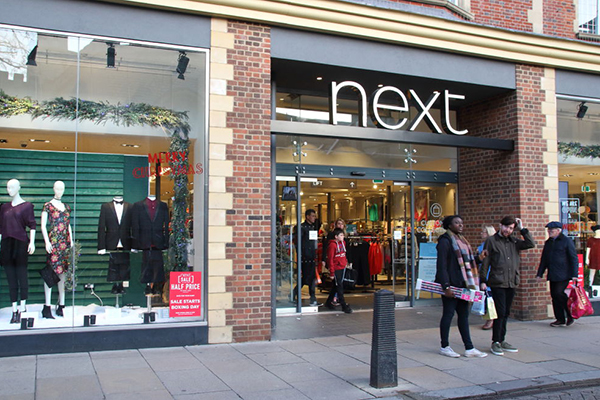
Next store in Cambridge. Photo: Keith Mayhew/SOPA Images/LightRocket via Getty Images.
First-quarter trading update to 2 May
- Full price sales up 6.2% compared to a year ago
- UK sales up 4.4%
- International online sales up 12.8%
Guidance
- Now expects full-year full price sales to rise by 5%, up from a previous 4.5%
- Now expects full-year pre-tax profit of £1.22 billion, up from a previous estimate of £1.21
ii round-up:
Next (LSE:NXT) is a retailer of clothing and homeware products, selling both its own and third-party branded goods.
The Next Online business, including both UK and overseas, accounted for 59% of overall profits over the group’s last financial year to 31 January 2026.
The Next Retail or store business generated 19% of profits. The Consumer Credit or Finance business generated a further 16% of profits, with most of the 6% balance coming from the relatively new Total Platform and Investment business, where it invests in and outsources the use of its online operations to others.
For a round-up of this latest trading update announced on 6 May, please click here.
ii view:
Tracing its roots back to 1864, the retailer today employs more than 30,000 people. Headquartered in Leicester and a constituent of the FTSE 100 index, Next’s competitors include Marks & Spencer Group (LSE:MKS), ASOS (LSE:ASC), Associated British Foods (LSE:ABF) owned Primark, and even clothes and homewares sold by supermarkets Tesco (LSE:TSCO) and Sainsbury (J) (LSE:SBRY). Investments made in and users of its Total Platform business include Reiss, FatFace, Joules and Cath Kidston.
Geographically, the UK made most sales at 77%, followed by Europe at 14%, the Middle East at 5%, Asia at 1% and the rest of the world the 3% balance.
- Learn more: SIPP for the Self-employed | Are SIPPs worth it? | Open a SIPP
For investors, the Middle East conflict has caused an increase in costs with sales for the region initially dipping before making some recovery. Potentially higher inflation from the conflict could result in elevated future interest rates and a broader slowing in consumer spending. An estimated future price/earnings (PE) ratio above the three- and 10-year averages may suggest the shares are not obviously cheap. The importance of the weather in impacting customer demand cannot be forgotten, while the eventual question of succession planning for CEO Lord Wolfson deserves some thought given his importance to the company.
On the upside, management plans to counter increased costs via the Middle East through heightened cost savings and product price rises for the region. The retailer’s broad strategic pushes include a move to becoming a global brand and retailer, developing new brands, as well as growing the Investment and Total Platform business. Group investment in stores, technology and warehouses is ongoing, while a focus on shareholder returns, predominantly via share buybacks at the moment, leaves the shares sat on an estimated future dividend yield of around 2%.
For now, and despite ongoing risks, this well-managed UK and overseas retailer continues to justify its place in many already diversified investor portfolios.
Positives:
- Product and channel diversity
- Majority of sales and profits generated online
Negatives:
- Uncertain economic outlook
- Chief executive considered key in prospects
The average rating of stock market analysts:
Strong hold
These articles are provided for information purposes only. Occasionally, an opinion about whether to buy or sell a specific investment may be provided by third parties. The content is not intended to be a personal recommendation to buy or sell any financial instrument or product, or to adopt any investment strategy as it is not provided based on an assessment of your investing knowledge and experience, your financial situation or your investment objectives. The value of your investments, and the income derived from them, may go down as well as up. You may not get back all the money that you invest. The investments referred to in this article may not be suitable for all investors, and if in doubt, an investor should seek advice from a qualified investment adviser.
Full performance can be found on the company or index summary page on the interactive investor website. Simply click on the company's or index name highlighted in the article.