Party conference round-up: what the major parties propose for your money
During conference season, the five main political parties revealed their policy plans with the state pension, inheritance tax and fiscal drag among key areas of debate.
15th October 2026 11:23
by Rachel Lacey from interactive investor
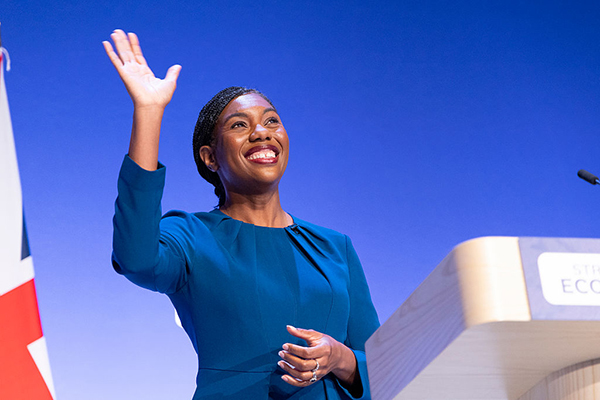
Kemi Badenoch, leader of the Conservative Party, delivers a speech to the Conservative Party Conference on 7 October in Birmingham. Photo: Nicola Tree/Getty Images.
Party conferences give the major UK political parties the opportunity to showcase their plans to their members – and the world at large.
For Labour, it’s an opportunity to debate its long-term plans for the country. For opposition parties, it’s the chance to discuss what they would do differently, if they came to power.
And this year there has been no shortage of headline-grabbing proposals for policy change, covering everything from the triple lock and the personal allowance to inheritance tax (IHT) and social care.
Now, with the 2026 conference season complete, we round up the key announcements from the major parties that will affect you and your wealth (in the order the events were held).
Reform (3-5 September)
Treasury spokesperson and Tory defect Robert Jenrick used his keynote speech to confirm that Reform would increase the personal allowance to £15,000 a year in its first 100 days (up from £12,570), with a view to eventually taking it to £20,000.
According to Reform estimates, the move would cost £17.7 billion in its first year but benefit up to 40 million people.
The tax cut would be funded by £80 billion in public spending cuts, including a reported £50 billion from welfare.
But while Reform had previously said it would increase the nil rate band for inheritance tax to £2 million in 2024 and reduce the rate to 20%, it now appears to be backtracking on that proposal.
Danny Kruger MP, however, is reported to have told the National Farmers Union (NFU) that Reform would reverse the changes to agricultural property relief bought about by the last Finance Act.
Liberal Democrat (19-22 September)
Lib Dem leader Ed Davey also announced a plan to increase the personal allowance to £15,000 - in time - if the party won the next election.
However, the Lib Dems also want to take income tax reductions further, by increasing the higher-rate threshold to £56,000 (up from £50,271), undoing the impact of fiscal drag from frozen allowances. “A tax band designed for stockbrokers is now holding back teachers and nurses. That’s not fair. It’s not right,” he said.
The cuts, he said, would be funded by growth generated by improved trade relations with the European Union, rather than a reduction in spending. As such, they would not be expected until 2034 at the earliest.
- What you need to know about ISAs and how they’ll soon change
- Case study: managing a £1.25m pension and ISA portfolio in midlife
Labour (27-30 September)
The headline announcement from Prime Minister Andy Burnham was his plan to launch a National Care Service in the next parliament, to provide free personal care for all over 65s who need it.
The move would ease pressures on the families of older people, who frequently find themselves selling the family home to pay for care bills.
Three in four over 65 will require some care or support in later life, with one in seven being forced to shell out more than £100,000 to cover the costs.
Entitlement for help with bed and board costs would be means-tested, but personal care, which includes help with eating, washing, mobility and going to the toilet would be free of charge.
Free personal care is already available in Scotland.
But it’s Burnham’s means of funding the new service that really grabbed the headlines.
The prime minister finally “ripped the plaster off” and announced plans to scrap the triple lock from April 2030.
Instead of increasing the state pension by the highest of inflation, earnings growth or 2.5% each year, a new “adjusted triple lock” would be introduced. This would see the state pension rise at a rate of inflation or 2.5%, with an additional link to ensure increases keep up with wage growth over time.
- Autumn Budget preview and triple lock change explained
- Burnham’s triple lock shake-up and what it could mean for pensioners
Government forecasts suggest that the policy would save £15 billion a year by the end of the 2030s and up to £50 billion from 2050. However, critics have stressed these savings wouldn’t be enough to fully fund the new service.
Previously, Burnham had talked about introducing a universal 10% levy on death to pay for social care.
Turning to the struggles of first-time buyers, the prime minister also announced the launch of a new scheme called “Your First Home”. This would provide an equity loan to help first-time buyers purchase new-build properties with a deposit of just 2.5%. Further details are expected in the Autumn Budget on 28 October.
Behind the scenes, there were also more calls for the introduction of a wealth tax. A motion was moved by Unite and the Union of Shop, Distributive and Allied Workers. But while party delegates may have voted in favour of the motion, it’s more an indication of sentiment within the party rather than a sign of imminent policy change.
Green (2-4 October)
On the finance front, the Greens focused on better deals for private renters, with a proposal for new restrictions for rent increases from landlords.
Green party leader Zack Polanski also repeated ongoing calls for increased taxes on “extreme wealth” and a windfall tax on bank profits.
Conservative (4-7 October)
Conservative leader Kemi Badenoch used the Tory conference to demonstrate the party’s commitment to Middle England.
Shadow chancellor Andrew Griffith opened his speech with a rallying mission to scrap one tax every Budget.
Among the first taxes he’s set his sights on is the contentious mansion tax, which will be levied on English homes worth more than £2 million from April 2028.
Badenoch then announced that the Conservatives would also abolish stamp duty on all main residences.
But the biggest announcement was around what’s often dubbed the UK’s most hated tax - IHT.
Under the new proposals, no tax would be charged on family homes passed to children or grandchildren – irrespective of their value. The combined tax-free allowance would also be increased to £1 million for couples (suggesting a simpler £500,000 individual nil rate band).
That would mean couples could pass on £1 million to loved ones, plus their property before IHT would be charged on their estate (compared to £1 million total today – including the family home).
Badenoch also said that the Conservatives would strive to scrap IHT altogether as soon as it is affordable to do so.
But even the first wave of change will be staggeringly expensive.
According to Oxford Economics, increasing the threshold for IHT would cost £6.6 billion a year in its first year alone (2029-30).
The leader said that bill would be footed by cuts to the welfare bill.
Currently, less than 5% of estates pay IHT but the Office for Budget Responsibility (OBR) has forecast that will double to one in 10 as soon as 2030, thanks to the ongoing freeze on the nil rate band and rising house prices.
An additional 10,500 estates will also pay IHT from 6 April 2027, when unspent pension funds also become subject to the tax.
- Pensions and IHT: the countdown to new tax rules has started
- The conversations that could slash your inheritance tax bill
By increasing the tax threshold, Oxford Economics has predicted the number of people paying IHT will halve.
But critics have been quick to point out that the policy risks turning the family home into a vehicle for inter-generational wealth transfer.
Older people would be incentivised to buy bigger, more expensive properties and would be less likely to downsize – causing distortions in the housing market (for, example reducing the supply of larger family properties for younger buyers).
Turning to working parents, the Tories also committed to scrapping the “cliff edge” that sees families where one partner earns £100,000, lose valuable support with childcare costs.
This includes 30 hours of free childcare for pre-school children and the tax-free childcare scheme.
- The pension trick saving parents thousands in tax and free childcare
- Sign up to our free newsletter for investment ideas, latest news and award-winning analysis
Badenoch also said that she would reverse the government’s recent move to charge VAT on private school fees.
Finally, turning to the problem of youth unemployment, she confirmed plans to make it cheaper for businesses to hire younger workers by halving the rate of employer national insurance contributions for 21–24-year-olds from 15% to 7.5%.
These articles are provided for information purposes only. Occasionally, an opinion about whether to buy or sell a specific investment may be provided by third parties. The content is not intended to be a personal recommendation to buy or sell any financial instrument or product, or to adopt any investment strategy as it is not provided based on an assessment of your investing knowledge and experience, your financial situation or your investment objectives. The value of your investments, and the income derived from them, may go down as well as up. You may not get back all the money that you invest. The investments referred to in this article may not be suitable for all investors, and if in doubt, an investor should seek advice from a qualified investment adviser.
Full performance can be found on the company or index summary page on the interactive investor website. Simply click on the company's or index name highlighted in the article.