Countdown to SpaceX IPO: key details imminent
Excitement is building ahead of a stock market listing that could rank as the biggest ever. Here’s the latest speculation around the timeline for SpaceX’s debut.
19th May 2026 15:33
by Graeme Evans from interactive investor
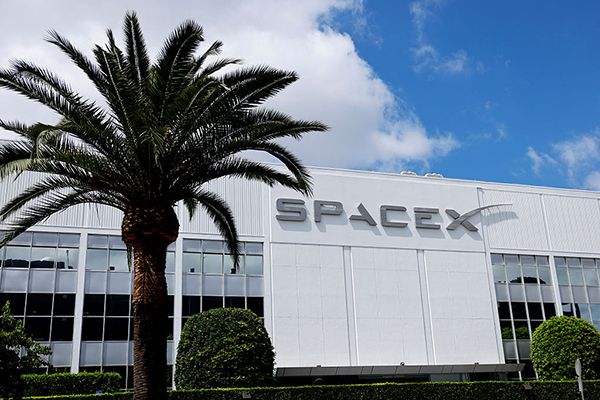
A SpaceX facility in Hawthorne, California. Photo: Mario Tama/Getty Images.
The numbers behind the record-breaking SpaceX IPO could be revealed tomorrow as Elon Musk’s space transportation company begins the countdown to a possible 12 June debut.
The filing of the SpaceX prospectus, which includes key financial metrics as well as Musk’s ownership arrangements post the initial public offering (IPO), would pave the way for a period of marketing prior to the launch of the formal investor roadshow from 4 June.
- Invest with ii: Most-traded US Stocks | Buying US Shares in UK ISA | Cashback Offers
The level of demand from institutions and retail investors during this offer period will determine whether SpaceX is on track for a valuation as high as $2 trillion (£1.49 trillion).
SpaceX has already indicated that the retail element of the offer will be bigger than any IPO in history, with potentially up to 30% of available shares set for non-institutional investors.
Based on the current suggested IPO timeline - first reported by Reuters at the end of last week - retail investors will have until Wednesday 10 June to apply via intermediaries.
They will be notified of their allocations and the offer price by 6am on Friday 12 June before the start of Nasdaq dealings at 2.30pm UK time later that day. All these dates are subject to change.
- SpaceX IPO: everything you need to know
- The new space race: are private markets positioned for lift off?
- Ian Cowie: why I’ve bought Scottish Mortgage
SpaceX, whose operations span reusable rocket launches, Starlink satellite broadband, artificial intelligence (AI) and social media, will be looking to raise $75 billion or more in the listing.
That would comfortably exceed the world record fundraising by Saudi Aramco, which generated $25.6 billion through the sale of about 1.5% of the company in a December 2019 listing.
A valuation of more than $1.75 trillion would make SpaceX more valuable than Meta Platforms Inc Class A and Tesla Inc but still some way short of NVIDIA Corp at $5.4 trillion and Google-owner Alphabet Inc Class A at $4.7 trillion.
The entire value of the FTSE 100 index is about $3.2 trillion (£2.4 trillion), led by HSBC Holdings with a market capitalisation of $306.7 billion.
The developments will be closely watched by holders of Scottish Mortgage Ord, given that the business it first backed in 2018 now accounts for 17.9% of the portfolio.
The stake has delivered a total return of 1,197% in the five years to the end of 2025, only bettered over the same period by Scottish Mortgage’s Nvidia holding at 1,364%.
Another early backer was Alphabet, which now holds a stake of about 6% after participating in a 2015 funding round that raised $1 billion and valued SpaceX at $12 billion.
Other beneficiaries of a successful IPO will include the Wall Street banking sector, given that JPMorgan Chase & Co and Citigroup Inc are thought to be among at least 20 institutions set to share a $1 billion fees windfall from their involvement in the process.
The move will also set the tone for other mega-cap listings, potentially Anthropic and OpenAI, after AI infrastructure firm Cerebras Systems Inc Class A last week jumped 68% on its IPO for a valuation of $95 billion.
The release of the SpaceX prospectus will be the first time it has filed public financial statements. Reports have said it generated more than $18.5 billion in revenues from launch services and satellite broadband operations last year, with adjusted earnings of $6.5 billion.
Much of the company’s growth comes from aviation and maritime connectivity contracts, as well as government agreements for emergency communications.
The primary growth engine is Starlink, which now has 10,000 satellites in low-Earth orbit providing broadband connectivity to more than 10 million customers worldwide.
- SpaceX: trusts to gravitate towards for exposure
- Sign up to our free newsletter for investment ideas, latest news and award-winning analysis
- Fund manager pessimism melts away
The vertical integration of SpaceX has been crucial to Starlink’s success, given the cost benefit of reusable Falcon 9 rockets within the launch and transportation side of the business.
SpaceX has launched more rockets than any government programme in history, with 170 in 2025 and 138 in 2024 representing an orbital launch roughly every two days.
SpaceX’s Starship spacecraft is a fully reusable transportation system designed to carry both crew and cargo to Earth orbit and eventually the Moon and beyond.
This year, Starship will begin delivering the much more powerful V3 Starlink satellites to orbit, with each launch adding more than 20 times the capacity to the constellation as the current Falcon launches of the V2 Starlink satellites.
Starship will also launch the next generation of direct-to-mobile satellites, which will deliver full cellular coverage everywhere on Earth.
Meanwhile, February’s merger of SpaceX and Musk’s artificial intelligence start-up xAI has reinforced his vision of space-based data centres as the answer to the energy needs of AI firms.
These articles are provided for information purposes only. Occasionally, an opinion about whether to buy or sell a specific investment may be provided by third parties. The content is not intended to be a personal recommendation to buy or sell any financial instrument or product, or to adopt any investment strategy as it is not provided based on an assessment of your investing knowledge and experience, your financial situation or your investment objectives. The value of your investments, and the income derived from them, may go down as well as up. You may not get back all the money that you invest. The investments referred to in this article may not be suitable for all investors, and if in doubt, an investor should seek advice from a qualified investment adviser.
Full performance can be found on the company or index summary page on the interactive investor website. Simply click on the company's or index name highlighted in the article.