Market snapshot: more questions than answers for investors
As global financial markets show little sign of calming down, ii's head of markets looks at what's driving the volatility and how stock prices are moving right now.
11th June 2026 08:35
by Richard Hunter from interactive investor
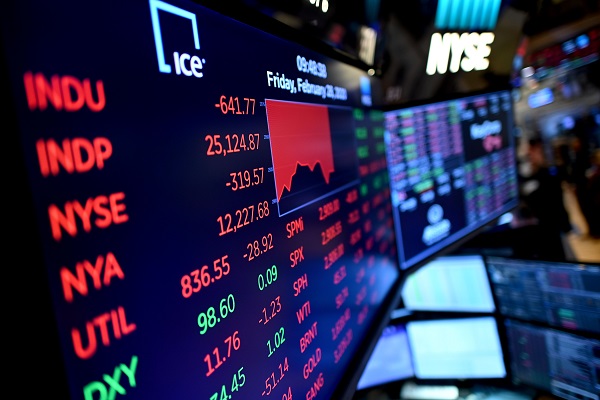
The AI trade continues to pose more questions than answers, sending US and in turn Asian markets lower as investors mull the next steps.
- Our Services: SIPP Account | Stocks & Shares ISA | See all Investment Accounts
The reasons for the recent sell-off are unclear and have drawn differing theories. At best, investors could simply be repositioning and raising funds in advance of hugely anticipated US IPOs this year. Money set aside for them could run into hundreds of billions of dollars which has to come from somewhere.
Equally, there are signs that investors are becoming more selective in the tech space, with weakness in certain stocks suggesting there will ultimately be winners and losers, and these will need to be separated. At the same time, some spending plans are rattling investors, and Oracle Corp (NYSE:ORCL) was the latest casualty as its shares fell by 10% in after-hours trade after announcing a $40 billion raise for further investment.
- Tech stocks spooked by US inflation at 3-year high
- Has tech sector sell-off called top of the market?
Another possibility is that some air is being let out of the tyres after what has been a stellar run for tech and chip stocks in particular. NVIDIA Corp (NASDAQ:NVDA) has a disproportionate weighting on the S&P500 and its near 4% drop was a prime reason for the fall in the index, while another recent star Broadcom Inc (NASDAQ:AVGO) fell 5%, alongside losses for Advanced Micro Devices Inc (NASDAQ:AMD) and Micron Technology Inc (NASDAQ:MU). More positively, these recent share price falls ease some of the valuation concerns, although pressure will remain on earnings which will need to keep pace to keep valuations in check.
Meanwhile, the increasingly loose definition of a ceasefire in the Middle East is becoming meaningless, as the US and Iran carried out targeted attacks on each other. President Trump ramped up the rhetoric once more by promising further “very hard” attacks as negotiations had taken too long, while Iran threatened to target vessels passing through the Strait of Hormuz.
- eyeQ: watch for green light on S&P 500 trade
- AI boom or bubble? How to navigate risks and opportunities
With little light at the end of the negotiating tunnel, oil prices spiked once more, although the price remains comfortably under $100 per barrel. Nonetheless, the rise had its effect, with the likes of United Airlines Holdings Inc (NASDAQ:UAL) and cruise-operator Carnival Corporation Ltd (NYSE:CCL) each falling by more than 6% in anticipation of higher fuel bills for travel companies.
May’s Consumer Price Index reading was bang in line with expectations, with the core reading rising by 0.2%, annualised to 2.9%, although the headline rate nudged over 4% for the first time in three years. With a blowout jobs report the most recent indication of the labour market, the Federal Reserve has its work cut out as its dual mandate which covers inflation and the labour market would in normal circumstances lead to an interest rate hike. This is increasingly being priced in by the market before the end of the year.
- The Income Investor: a FTSE 100 stock with dividend potential
- Why Tesco and Sainsbury’s shares now offer ‘good entry point’
Despite the cocktail of concerns, the main indices remain comfortably ahead in the year to date, with gains of 3.9%, 6.2% and 8.3% for the Dow Jones, S&P500 and Nasdaq respectively.
The FTSE100 marginally escaped the dour sentiment emanating from other global markets, with small gains at the open given its relative lack of exposure to big tech. Some of the index heavyweights which had been under pressure given their exposure to Hong Kong and China reaped the benefit of renewed buying interest, with decent gains for the likes of Prudential (LSE:PRU), HSBC Holdings (LSE:HSBA) and Standard Chartered (LSE:STAN). Selective buying among the miners also helped to nudge the primary index higher.
- Self-employed? Why it pays to start your pension now
- Sign up to our free newsletter for investment ideas, latest news and award-winning analysis
In the year to date, the FTSE100 has now added 3.5%, although it remains more than 6% lower than the record high set in February. Its average dividend yield of 3.1% is a stable and additional attraction for investors, and while the index could be viewed as a global tracker on many fronts, the absence of a large tech presence has tended to be both a blessing and a curse this year depending on the global backdrop and investor risk appetite.
These articles are provided for information purposes only. Occasionally, an opinion about whether to buy or sell a specific investment may be provided by third parties. The content is not intended to be a personal recommendation to buy or sell any financial instrument or product, or to adopt any investment strategy as it is not provided based on an assessment of your investing knowledge and experience, your financial situation or your investment objectives. The value of your investments, and the income derived from them, may go down as well as up. You may not get back all the money that you invest. The investments referred to in this article may not be suitable for all investors, and if in doubt, an investor should seek advice from a qualified investment adviser.
Full performance can be found on the company or index summary page on the interactive investor website. Simply click on the company's or index name highlighted in the article.