Has tech sector sell-off called top of the market?
After making huge gains in the past five years, it’s now a question of whether recent selling is merely a pause before a move higher or sign of something more sinister. Analyst John Ficenec shares his view.
9th June 2026 13:41
by John Ficenec from interactive investor
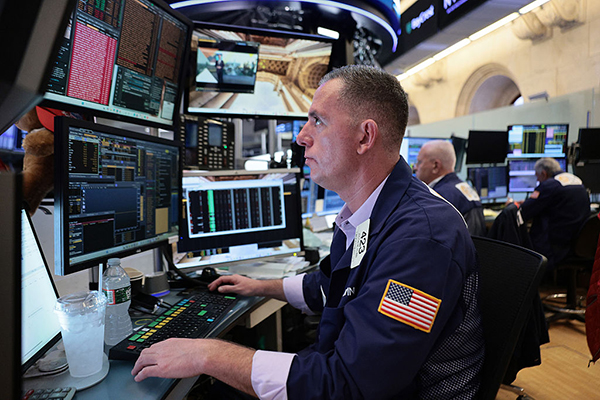
A trader on the floor of the New York Stock Exchange last week. Photo: Michael M. Santiago/Getty Images.
Steep falls in semiconductor stocks, a stampede to raise record levels of capital from the equity market, and mind-blowing gains in US markets all raise the question: “Have we reached the top?”.
There will be no bell to mark the peak of this bull market, and some important indicators suggest it may already be behind us, which begs the question of how best to invest in this market cycle?
- Learn more: SIPP for the Self-employed | Are SIPPs worth it? | Open a SIPP
Euphoria or a new paradigm?
Therein lies the question of where we are in the market cycle. Because what we have now looks an awful lot like the euphoria that comes hand in glove with the top of the market. Market cycles have many stages but are typified by depression and despondency at the bottom and euphoria and extreme valuations at the peak. The underlying companies are performing well, but the buying is not ruled by rational thinking alone, but a fear of missing out.
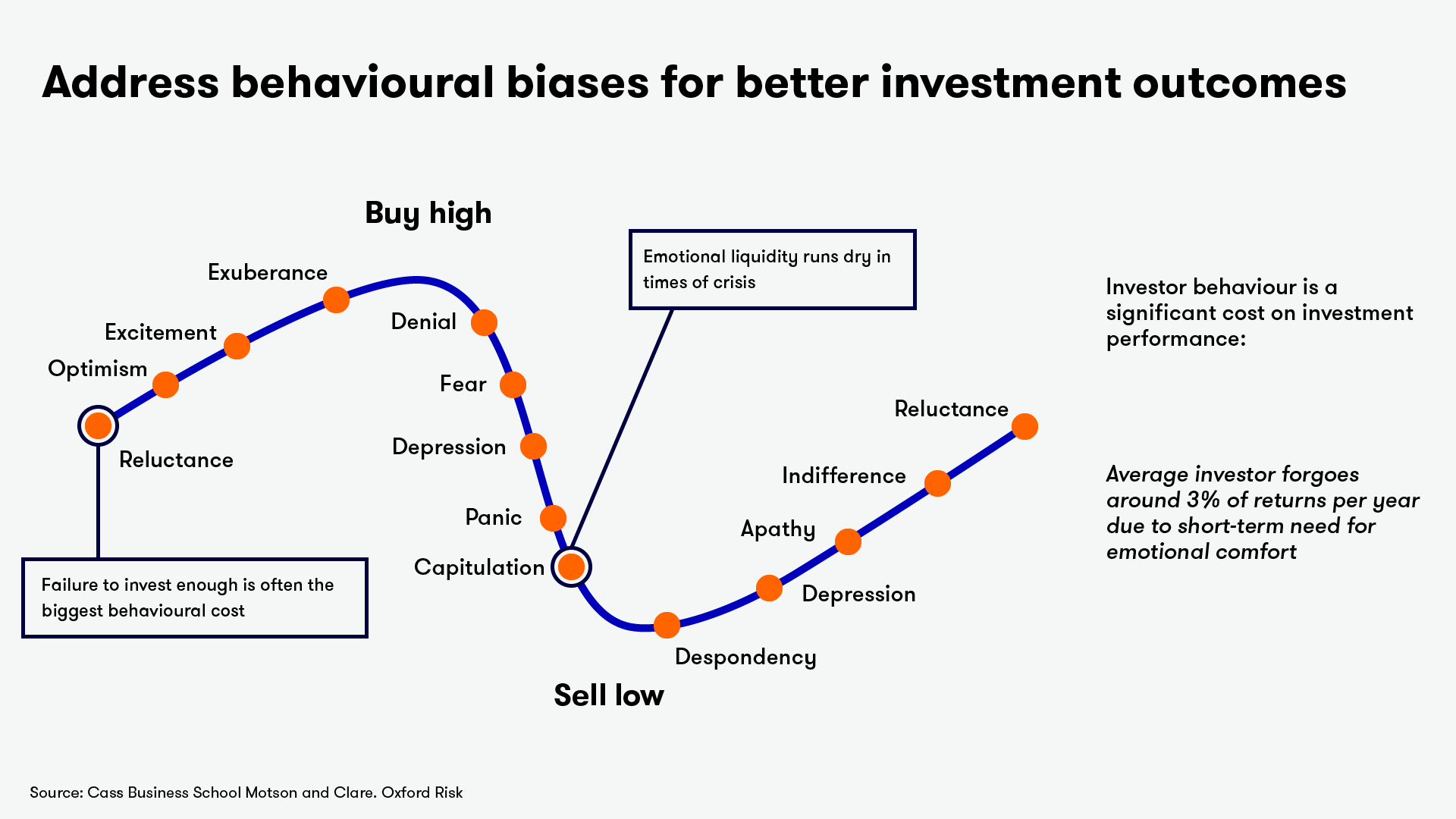
Henry Allen, analyst at Deutsche Bank, has shown that the rapid 16% gain in the S&P 500 over the past two months has only been seen four times since the Second World War. On three of those occasions, it was a bounce back from a recession after the 1973 oil shock, the 2008 banking crisis, and the 2020 Covid-19 pandemic. The other was just before the Black Monday crash in 1987.
The prices being paid for many technology shares today include a lot of good news, with the revenue and profit forecasts including huge growth in spending on data centres throughout this year and into the next. The issue here is execution and funding risk with little margin for error. Delays or difficulties during construction will hurt those lofty ratings.
Dell Technologies Inc Ordinary Shares - Class C (NYSE:DELL) is a good example here as first-quarter revenue increased by $21 billion (£15.7 billion) to $44 billion, from $23 billion a year earlier. However, of that $21 billion increase some $8 billion went into receivables and $5 billion into inventories, so some 60% of the headline sales growth is revenue booked but cash yet to be collected, and that’s dependent on delivering contracts successfully.
- AI boom or bubble? How to navigate risks and opportunities
- Iran war 100 days: how stocks and markets have performed
Execution risk can lay low some of the fastest growing companies. In a totally different industry Lululemon Athletica Inc (NASDAQ:LULU), the sportswear apparel maker famous for its yoga pants, reported double-digit growth in 2023 after record sales in China. At this point management were confident they could double revenue from $6.2 billion in 2021 to $12.5 billion in 2026. However, tastes changed, competition increased and growth stalled. The shares peaked at over $500, trading on 76 times earnings, at the end of 2023, and have since fallen nearly 80% to $114.
Parabolic performance
First there was the Magnificent Seven US technology stocks - NVIDIA Corp (NASDAQ:NVDA), Apple Inc (NASDAQ:AAPL), Microsoft Corp (NASDAQ:MSFT), Amazon.com Inc (NASDAQ:AMZN), Alphabet Inc Class A (NASDAQ:GOOGL), Meta Platforms Inc Class A (NASDAQ:META) and Tesla Inc (NASDAQ:TSLA) - that have powered markets for the past two decades. They make up around a third of the S&P 500 by market value and have been driving returns in the index.
During the past three years, the Mag7 were responsible for more than half the S&P 500 total return of 73.2%. With the S&P gaining another 8% so far this year and forecast for 16.9% to the year end, that would mark a fourth year of double-digit gains, something that was only last achieved in the period 1995 to 1999.
More recently, the baton of stock market gains has been passed to the Parabolic 7, the US manufacturers of hardware needed to kit out the data centres to power AI. These companies - SanDisk Corp Ordinary Shares (NASDAQ:SNDK), Marvell Technology Inc (NASDAQ:MRVL), Broadcom Inc (NASDAQ:AVGO), Advanced Micro Devices Inc (NASDAQ:AMD), Micron Technology Inc (NASDAQ:MU), Intel Corp (NASDAQ:INTC) and Dell - are so called because of the near vertical trajectory of their share prices.
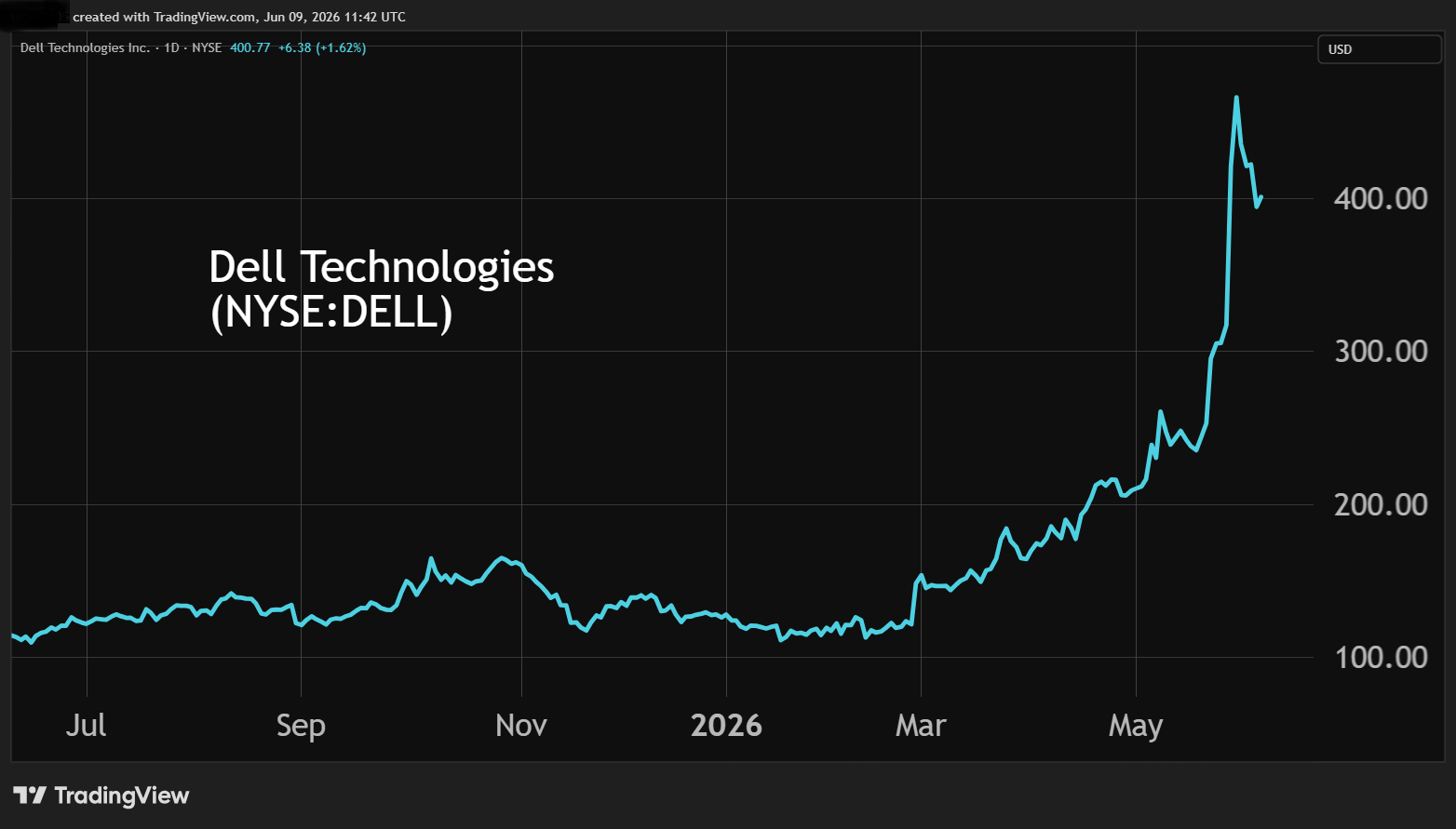
Source: TradingView. Past performance is not a guide to future performance.
Until last year many of these companies had been in the doldrums, largely left behind by the tech boom. Dell was grappling with being left flat-footed by the move to handheld devices and smartphones, instead focusing on desktops for too long. Intel was designing chips but nothing that could handle the raw power of AI demands.
What changed was the investment boom into data centres, with around $375 billion spent last year, and a forecast $765 billion this year. Suddenly memory and hard drives made by SanDisk were needed to store calculations made by Nvidia chips. The banks of Nvidia chips needed central processing units, or CPUs, which is what Intel specialises in. Dell’s desktop background makes it an expert in making the hardware and building computer networks which is what data centres are on steroids.
- Ian Cowie: the investment trust gems returning to form
- Sign up to our free newsletter for investment ideas, latest news and award-winning analysis
The results of the Parabolic 7 are not in question. Dell astounded markets with results for the first quarter of this year largely driven by data-centre spending, with revenue up 88% and earnings per share up 282% year-on-year. It was a similar story across the Parabolic 7, the spending is real, the issue is the scale and speed of the stock market response.
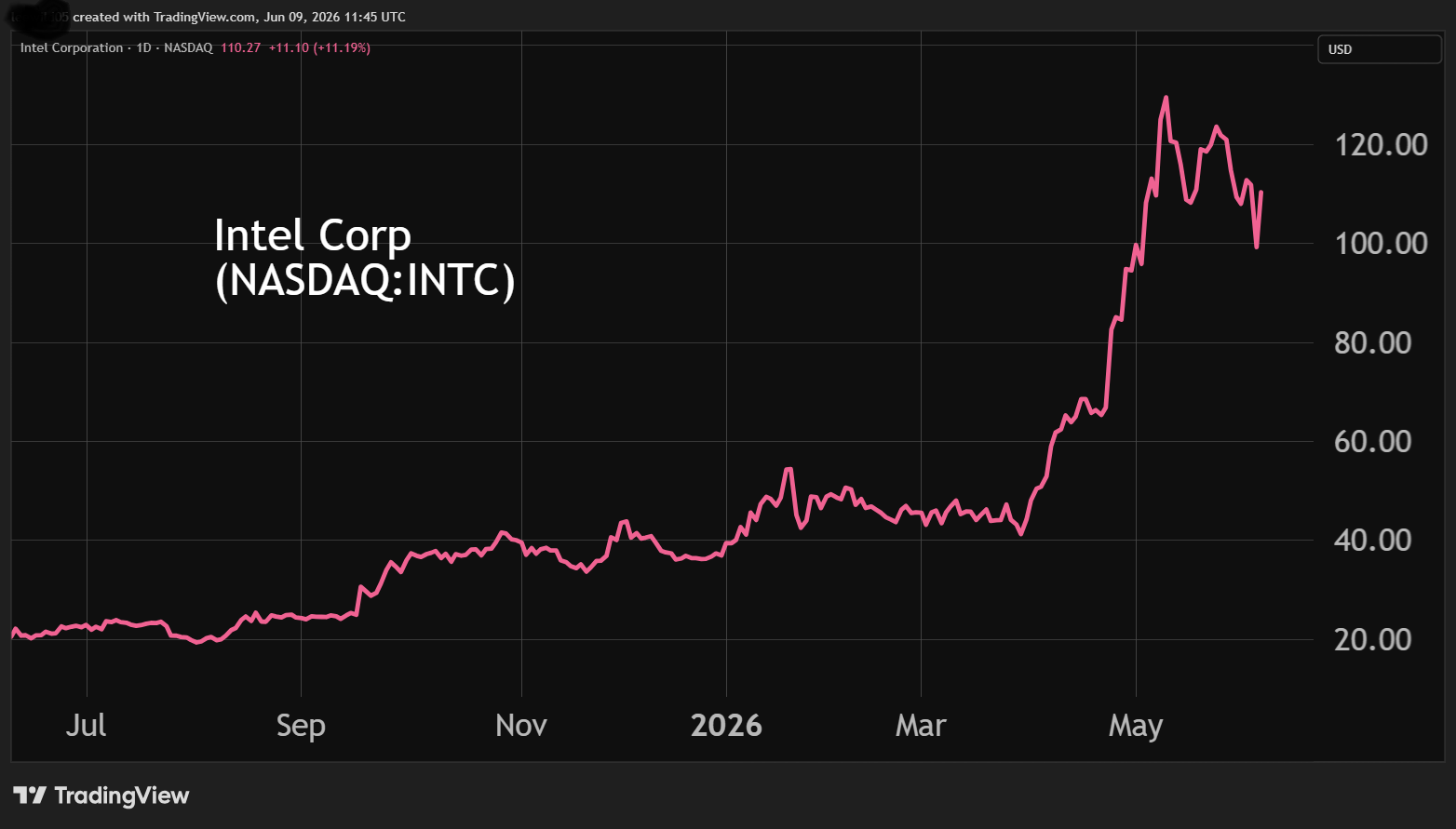
Source: TradingView. Past performance is not a guide to future performance.
Customer concentration
The other issue is that the AI investment programme is being funded by a few companies which will need to find vast sums of money to support the spending. There is just about enough cash on the balance sheet when combined with operating cashflow, to get them through to the end of this year’s spending. But given AI is still unprofitable and infrastructure spending is set to accelerate next year, then fundraising has begun in earnest.
Google owner Alphabet announced at the end of May an $85 billion equity raise, and Meta is rumoured to be considering tens of billions in equity funding. Some mega IPOs in the US this year are also likely to raise tens of billions of dollars.
- Stockwatch: this turnaround share could march higher
- Tech Focus: Alphabet, Anthropic, Nvidia, Marvell, Oracle
Big AI IPOs this year likely include Anthropic, which designed the Claude AI tool, and ChatGPT designer Open AI. This rush to raise funds from the stock market has drawn comparisons with 1999 when hundreds of companies looked to cash in on the dotcom boom before the crash just months later.
Wobbles and cracks
Elsewhere, there are signs that investors are either taking profits, beginning to question valuations, or just pausing for breath. The semiconductor-heavy KOSPI index in South Korea halted trading on Monday, ending the day down 8.3%, but is still up 74% so far this year.
Gold had some interesting price movements at the end of last week as well. In particular, the selling was consistent on Friday with the price closing at or near lows for the day. It went clean through the important level of support at $4,400, which is close to the 200-day moving average and which had been a base for many recoveries. The fall in the gold price last week now removes all the gains made this year.
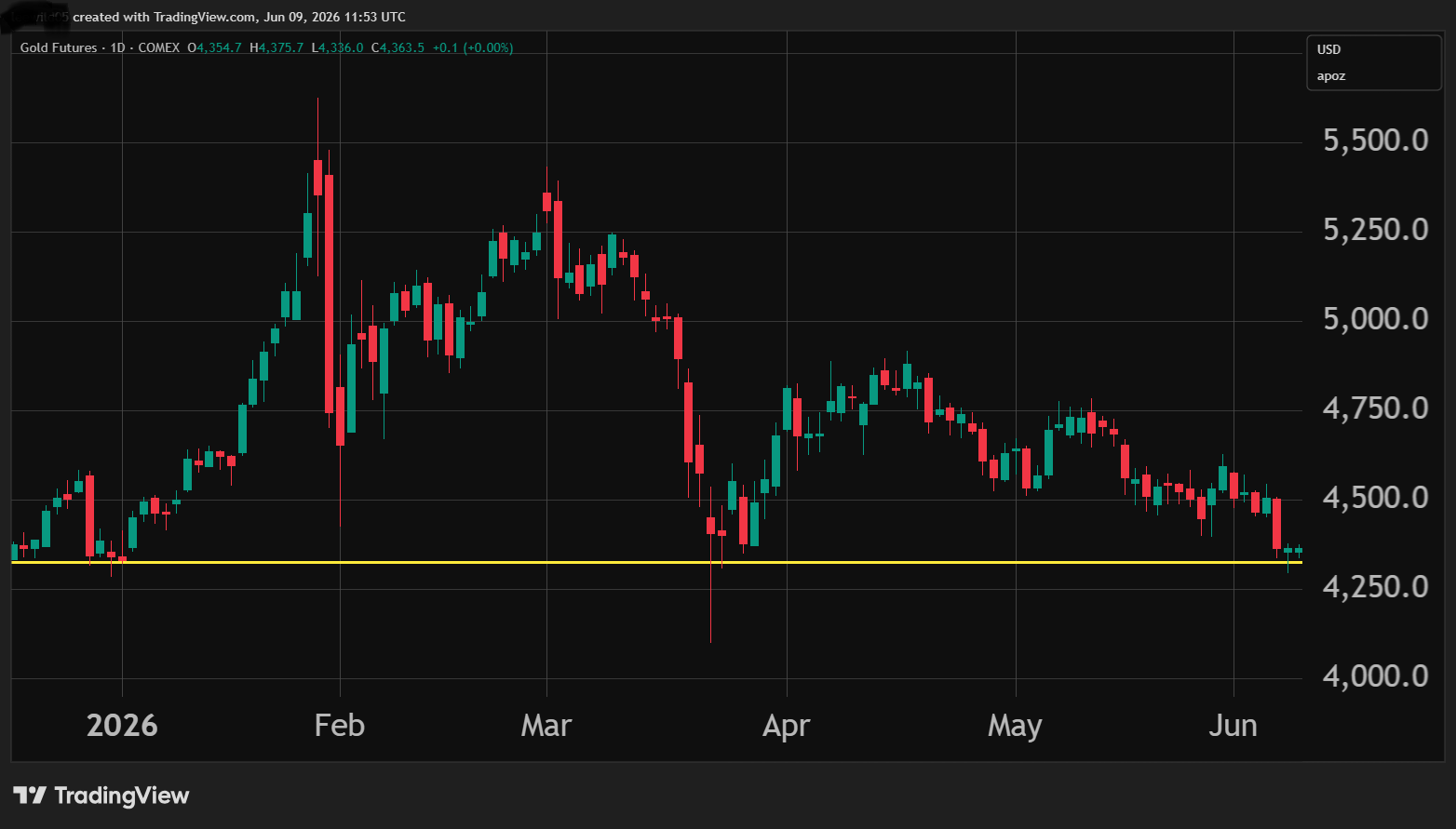
Source: TradingView. Past performance is not a guide to future performance.
There was consistent selling throughout the week in bitcoin as well. The cryptocurrency was down 15% and is now down 27% so far this year and 40% in the last 12 months. Bitcoin is now bouncing around the all-important support level of $60,000, which means anyone who has bought in the past two years has barely made any money. All of these indices have made huge gains in the past five years; it is now a question of whether the selling is merely a pause before a move higher or the sign of something more sinister?
There is a lot to unpack in determining where we might be in the cycle. The spending, if it can be funded, is only in its early stages. Open AI has committed to spending $1.4 trillion, and Goldman Sachs expects around $5.3 trillion in total AI spending by 2030. Clearly, if the funds can be raised from profits, cashflow, debt and equity, then we are only seeing the beginning of the share price rises.
One Big Beautiful Boost
There is a significant tailwind from the US President Donald Trump’s One Big Beautiful Bill, which is estimated to provide around $3.8 trillion in tax cuts to business in the next decade. The US government has also been keen to support tech by taking a 10% stake in Intel because it has crucial chip manufacturing capability. It has floated the idea of stakes in other tech companies, but it is unclear whether those without critical manufacturing or market positions would receive the same support.
- How much do you need to secure a comfortable retirement?
- Why Broadcom crash could be buying opportunity
The touchstone for me at moments like this is always that the first rule of investing is preservation of capital. Against a backdrop of unprecedented price moves, huge fundraising and questions in credit markets, I’m more than happy to miss out on the potential for gains in the Parabolic 7 and elsewhere.
Those considering the raft of IPOs heading our way need to make sure they have the right risk appetite and investment horizon. It took nearly a decade for Amazon to recover from its share price peak in 1999 before the dotcom crash, but it now stands an imperious 54 times above that level.
Alan Greenspan, the former chair of the Federal Reserve, called out irrational exuberance in the stock market at the end of 1996. That would be three years of missed gains, dividends and opportunities as stocks sped higher still. Best remember that timing the market is impossible, but trimming your sails when the outlook is uncertain just seems like common sense.
John Ficenec is a freelance contributor and not a direct employee of interactive investor.
These articles are provided for information purposes only. Occasionally, an opinion about whether to buy or sell a specific investment may be provided by third parties. The content is not intended to be a personal recommendation to buy or sell any financial instrument or product, or to adopt any investment strategy as it is not provided based on an assessment of your investing knowledge and experience, your financial situation or your investment objectives. The value of your investments, and the income derived from them, may go down as well as up. You may not get back all the money that you invest. The investments referred to in this article may not be suitable for all investors, and if in doubt, an investor should seek advice from a qualified investment adviser.
Full performance can be found on the company or index summary page on the interactive investor website. Simply click on the company's or index name highlighted in the article.