Record CGT receipts: what you need to know ahead of the Budget
Both revenues and the number of people realising capital gains hit record levels during the 2024-25 tax year. Here’s how to minimise your CGT bill.
3rd September 2026 14:20
by Rachel Lacey from interactive investor
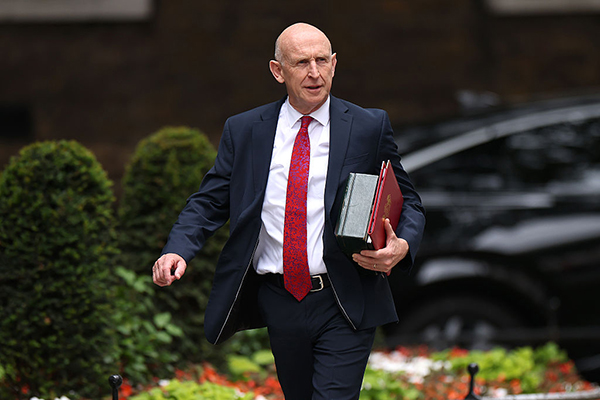
Chancellor John Healey at 10 Downing Street. Photo: Dan Kitwood/Getty Images.
The capital gains tax (CGT) take has surged by a staggering 89% in the course of a year, according to latest figures from HMRC.
In the 2024-25 tax year, CGT receipts reached a record £24.2 billion, with the number of people paying the tax when they sold assets, increasing by 45% to 584,000.
- Our Services: SIPP Account | Stocks & Shares ISA | See all Investment Accounts
The astonishing spike has been attributed to speculation ahead of Labour’s first Budget in October 2024, which saw the tax rate for basic-rate taxpayers immediately jump from 10% to 18%. The rate for higher-rate taxpayers rose from 20% to 24%.
Changes to CGT
CGT is charged on gains when you sell or transfer assets like investments, which aren’t sheltered by a tax wrapper like a pension or individual savings account (ISA), and properties that aren’t your main residence, such as rentals, holiday lets and second homes.
But it’s not just the rate of tax that has changed in recent years. The amount of gains you can enjoy before the tax is charged – officially referred to as the “annual exempt amount” – has been cut from £12,300 in 2023-24 to just £3,000 today.
Burnham’s first Budget
But despite these measures, there are concerns that further changes could feature in the upcoming Budget on 28 October, the first since the start of Andy Burnham’s premiership from newly appointed chancellor, John Healey.
Wealth taxes like CGT feel like an easy win for the chancellor, who remains stymied by Labour’s manifesto pledge not to increase taxes for working people.
One often-touted option is to equalise rates for CGT with income tax. That would see basic-rate taxpayers pay 20% on taxable gains, higher-rate taxpayers would pay 40%, while those who pay additional rate tax would face a 45% bill.
For higher-rate taxpayers, that would mean a 16-percentage point increase (24% to 40%).
Those in favour of this particular change argue that there’s no reason why a gain made from investment – or even luck – should be taxed any differently to income.
But a report from the Centre for Policy Studies uses the government’s own figures to show that increasing CGT so drastically could actually have a detrimental impact on public finances.
- 5 smart steps to navigate pre-Budget uncertainty
- Wealth warning: when acting on rumours can cost you a fortune
HMRC analysis suggests that increasing the higher rate of CGT by 10 percentage points would actually lower receipts by £3.6 billion in three years. By contrast, if the lower rate was increased by only 1 percentage point, it would raise £5 million.
The problems arise because CGT revenues are very heavily influenced by behaviour (as the latest spike shows). CGT is still only paid by a relatively small number of individuals and there’s the risk that if tax rates rise too high, wealthier individuals will simply not sell those assets, meaning less tax will be paid overall.
Another seemingly innocuous reform that was being debated back in July was the removal of the CGT uplift on death.
At the moment, capital gains are rebased on death. This means that any gains made during the deceased’s lifetime are wiped out. As such, when the individual who inherits the asset eventually sells, the tax payable will only be based on the gains they’ve accrued since they took ownership.
If this rebasing was abolished, families could face a double tax burden on the death of a loved one, potentially paying CGT and inheritance tax (IHT) on inherited wealth.
What should investors do?
Over the past few years, speculation in the run-up to the Budget has reached unprecedented levels, with some investors making major decisions based on fears that never materialised.
For example, the number of individuals taking tax-free lump sums out of their pensions surged ahead of both the 2024 and 2025 budgets amid concerns that the £268,275 cap could be reined in.
As a result, numerous individuals may have accessed pensions unnecessarily and exposed huge sums of money to tax.
It’s impossible to say what will or won’t happen in the Budget. Recent history suggests there could be another surge in asset sales ahead of the big day on 28 October. But it would usually only make sense to sell assets before the Budget if you had already planned to sell them anyway in the relatively near future.
Keeping CGT at bay
Ongoing speculation about CGT, not to mention the surging tax take, does, however, provide a useful nudge to keep an eye on any investments that could be exposed to CGT and look at ways to keep it at bay.
Here are the best ways to do it:
1) Make the most of your annual ISA allowance
Each year you can pay up to £20,000 into ISAs. It’s straightforward to pay cash holdings into a stocks and shares ISA, but you may also be able transfer existing investments (in trading or general investment accounts) to shelter them from tax in the future. By using the “Bed & ISA” process, it’s possible to sell investments from a trading account and immediately rebuy them within your ISA (bypassing the 30-day rule). Just note that you need to have enough ISA allowance remaining and, so long as the transfer doesn’t breach your CGT allowance, there shouldn’t be any tax to pay.
- What you need to know about ISAs and how they’ll soon change
- Portfolio Dilemma: we tackle six investment problems
2) Use your pension
Investments held within pensions will also be sheltered from CGT. The catch is that your money will be tied up until you’re 55 (rising to 57 in 2028), but on the plus side your contribution will be bumped up by tax relief.
Most people can pay 100% of their earnings, up to £60,000 a year, into their pension.
3) Use your CGT allowance each year
You only get to use the CGT exemption in the year that you sell. So, the shrinking allowance means that even modest investors can be landed with hefty bills, if they have held them for a long while. But, if you sell an amount equal to the allowance each year, you can take advantage of the annual exemption multiple times and reduce the amount of tax that you eventually pay.
You don’t necessarily need to take money out of the market to use your allowance. You could, for example, arrange a Bed & ISA and get tax protection going forward. Or, if that’s not an option, you can sell up and buy an equivalent investment or use it as an opportunity to rebalance your portfolio if your asset allocation has shifted.
- What global bond shock means for UK investors
- Sign up to our free newsletter for investment ideas, latest news and award-winning analysis
4) Use losses
It’s also important to be aware that if you have suffered any losses on a sale, you can offset them against your gains to reduce the amount of tax you pay.
To use a loss in this way, you need to report it within four years of the sale. You can do this by writing to HMRC if you don’t complete a tax return.
5) Plan with your partner
It’s not terribly romantic, but if you’re married or in a civil partnership, you could cut your tax bill by taking the time to plan your finances together.
Both of you will have your own ISA, CGT and dividend allowance and by spreading your wealth between you, you can take full advantage of both sets. This works because transfers between spouse don’t trigger any tax.
Even if this isn’t enough to avoid paying any CGT, it could still cut the bill if your partner pays tax at a lower rate than you.
The important thing is just to be aware that this involves giving your partner legal ownership of your wealth – you aren’t just parking it in their account. That means it’s important you trust each other and have the same long-term financial goals.
If it’s important that you keep control of your money, it’s best to keep it in your name.
Important information: Please remember, investment values can go up or down and you could get back less than you invest. If you’re in any doubt about the suitability of a Stocks & Shares ISA, you should seek independent financial advice. The tax treatment of this product depends on your individual circumstances and may change in future. If you are uncertain about the tax treatment of the product you should contact HMRC or seek independent tax advice.
These articles are provided for information purposes only. Occasionally, an opinion about whether to buy or sell a specific investment may be provided by third parties. The content is not intended to be a personal recommendation to buy or sell any financial instrument or product, or to adopt any investment strategy as it is not provided based on an assessment of your investing knowledge and experience, your financial situation or your investment objectives. The value of your investments, and the income derived from them, may go down as well as up. You may not get back all the money that you invest. The investments referred to in this article may not be suitable for all investors, and if in doubt, an investor should seek advice from a qualified investment adviser.
Full performance can be found on the company or index summary page on the interactive investor website. Simply click on the company's or index name highlighted in the article.