Must read: UK inflation, JD Wetherspoon, BT, easyJet
ii’s head of investment looks ahead to some of the big events in the diary next week.
17th July 2026 10:42
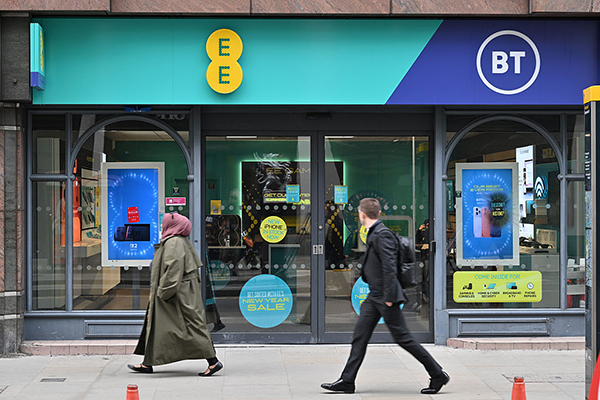
EE & BT shops in London. Photo: John Keeble/Getty Images.
UK inflation – Wednesday 22 July
Victoria Scholar, Head of Investment, interactive investor, “UK inflation figures out on Wednesday are expected to ease to 2.6% in the 12 months to June, versus 2.8% in May, driven by a sharp drop in petrol and diesel prices. However, the relief could be short-lived as energy bills are expected to rise by around 13.5% next month because of the higher Ofgem energy price cap, which will push inflation higher again.
- Invest with ii: Top UK Shares | Share Tips & Ideas | Cashback Offers
- Week Ahead: 3i Group, BT, Centrica, Compass, Fresnillo
Inflation is likely to peak at around 3.5% later this year, notably above the 2% target, but relatively under control compared to the inflation spike back in October 2022 during the post-Covid reopening period and Russia’s invasion of Ukraine.
Fiscal policy is an unknown in terms of the outlook for inflation. Gilt markets are pleased that Andy Burnham seems to want to stick with Rachel Reeves’ fiscal rules and are relieved with the reported selection of Shabana Mahmood over Ed Miliband as chancellor. However, the incoming government could mean more spending at the Budget, which could have an inflationary effect. Yet if funded through taxes over debt, the impact would be reduced.
As it stands, markets expect the Bank of England to keep interest rates on hold this year. But with the recent resurgence in US-Iran tensions and rising oil prices, the chances of a rate hike have been inching higher.”
JD Wetherspoon Q4 – Wednesday 22 July
Richard Hunter, Head of Markets, interactive investor says, “Wetherspoon’s dogged determination to fight its corner has won the brand many friends, but from an investment perspective the jury remains out on prospects. Wetherspoon (J D) (LSE:JDW) had previously advised that profits were likely to be lower this year, and that unfortunate prediction is playing out. Additional annual costs of £60 million for the likes of wages and National Insurance contributions, £7 million for non-commodity energy, and £2.4 million on a packaging levy are heavy headwinds.
The third-quarter update in May revealed that growth in like-for-like (LFL) sales remained above the industry average for the 43rd consecutive month in March. Nonetheless, the trend is moving in the wrong direction, which has hampered the share price. LFL sales grew by 3.7% in the first quarter and by 6.1% in the second, but pared back to growth of 3.4% in the third.
Year-end net debt is another concern and currently estimated to fall between a range of £740 and £760 million. At the half-year results, the group warned that an already wafer-thin operating margin of 6.3% had fallen to 4.86% and, despite a 5.7% increase in revenues to £1.09 billion, pre-tax profit was down by 31.9% to £22.4 million for the period.
- 20 hottest tech stocks of the week: IBM, SK Hynix, SpaceX, Alphabet
- Turnaround strategy working as Burberry reports Q1 sales rise
However, even now the previous lockdown continues to leave a stain and the share price remains 57% below pre-pandemic levels, and down by 8% over the last year. While revenues have finally recovered to stand 22% higher than that period, the group has 85 fewer pubs. This results in sales per pub which have increased by 35.4%, but in terms of profit that progress has been largely obliterated by growth of 80% and 61% in energy and wage costs respectively.
More positively, the World Cup should have provided a spike to revenues as being reported elsewhere in the sector, while access to liquidity and a largely freehold estate valued at £1.4 billion lessen any immediate financial concerns. The group continues to open new venues en route to its target of 1,000 outlets in the medium term from the current 800 level. The failure of some of the smaller pubs following the pandemic lessens some of the competition, while the group remains committed to its share buyback policy.”
BT Q1 - Thursday 23 July
Richard Hunter, Head of Markets, interactive investor says, “Just over two years into her tenure, the CEO’s transformation plans to cut costs, boost efficiency and provide more focus have been at the centre of the group’s recent fortunes. By the same token, changing horses midstream is never an easy task, and the telecoms sector is a tough place to be in normal circumstances, let alone when a group is in the midst of a turnaround as competitors continue to flourish.
At the end of June, a particularly interesting development came in the telecoms sector, underlining the importance of the technology in a rapidly evolving communications world. BT Group (LSE:BT.A) announced that it would be forming a joint venture with Verizon Communications Inc (NYSE:VZ) of the US – a company previously intertwined with Vodafone Group (LSE:VOD) – in a move which would represent some $4 billion (£3 billion) of combined annual revenue, serving 3,000 customers in around 180 countries and which is expected to complete next year.
- DIY Investor Diary: shifting from 25 holdings to 50
- The Income Investor: why I back Sainsbury’s to deliver the goods
The Openreach division has been doing much of the heavy lifting in the meantime and is seen by many as being a future potential jewel in the crown. Following several record build rates of over a million FTTP (fibre to the premises) connections, Openreach has now reached 21.4 million premises, over half of those in the UK. It also leaves the plan of increasing the number to 25 million in total by December 2026 well on track.
Perhaps equally importantly is the fact that peak capital expenditure on this roll-out has passed, which is an important inflection point. Indeed, all things being equal this should free up substantial amounts of capital in due course which, given the group’s strong levels of cash generation, can be steered towards what is still an uncomfortably high level of net debt and a pension deficit which has been something of an albatross around the neck for some considerable time.
BT estimates that this year’s expected £1.5 billion of cash flow will grow to £2 billion by 2027 and to £3 billion by the end of the decade. This could also free up some capital for a strong increase in the dividend, where the current yield of 6% is a major attraction. It will be increasingly difficult for BT to positively surprise investors, but in the meantime it has been successful, with a share price rise of 37% over the last two years, although over the last 12 months the shares have managed a gain of just 1% on heightened expectations.”
easyJet Q3 – Thursday 23 July
Richard Hunter, Head of Markets, interactive investor says, “The update has of course been entirely overshadowed by a bidding war which has seen the shares soar by 32% so far this year. In early July, the easyJet (LSE:EZJ) story ran hotter with the emergence of a rival £5.7 billion bid at 715p per share from Apollo Management, which trumps the previous 690p per share offer from Castlelake and leaves Apollo firmly in the pilot’s seat. The prospect of a bidding war left investors focused on a further potential knockout offer which could propel the firm’s share price ascent further.
- Why Europe’s biggest stock just got even bigger
- Sign up to our free newsletter for investment ideas, latest news and award-winning analysis
Even so, the numbers provide the opportunity for easyJet to provide a reminder as to why it is being sought as a takeover target. The group’s half-year results in May revealed that the rest of the year could be affected by weaker demand, reducing the airline’s ability to offset some of the costs by increasing air fare prices. This proved a meaningful headwind to its otherwise pleasing progress. The group has expanded both its fleet as well as the number of destinations, closing underperforming bases with the switch of aircraft to more profitable airports already paying dividends. In addition, the benefit of increasing ancillary revenues, which include the likes of customer payments for personally allocated seats, baggage and food, were in evidence, Now accounting for 26% of group revenue, customers are clearly still readily prepared to pay for these extras, while also adding another string to the group’s revenue bow.
In addition, the easyJet holidays arm has been the recent star of the show. This is a burgeoning business which seems to have come at the right time with cost-conscious consumers searching for value packages. The group has high hopes for the unit’s longer-term contribution to overall profits, which currently accounts for 14% of total group revenue. easyJet previously hit its medium-term target early, resulting in a new target being set of £450 million of pre-tax profit by 2030.”
These articles are provided for information purposes only. Occasionally, an opinion about whether to buy or sell a specific investment may be provided by third parties. The content is not intended to be a personal recommendation to buy or sell any financial instrument or product, or to adopt any investment strategy as it is not provided based on an assessment of your investing knowledge and experience, your financial situation or your investment objectives. The value of your investments, and the income derived from them, may go down as well as up. You may not get back all the money that you invest. The investments referred to in this article may not be suitable for all investors, and if in doubt, an investor should seek advice from a qualified investment adviser.
Full performance can be found on the company or index summary page on the interactive investor website. Simply click on the company's or index name highlighted in the article.