Great British Retirement Survey 2026: Chapter 3
Retirement expectations
Chapter 3 of the Great British Retirement Survey reveals what we expect our finances to look like when we hit retirement.

Important information: As investment values can go down as well as up, you may not get back all of the money you invest. Currency changes affect international investments, and this can decrease their value in sterling. If you’re unsure if an investment account is right for you, please speak to an authorised financial adviser. Tax treatment depends on your individual circumstances and may be subject to change in the future.
Gen X expected to fall £200,000 short of a comfortable retirement
Gen X, or those aged between 45 and 60, are the closest generation to retirement. Yet many of them are still some way short of saving enough.
They expect their typical pension to reach around £150,000 - which is £200,000 short of what is considered a “comfortable retirement” by the Pensions UK Retirement Living Standards.
A “comfortable retirement” includes running a car, eating out occasionally, taking annual holidays and having some money available for leisure activities and unexpected costs.
Worryingly, the typical Gen X has around £45,000 in pension savings.

Key findings
- We expect we'll need £350,000 for a comfortable retirement
- On average, we're expected to retire with £100,000 less than that
- Gen X expect to have just £150,000 saved
- Millennials (29-44) have big ambitions but relatively modest savings today
Other generations are off track too
It’s not just Gen X who are expected to fall short of having a comfortable retirement.

Baby boomers (61-79)
Baby boomers, who are in retirement or very close to it, have a typical pension worth £87,500. They expect this to be worth £150,000 at retirement, which is still off comfortable.
Millennials (29-44)
Despite saving the most towards their pension than any other generation, millennials have a typical pot worth £25,000. They expect to retire on £450,000.
Gen Z (18-28)
Gen Z expect to retire earlier than older generations, at 60 on average. But with a typical pension worth £15,000, they’ll need to rely on strong growth and savings habits.
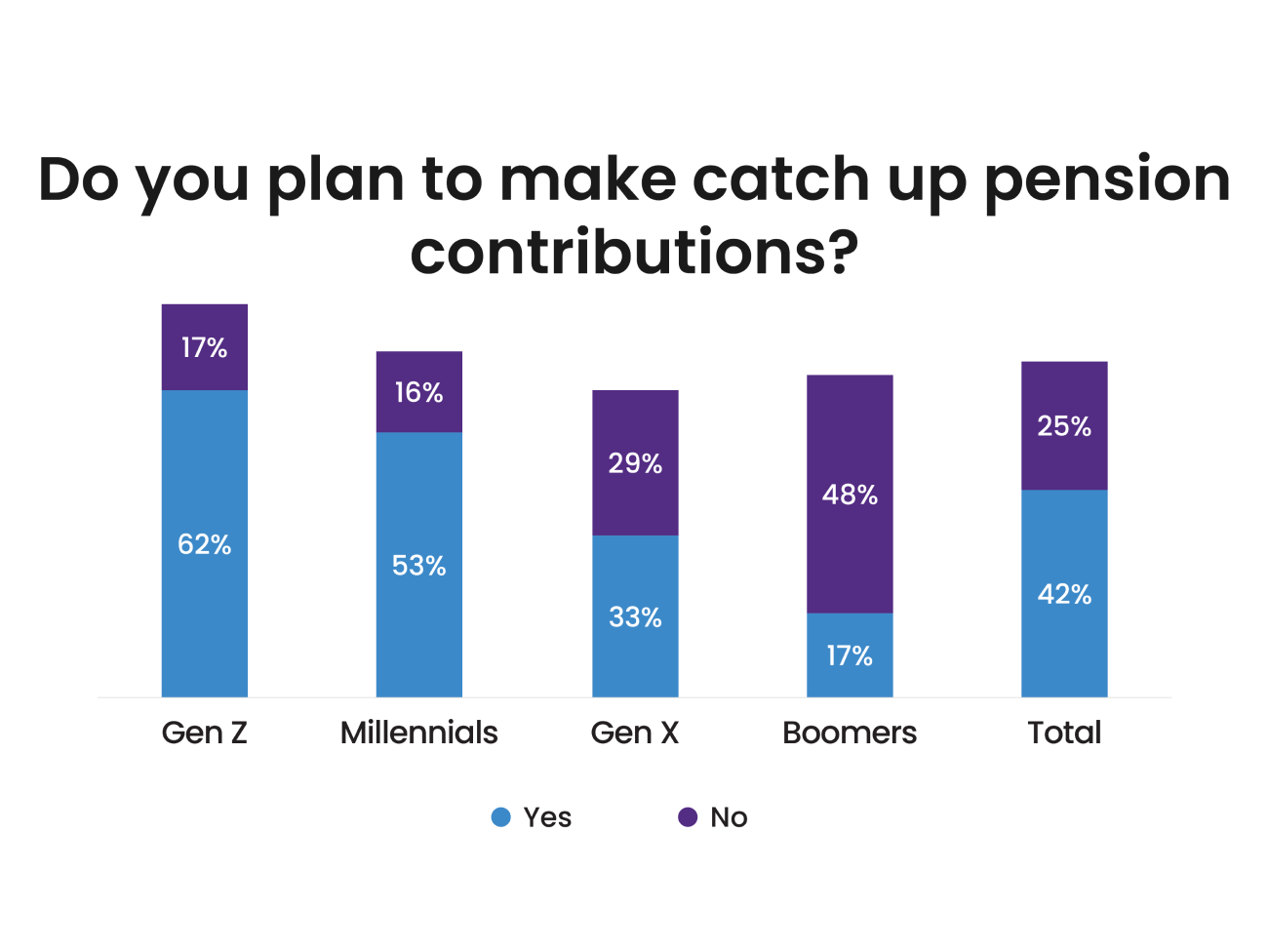
What about catch-up contributions?
Many workers know they may fall short of their retirement goals.
But relatively few are increasing their pension contributions. Workplace pension saving averages around £200 a month across all generations, while Gen X (45-60) contribute no more than younger savers despite being much closer to retirement.
Younger generations are also taking a broader approach to retirement saving.
Gen Z (18-28) and Millennials invest around £400 a month on average outside their pensions, and Millennials contribute £400 a month to private pensions.
Making your contributions work harder
“It’s encouraging to see that both Gen Z and Millennials are investing more on a monthly basis outside of their pension.
By making these decisions to save more earlier on, they’re able to benefit from compounding to help them in the long-term.
However, it is concerning that Millennials are opting to save quite high proportions in cash.
While it’s always sensible to have a cash buffer, people risk missing out on years of investment compounding, and if they’re looking to save this cash for retirement in particular, it could materially damage their retirement prospects.”

ii recommends
Savings benchmarks are confusing and lack consistency, making it hard for savers to know if they are on track. Here is a practical change that could help ease those concerns:
We need a simple, easy-to-understand benchmark that shows how much income is needed each month and year for a minimum, moderate or comfortable retirement. This would help people see not just how much they've saved, but whether they're on track for the retirement lifestyle they want.
Thinking about a Self-Invested Personal Pension?
Our free Essential Guide to SIPPs has everything you need to know to help you get started. It covers what a SIPP is, how it works and whether it’s right for you.