Great British Retirement Survey 2026: Chapter 4
Gender income and wealth gaps
Chapter 4 of the Great British Retirement Survey reveals how gender disparities are affecting retirement.

Important information: As investment values can go down as well as up, you may not get back all of the money you invest. Currency changes affect international investments, and this can decrease their value in sterling. If you’re unsure if an investment account is right for you, please speak to an authorised financial adviser. Tax treatment depends on your individual circumstances and may be subject to change in the future.
Women face greater retirement uncertainty
Women are more likely than men to be unsure about their financial future in retirement.
Almost three-quarters (73%) of non-retired women are unsure if their savings will be enough throughout retirement, compared with 58% of men.
This uncertainty goes beyond pension balances. More than half (53%) of women don't know how they will manage their income in retirement, while 24% have no planned retirement age.
The findings suggest that while women are regularly engaging with their pensions, many still lack confidence about what their savings mean for their future retirement income.
Key findings
- Nearly three quarters of women are unsure their savings will last
- Women hold less pension wealth, savings and investments than men
- More women have no pension savings at all
- Retired men with a defined contribution pension, like a SIPP, have almost 4 times more pension wealth than women
How much are women saving?
It’s not only pensions where there’s a wealth disparity.

Pension
Women have £25,000 in defined contribution pension savings on average, compared with £45,000 for men. The gap widens further in retirement, where women hold less pension wealth than men.

Cash savings
Women have £7,500 in cash savings on average, compared with £17,500 for men. Lower cash reserves can make it harder to build financial resilience and save for the future.

Other investments
Almost three-quarters of women (74%) have no investments at all, compared with 58% of men. Women are also less likely to be saving for retirement outside of a pension.
Are you checking in on your pension?
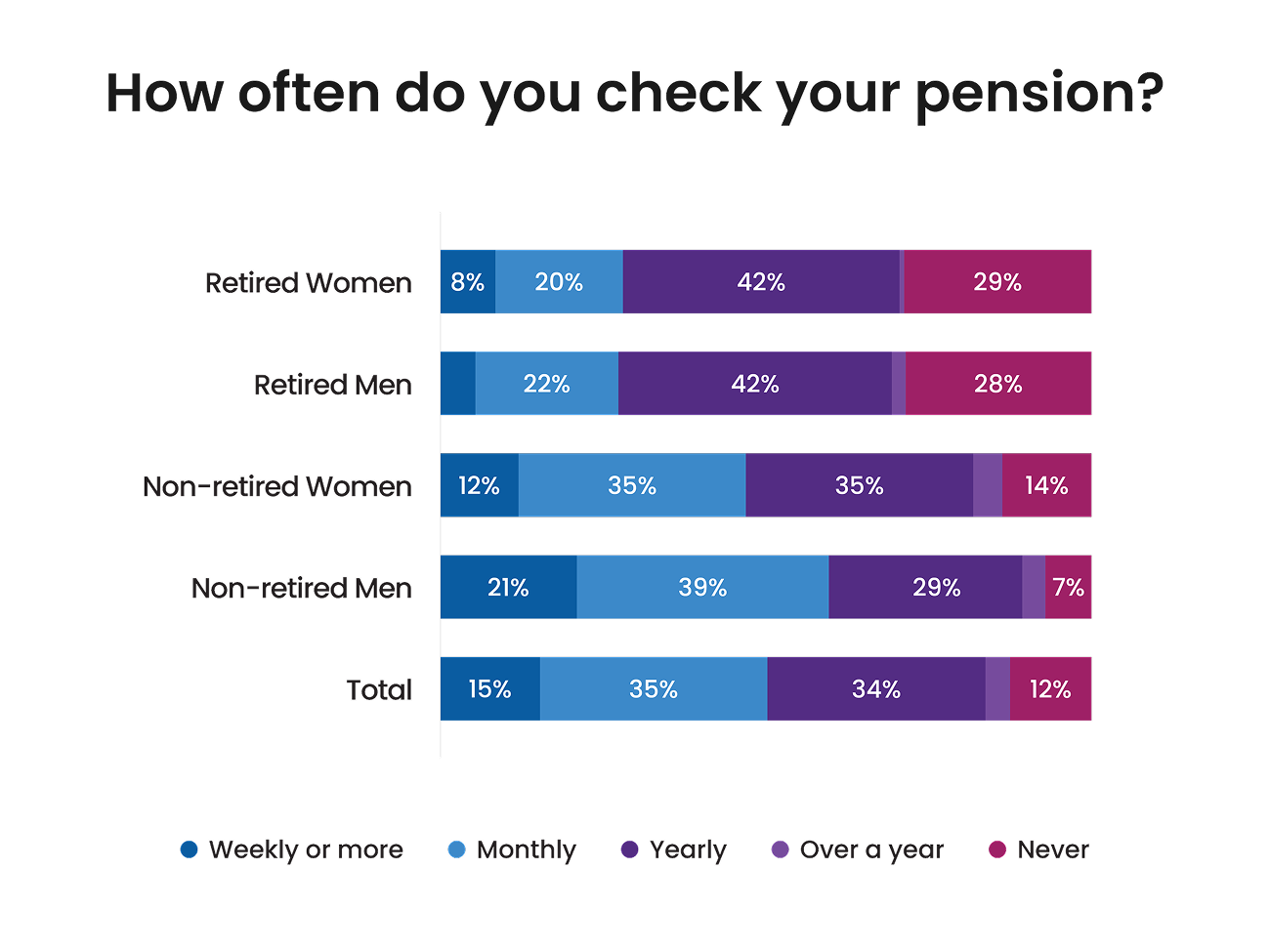
More than eight in ten (82%) working women with a defined contribution workplace pension check their pension at least once a year, with 12% checking weekly and 35% monthly.
Yet regularly checking a pension doesn't always lead to greater confidence or understanding. More than half of women (55%) don't know whether their pension automatically derisks as they approach retirement, compared with 39% of men.
Closing the gap starts with confidence
“While there are wider commitments from policymakers to change the gender gap, it can’t happen overnight.
In the meantime, women can take matters into their own hands – and we want to help them do so.
“Our women’s wealth hub was created to give women the tools and tips they need to help ensure they can reach their financial goals.
The fact of the matter is that when women invest, they do it incredibly well, and we want to help champion this. Our hub is here to ensure that women have all the information they need to create their financial toolkit together – helping them reach their dream retirement.”

ii recommends
Women generally save less for retirement than men. Here are some practical changes that could help bridge the inequality gap:
Expanding auto enrolment to low earners would help reduce the gender pension gap, as women are more likely to work part-time with lower lifetime earnings. Low earners would also benefit if employers continued to contribute even if an employee opts out.
Thinking about a Self-Invested Personal Pension?
Our free Essential Guide to SIPPs has everything you need to know to help you get started. It covers what a SIPP is, how it works and whether it’s right for you.