Great British Retirement Survey 2026: Chapter 2
Finances under strain
Chapter 2 of the Great British Retirement Survey paints a picture of our overall financial health, and how that’s making us feel about retirement.

Important information: As investment values can go down as well as up, you may not get back all of the money you invest. Currency changes affect international investments, and this can decrease their value in sterling. If you’re unsure if an investment account is right for you, please speak to an authorised financial adviser. Tax treatment depends on your individual circumstances and may be subject to change in the future.
Gen X are facing financial pressure just as they approach retirement
Of the generations that are closest to retirement, Gen X (45-60) are feeling the pinch.
With average cash savings of £7,500, and a typical pension pot of £45,000, many are nervous about the prospect of retirement.
Added to this, they often have the same household income as Gen Z (18-28), suggesting that earnings have stagnated in life.
It’s perhaps of little surprise that 28% of Gen X don’t know at what age they’ll retire or said they would never retire, compared with 21% last year.
Key findings
- Gen X have average pension savings of just £45,000
- Unsecured debt among Gen X continues to rise
- Nearly a third use pension lump sums to clear debt
- Many are dipping into retirement savings to cover day-to-day costs
How much debt do you carry?
Whether it be a mortgage or car finance - debt is natural for many households. While it can offer many benefits when used correctly, an increasing number of households now rely on it.

Gen X (45-60)
45% of Gen X carry unsecured debt - like a personal loan or credit card. That’s an increase of 41% of respondents in 2025.
Millennials (29-44)
With an increasing debt load, a third of millennials feel less financially secure than their parents at the same age.
Gen Z (18-28)
23% of Gen Z had fallen behind on their bills within the last 6 months. That’s a decrease from 27% in 2025.
Will your savings last in retirement?
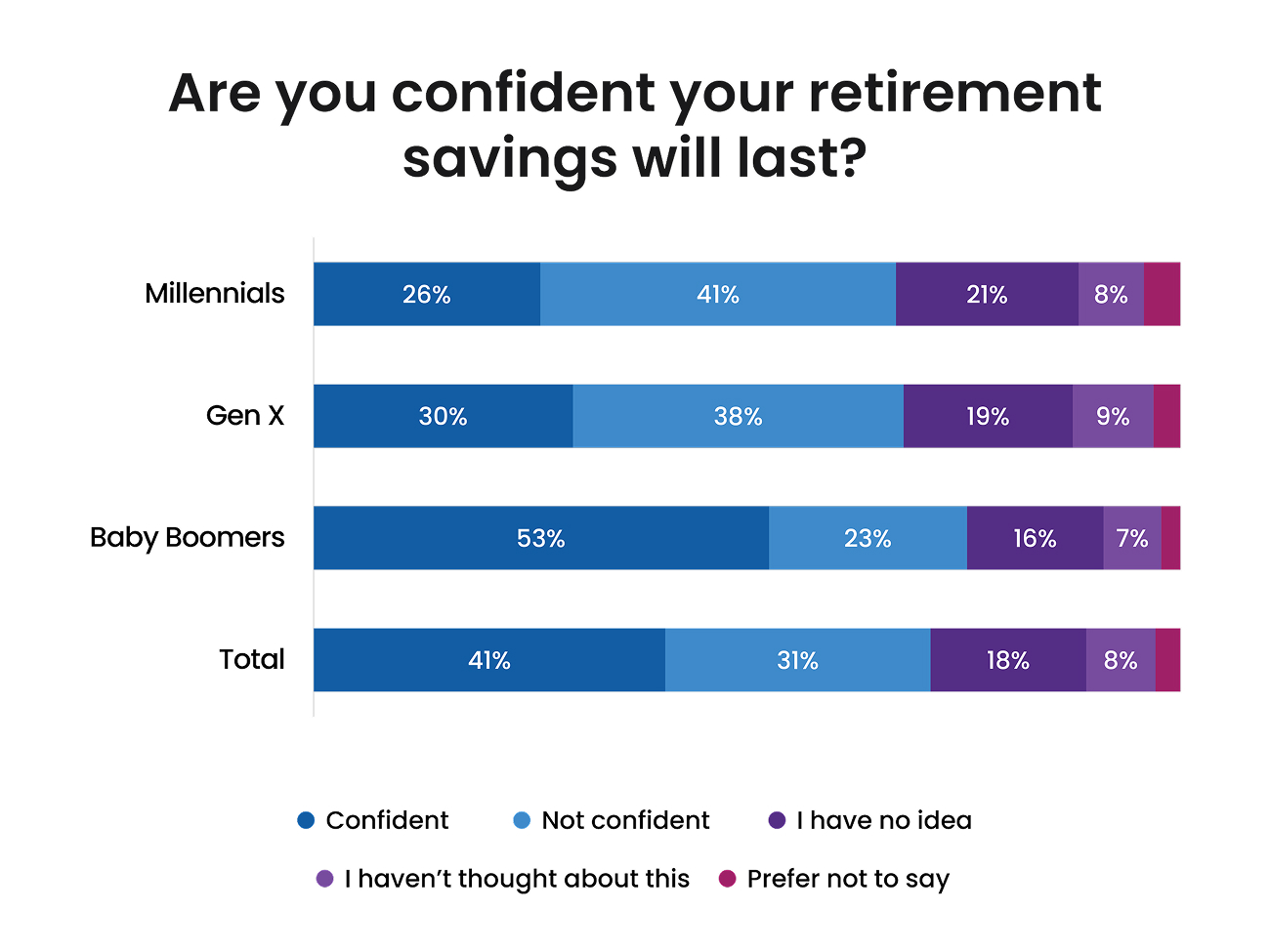
The closer people get to retirement, the less certain many feel about their financial future.
Just 30% of Gen X are confident their retirement savings will last throughout retirement, while two-thirds are either not confident or unsure.
As responsibility for retirement income increasingly falls on you, instead of your employer or the state, many are struggling to understand whether their pension savings will provide enough.
Saving little but often
“The problem with rising debt is that, across all ages, it risks de-railing people’s long-term financial goals.
To help curb the allure of taking out short-term debt, we need to look at the benefits of building healthy financial habits.
Understandably, saving, or investing, won’t always be feasible – or at least top priority – with more immediate costs being so high.
But the good news is small or modest amounts invested consistently over time can make a big difference and can help build that buffer in case you need it down the line – especially if you’re investing and making the most of long-term compound growth.”

ii recommends
More are expected to fall short of a moderately comfortable retirement. Here are some practical changes that could help ease those concerns:
Higher contributions today could mean significantly more retirement income.
This could add thousands to their future wealth, as these contributions have the time to compound.
Thinking about a Self-Invested Personal Pension?
Our free Essential Guide to SIPPs has everything you need to know to help you get started. It covers what a SIPP is, how it works and whether it’s right for you.