Great British Retirement Survey 2026: Chapter 5
Relationships and retirement
Chapter 5 of the Great British Retirement Survey uncovers how divorce and single life affects retirement.

Important information: As investment values can go down as well as up, you may not get back all of the money you invest. Currency changes affect international investments, and this can decrease their value in sterling. If you’re unsure if an investment account is right for you, please speak to an authorised financial adviser. Tax treatment depends on your individual circumstances and may be subject to change in the future.
Only one quarter of divorcees discuss pensions during divorce
Your pension is usually one of your most valuable assets. Yet only 1 in 4 of us discuss it during divorce.
What’s more, of the divorcees we surveyed, many of them didn’t regret bringing up their pensions during the break-up.
But there may well be a case for it. Divorcees are more uncertain than married couples of their pension lasting retirement, and are more likely to use the state pension as their main source of income.
More than two thirds of divorcees (67%) are unsure whether their pension will last throughout retirement, while nearly one third (32%) expect the state pension to be their main source of retirement income.
Key findings
- Only one quarter of divorcees discussed pensions during divorce
- Divorcees typically have lower incomes and less wealth
- They expect significantly lower pension savings in retirement
- Many are more reliant on the State Pension later in life
How much is the divorce and single penalty?
Sharing costs with a significant other can be easier on your wallet, but what savings are you looking at?

Household income
Single and divorced people have an average household income of £27,500, compared with £55,000 for married people. That's a gap of £27,500 a year, highlighting the cost of managing a household alone.

Cash savings
Single people hold average cash savings of just £4,000, while divorcees have £7,500. If you’re married, you’ll have £17,500 on average, leaving a much larger financial buffer for unexpected costs.

Pension
Divorcees expect to retire with pension wealth of just £75,000. By contrast, single people are more optimistic and expect double this at £150,000. Married couples expect £350,000 in retirement.
Divorcees are saving less for retirement
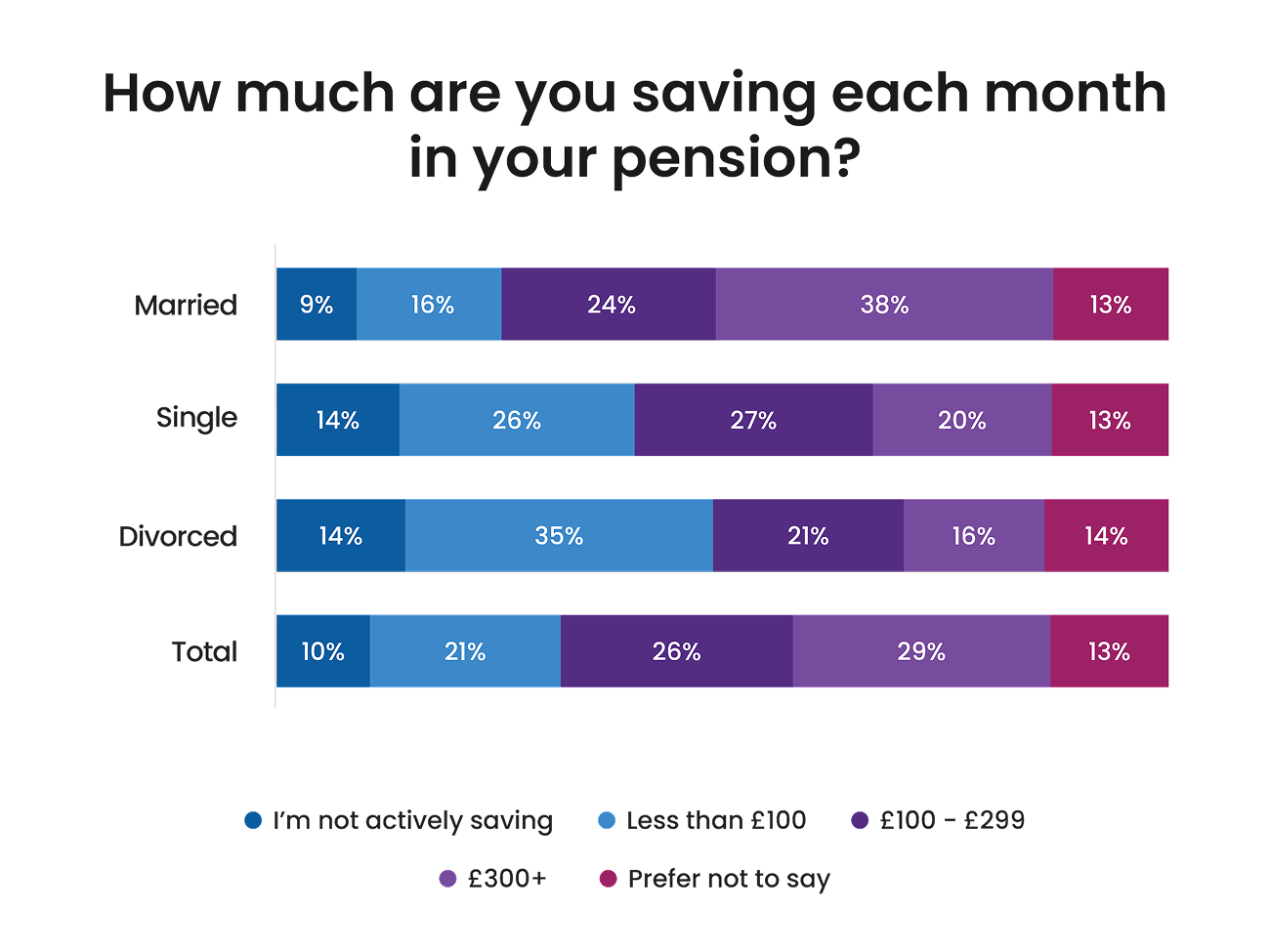
Many divorcees are struggling to build their pension savings. Among those with a defined contribution pension, almost half (49%) contribute less than £100 a month, compared with around a quarter of married couples.
Meanwhile, married couples are more than twice as likely to save over £300 a month into their pension.
Lower contributions today can make it harder to build financial security for a future retirement.
How to protect retirement during divorce
“Many couples focus on who keeps the house during a divorce, with pensions falling down the pecking order.
Compared to the house, pensions can seem like a complex pile of paperwork. But not understanding the value of your partner’s pension could mean that you lose out – ultimately leaving you financially vulnerable in retirement.”

ii recommends
Recently divorced and single people are significantly more likely to be financially vulnerable in retirement than dual income households. Here are some practical changes that could help ease these concerns:
Before a final divorce or civil-partnership dissolution order is made, both parties should receive a standardised statement of all pension assets, their estimated value and the main options for sharing, offsetting or earmarking.
Anyone entering divorce or dissolution should be offered a free specialist pension-guidance session, for example through a bespoke PensionWise scheme. Where pension values or benefits are complex, funded vouchers for regulated financial or actuarial advice should be provided
Thinking about a Self-Invested Personal Pension?
Our free Essential Guide to SIPPs has everything you need to know to help you get started. It covers what a SIPP is, how it works and whether it’s right for you.