Stockwatch: my view on five share tips as interest rates rise
With borrowing costs on the rise, analyst Edmond Jackson revisits his coverage of these stocks affected by rising inflation and higher rates.
13th November 2026 12:12
by Edmond Jackson from interactive investor

On 11 November, the National Institute of Economic and Social Research (NIESR) reacted to the Autumn Budget, saying monetary and fiscal policy decisions are being deferred, that consumer price inflation will reach 4.4% in February and, even if rates rise again, inflation will not return to a 2% target until late 2030. This will hit poorer households hardest given they cannot easily make adjustments or dip into savings; they have no choice but to buy less.
- Our Services: SIPP Account | Stocks & Shares ISA | See all Investment Accounts
That rates need another 0.25% rise to 4.25% early in 2027, when companies set wages and prices, then to 5.0% in the medium term, has implications for the housing market whatever people’s wealth. Sector professionals already expect sales to fall over the next 12 months.
While artificial intelligence (AI) investment helped the UK economy grow 0.7% in the third quarter, its fastest rate for two years, and the 2026 gross domestic product forecast is raised from 1.4% to 1.6%, the NIESR team has cut its estimate for 2027 to 1.1% from 1.3% - implying stagflation could next be the narrative.
Such shifts can seem minuscule to professionals whose wages peg to inflation, but what matters for UK aggregate demand is the marginal effect of a rise from 4.0% to 5.0% - which could be more significant than a rise from a lower base. Might there be any kind of tipping point?
Does this imply value in retail shares?
Yes, if the UK avoids recession and the retailer has adept marketing, but all are likely to be affected in a recession.
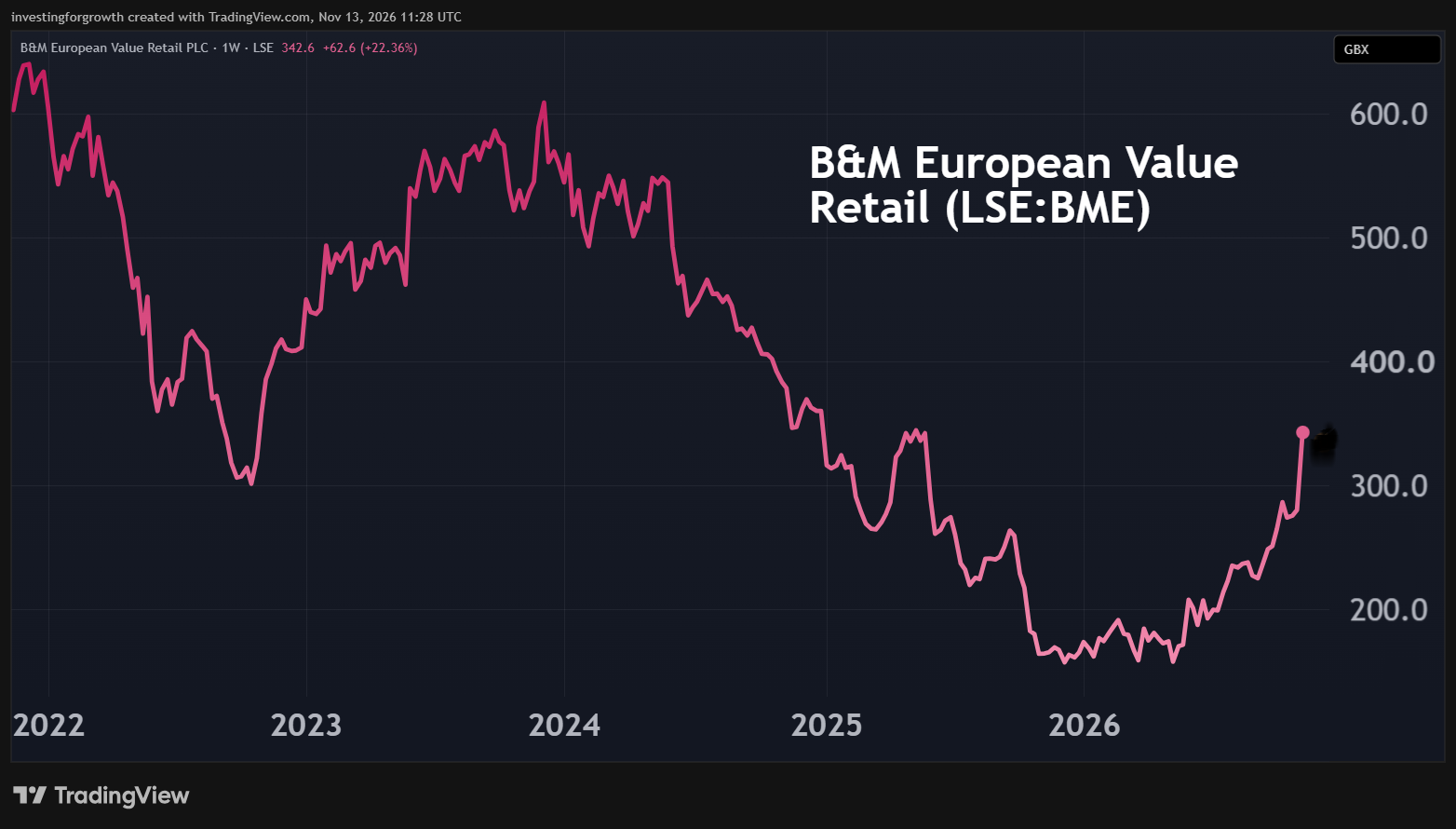
Yesterday’s interim results from B&M European Value Retail (LSE:BME) were illustrative of how a new CEO can start to get results. The six months to 26 September showed group revenue up 3.6% “with growth across all three businesses” (UK, France and Heron Foods) where UK like-for-like growth was 3.2% in the second quarter, making 0.4% over the period.
The shares closed up 21% Thursday at 337p – possibly helped by a 6.8% aggregate short position – as the news went down well in terms of the company’s goal to “to restore B&M to sustainable like-for-like growth”.
But given UK consumer inflation was 3.5% anyway in the 12 months to end-September, the net 0.1% improvement at B&M implies there’s a way to go.
After “back to basics” initiatives such as keener pricing and improved best-selling brand availability, a second phase aims to transform the customer experience and boost the productivity with new store formats. “Sales data from early trials have been encouraging...” This is to be funded by internally generated cash balanced by a slower pace of UK store roll-outs.
- Aviva in 'great shape' at Q3 stage and on track to hit targets
- Why this investing strategy thrives in winter
- FTSE 250 shares round-up: B&M, Persimmon, WH Smith, Dr Martens
One report has claimed B&M’s recent marketing agility “to become the go-to budget store” has accelerated Poundland’s demise – with a much wider range of products and seasonal ranges ideal for social media initiatives.
It implies B&M can benefit from a tougher consumer environment, but mind if inflation goes over 4% if fuel and energy prices remain stubbornly high, as costs will weigh. Half-year results already show a 5.4% increase in adjusted operating costs, but adjusted operating profit still managed an 8.3% rise and mitigated finance costs further enabled a 16.6% rise in adjusted pre-tax profit to £121 million (up 53.3% to £115 million at the reported level). Can further costs really be taken out to compensate?
After the dividend was cut from 15.0p per share for the year ended March 2025 to 9.6p, consensus expects a build to 10.7p in respect of March 2028 with a circa 3% yield on a 12-month forward basis.
I retained a “buy” stance on B&M at 184p in April and adjusted to “hold” given a forward price/earnings (PE) ratio possibly around 15x looks high versus earnings per share (EPS) growth more like 10%. In due respect, B&M’s 7.1% margin at the adjusted operating profit level compares with 5.3% recently at Tesco (LSE:TSCO), which at 552p trades on a 16.4x PE despite only about 5% forward EPS growth and a similar 3% yield.
Source: TradingView. Past performance is not a guide to future performance.
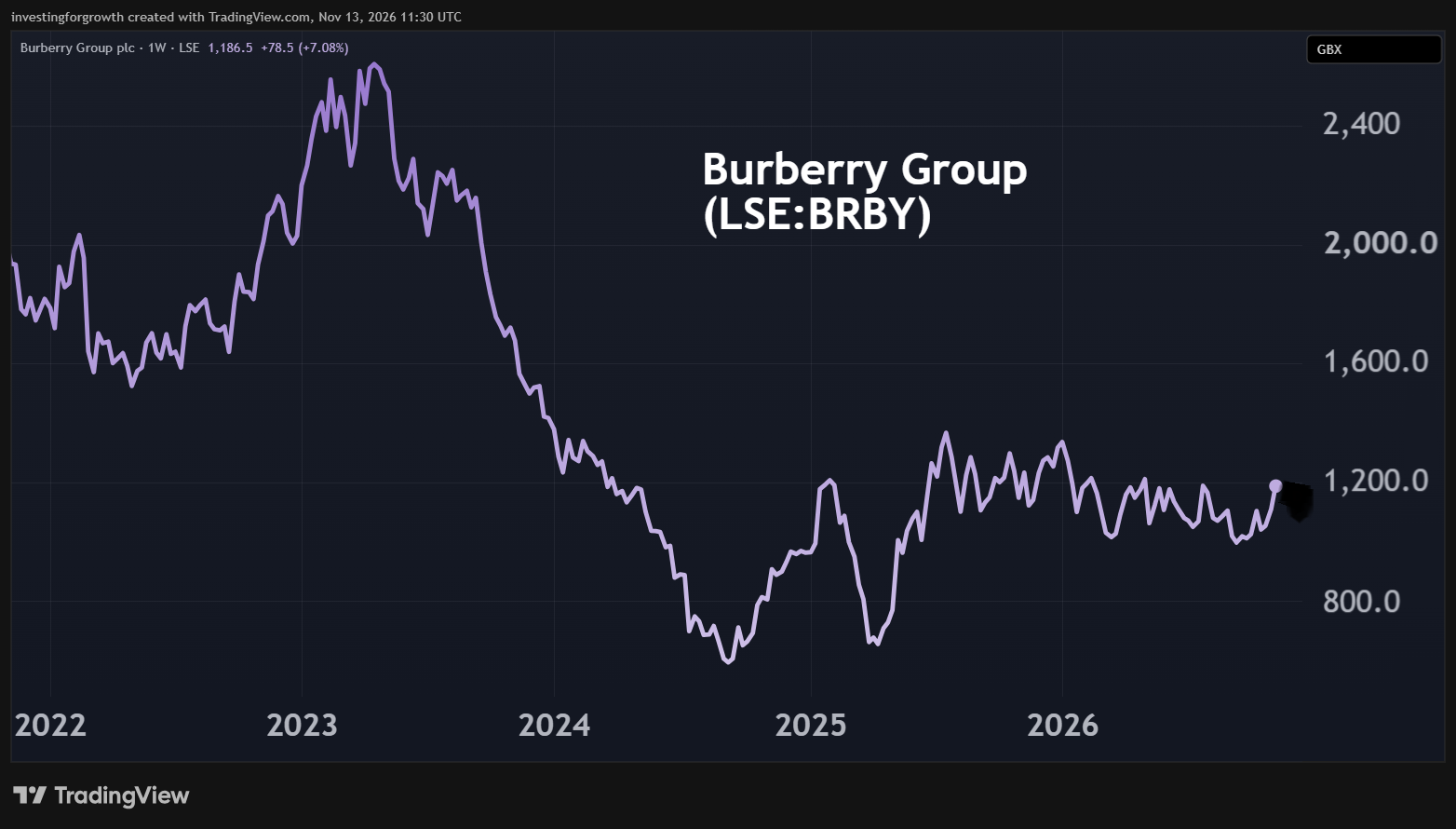
Burberry Group (LSE:BRBY) is the comparative foil – spending on luxury consumer goods possibly less affected by interest rate changes – but mind these groups are often international in sales despite a “British” tag, even including AIM-listed Sanderson Design Group Ordinary Shares (LSE:SDG). The UK represents less than 10% of Burberry’s annual sales, with China leading at 23% and the US 18%.
Its interim results, also to 26 September, show a 6.4% revenue rise and £66 million adjusted operating profit, aided by that margin up from 1.9% to 5.7%. The shares rose 8% to 1,180p in response, on 31.5x consensus estimates for 37.5p EPS this current year to 31 March, easing to 21.3x consensus for 55.3p EPS based on £135 million net profit in 2028.
- Another profit beat keeps Burberry turnaround on track
- New target for Rolls-Royce and dividend surprise from M&S
With a prospective yield just 2% and around 5x net asset value, this can seem a rich valuation – and is why I have not been able to muster more than “hold” ratings – but I retain this given the turnaround story under a newish CEO could have plenty further to run, and Burberry is a takeover target for the brand.
Source: TradingView. Past performance is not a guide to future performance.
Focus on affordable homes when picking housebuilders
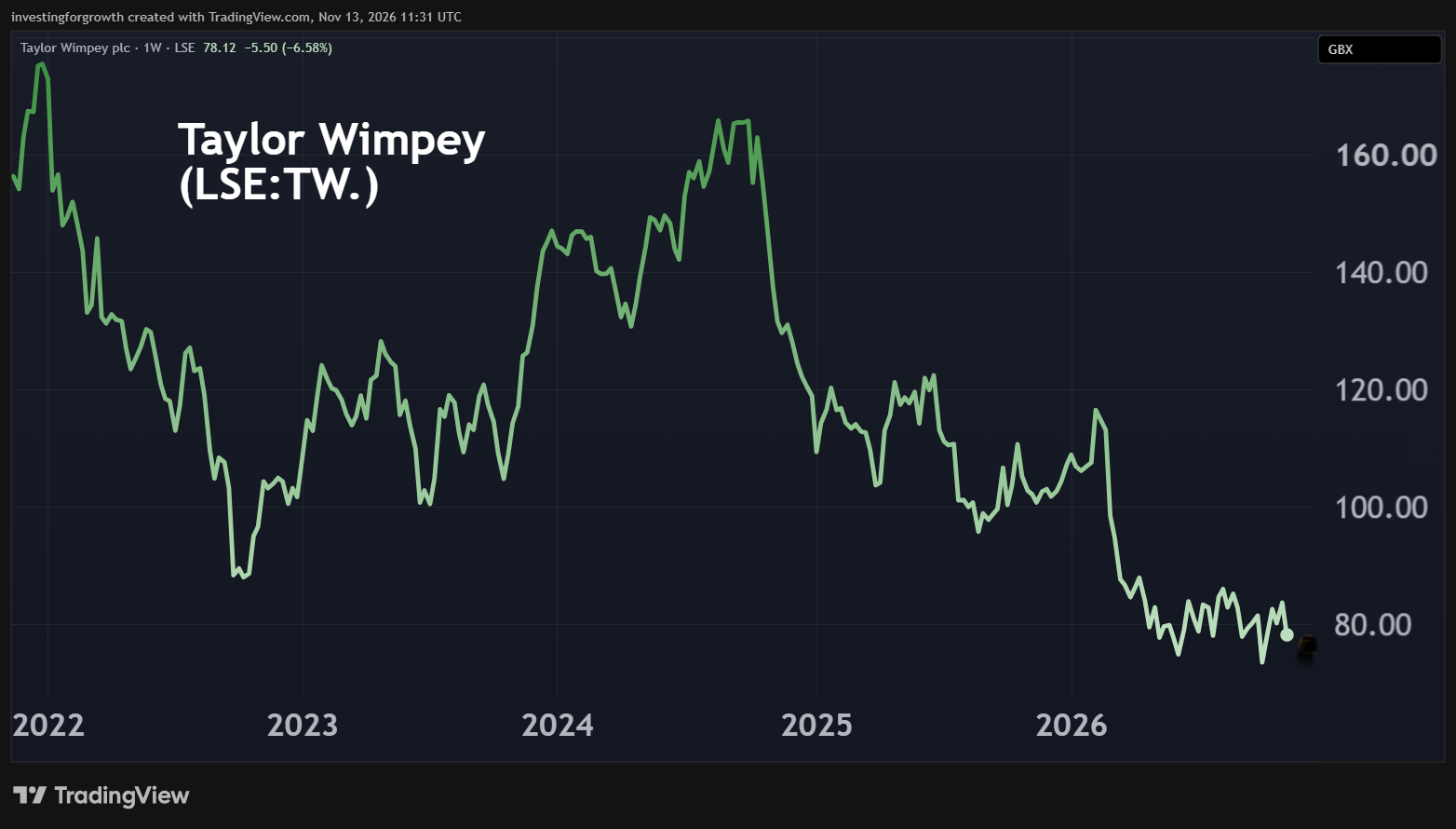
Rate rises compound the affordability issue where, for example, Taylor Wimpey (LSE:TW.) warned on 11 November that its 2026 adjusted operating profit will be right at the bottom of a £262-299 million consensus range.
Simultaneously, rising costs pressure builders’ margins. This update cited “further margin softening” and that the company continues to expect “build cost inflation of 3-4% for full year 2026”.
Due to the general decline in affordability, Taylor Wimpey’s order book has fallen 5.7% over 12 months to 6,839 homes, with their value down 6.2% to £1,984 million, reflecting discounts required to achieve sales albeit at further cost to margin.
Labour’s “Your first home” scheme seems unlikely to replicate the extent of profits boost that housebuilders enjoyed from Help to Buy.
Source: TradingView. Past performance is not a guide to future performance.
The upshot is clear: if investing in the sector, opt for builders prioritising affordable homes such as Vistry Group (LSE:VTY), MJ Gleeson (LSE:GLE) and Persimmon (LSE:PSN).
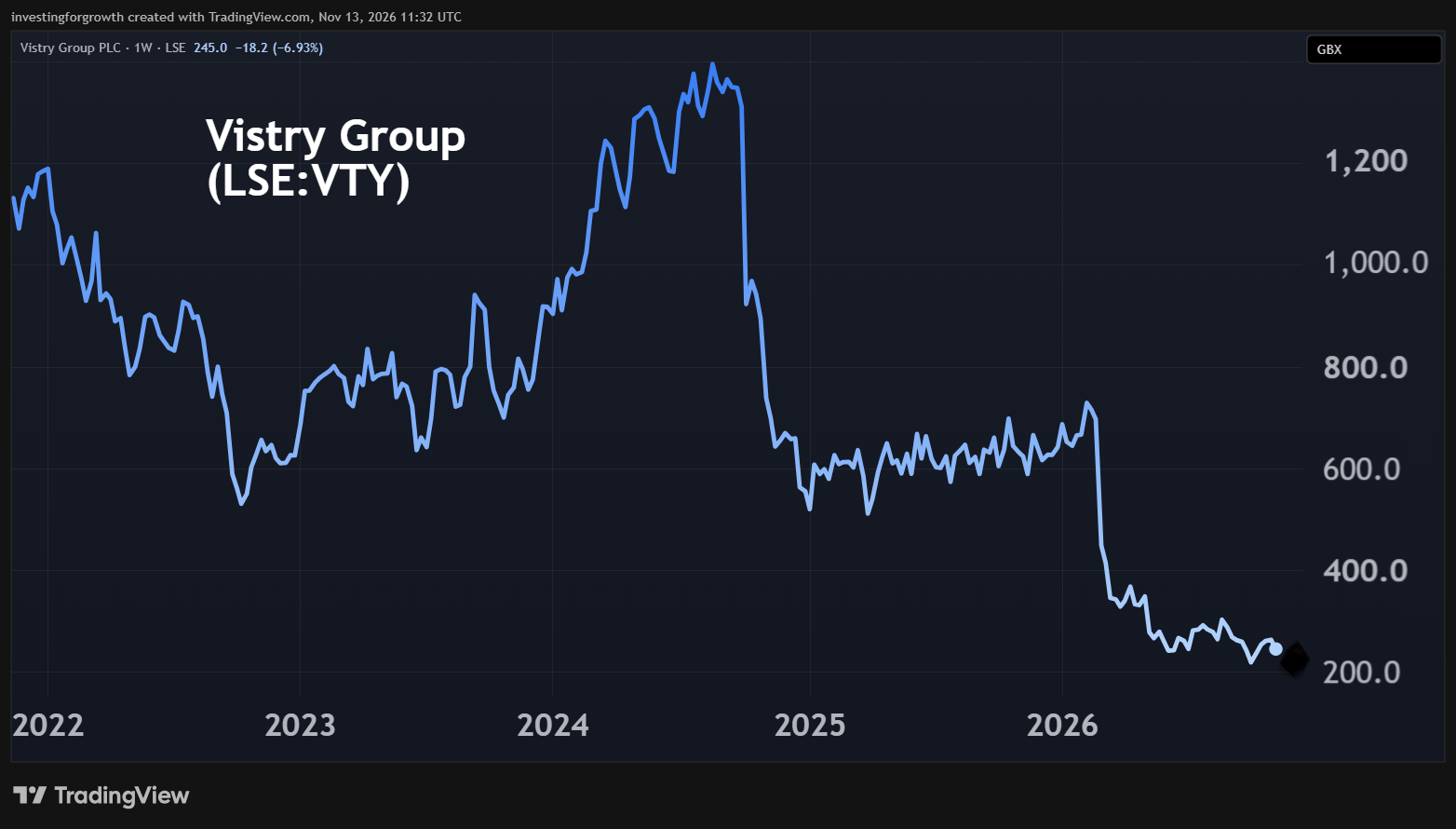
Mid-cap Vistry has the largest direct exposure, its partnerships business model targeting 65% to 75% of completions as such, equivalent to about one in seven of all affordable homes built in the UK.
Last August, Vistry was reconfirmed as a strategic partner under the government’s £39 billion sociable and affordable homes programme, securing a £350 million grant to build over 3,000 affordable homes. I re-iterated “buy” at 274p just recently on 6 November.
Source: TradingView. Past performance is not a guide to future performance.
Small-cap Gleeson is a pure-play specialist in low-cost, entry-level homes across the North of England and the Midlands. Since its properties are priced specifically for low-to-middle income, sales are sensitive to entry-level affordability, hence are a double-edged sword currently.
I retained “buy” at 397p in September 2023 after which the shares went to over 600p a year later but are back down to 397p with a 2.4% prospective yield. My stance is unchanged.
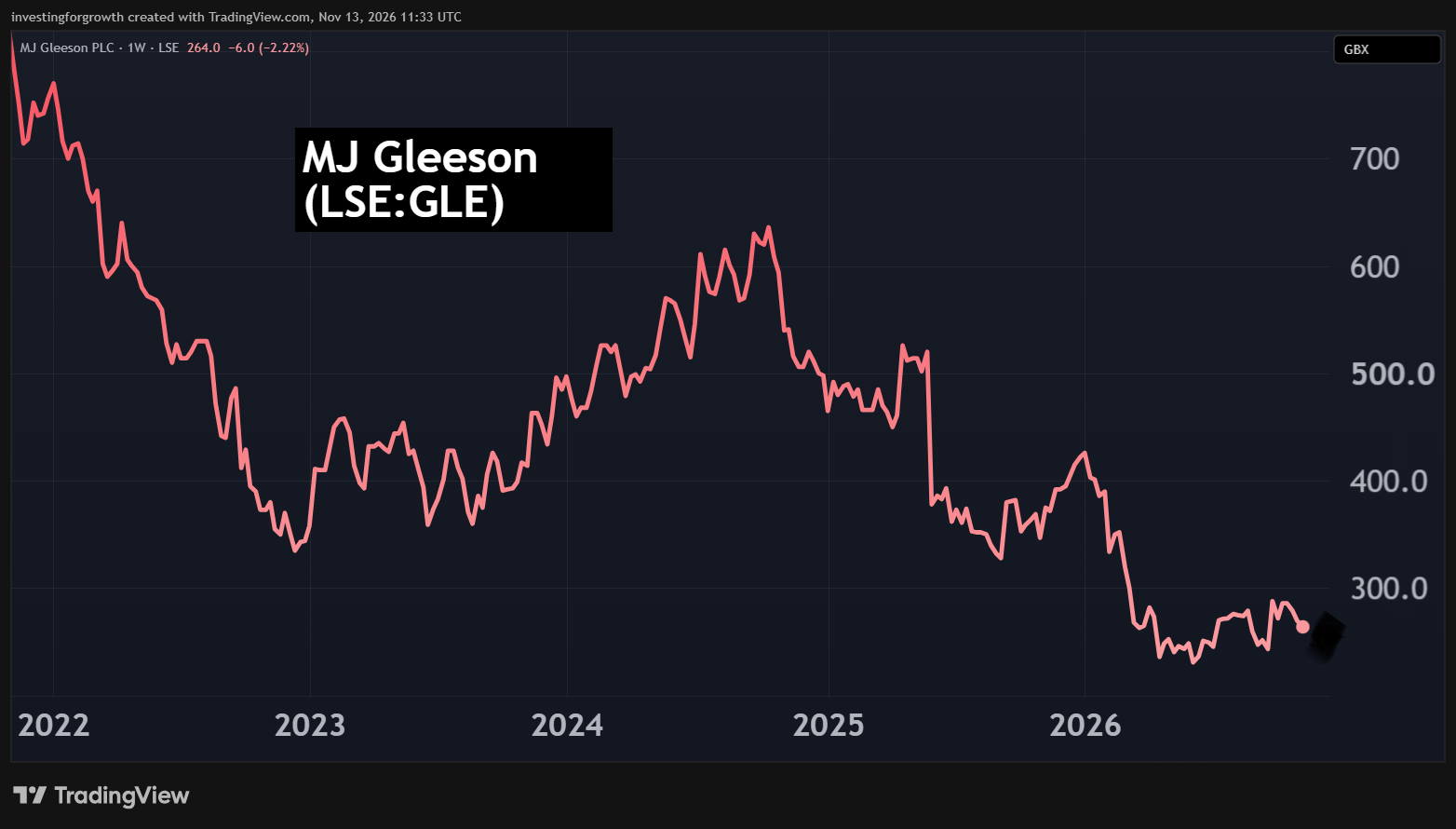
Source: TradingView. Past performance is not a guide to future performance.
In the FTSE 100, Persimmon has the lowest average selling prices at 11% below sector average, with about half of sales going to first-time buyers and around a quarter deriving from northern England – now the strongest market – with minimal reliance on expensive London.
A third-quarter 2026 update yesterday was “in line” albeit with 2027 profit growth looking limited. Total forward sales are up just 1%, although planning approvals are up 12% and some £30-40 million of 2027 cost headwinds are being mitigated.
The shares actually rose 3.2% to 1,293p in response, as if Persimmon is firmly the sector’s beauty queen – on 1.2x net tangible asset value, a 5.0% prospective yield and 12.3x PE – albeit 2027 consensus EPS growth of just 1.5%.
I contended “buy” at 1,080p in June since when the price has rallied 20% in five months. On that basis I temper my rating to “hold”.
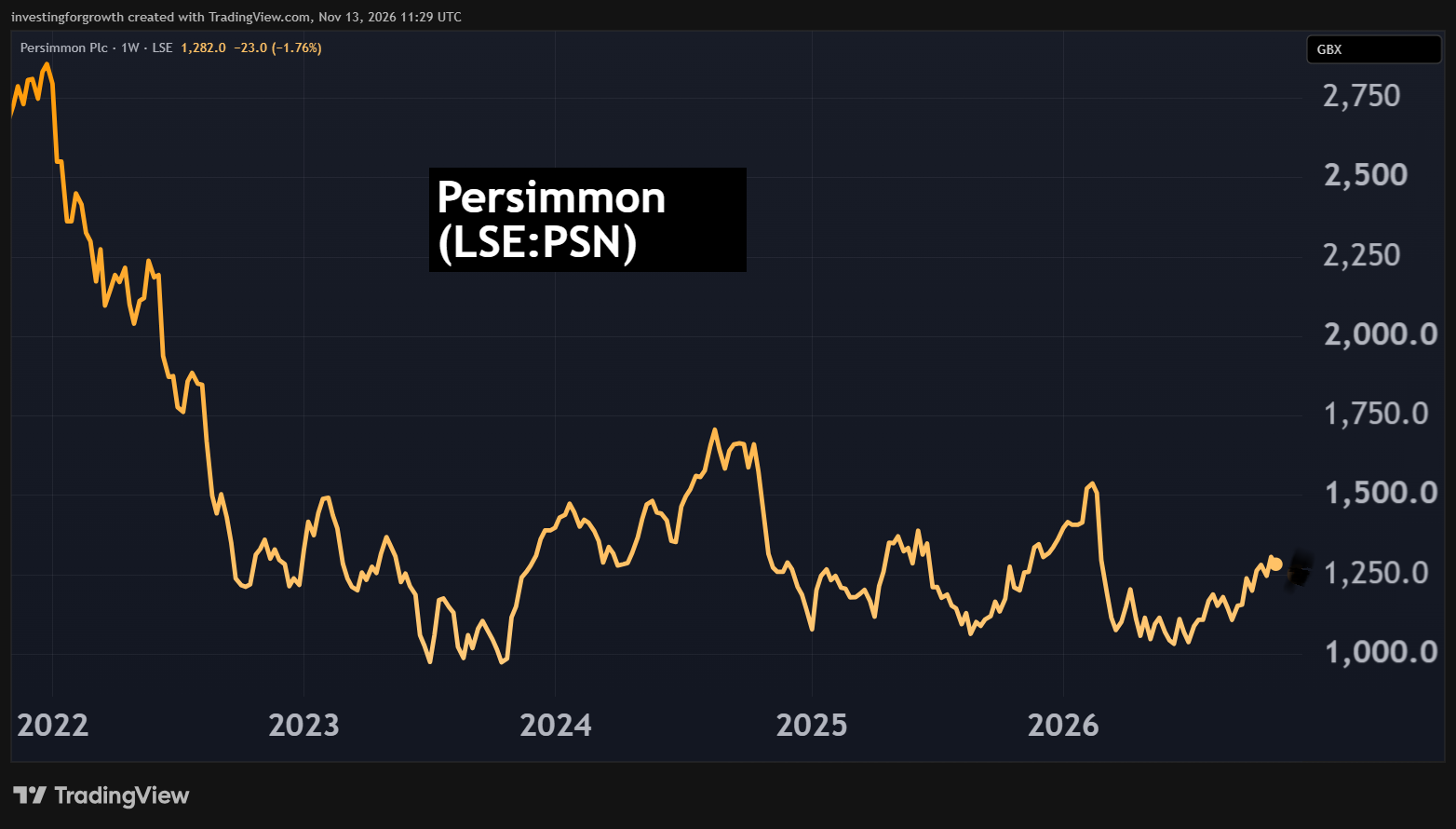
Source: TradingView. Past performance is not a guide to future performance.
Edmond Jackson is a freelance contributor and not a direct employee of interactive investor.
These articles are provided for information purposes only. Occasionally, an opinion about whether to buy or sell a specific investment may be provided by third parties. The content is not intended to be a personal recommendation to buy or sell any financial instrument or product, or to adopt any investment strategy as it is not provided based on an assessment of your investing knowledge and experience, your financial situation or your investment objectives. The value of your investments, and the income derived from them, may go down as well as up. You may not get back all the money that you invest. The investments referred to in this article may not be suitable for all investors, and if in doubt, an investor should seek advice from a qualified investment adviser.
Full performance can be found on the company or index summary page on the interactive investor website. Simply click on the company's or index name highlighted in the article.
Disclosure
We use a combination of fundamental and technical analysis in forming our view as to the valuation and prospects of an investment. Where relevant we have set out those particular matters we think are important in the above article, but further detail can be found here.
Please note that our article on this investment should not be considered to be a regular publication.
Details of all recommendations issued by ii during the previous 12-month period can be found here.
ii adheres to a strict code of conduct. Contributors may hold shares or have other interests in companies included in these portfolios, which could create a conflict of interests. Contributors intending to write about any financial instruments in which they have an interest are required to disclose such interest to ii and in the article itself. ii will at all times consider whether such interest impairs the objectivity of the recommendation.
In addition, individuals involved in the production of investment articles are subject to a personal account dealing restriction, which prevents them from placing a transaction in the specified instrument(s) for a period before and for five working days after such publication. This is to avoid personal interests conflicting with the interests of the recipients of those investment articles.