NatWest shares at 15-year high after cracking Q3 results
With results like these, the high street bank is pushing Barclays hard to become the preferred play in the sector, according to ii's head of markets.
24th October 2025 08:21
by Richard Hunter from interactive investor
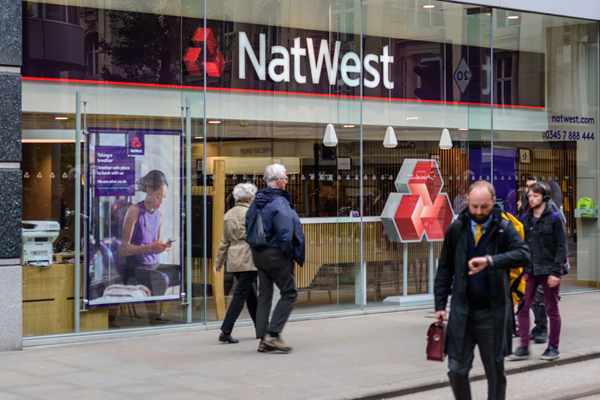
This is a sparkling set of numbers by any standards, as NatWest Group (LSE:NWG) continues its relentless recovery from its historic woes.
- Our Services: SIPP Account | Stocks & Shares ISA | See all Investment Accounts
As far as investors are concerned, NatWest is in a sweet spot. The government shackles have gone, the group has prodigious amounts of cash, and acquisitions to boost growth further seem likely.
Indeed, it remains to be seen whether this new-found freedom will enable a more aggressive acquisition policy, with NatWest already having made what it described as two significant purchases in the form of Metro Bank’s mortgage book and Sainsbury’s Bank and reportedly having been rebuffed in an approach for Santander’s UK operation.
Its significant cash generation will provide an interesting dilemma on whether to continue to bolster shareholder returns, make further acquisitions, invest heavily in the business particularly in regard to growing digitalisation, or perhaps a combination of all of these options.
At the headline level, profit of £1.68 billion was 35.1% higher than the previous year, with operating profit up by 30% to £2.18 billion, comfortably ahead of the expected £1.83 billion. Total income rose by 15.7% to £4.33 billion, again ahead of the £4.1 billion estimate. Within its three main units, operating profit rose by 30% to £850 million in Retail Banking, by 20% to £108 million in Private Banking and Wealth Management and by 2.4% to £1.04 billion in Commercial & Institutional.
- Lloyds Bank makes more than expected despite Q3 profit drop
- Barclays still preferred UK bank stock after Q3 results
- Sign up to our free newsletter for investment ideas, latest news and award-winning analysis
Revenue generally was boosted by both loan growth and structural hedge income, as well as a £4.4 billion increase in lending activity which included £1.7 billion of mortgage activity within Retail Banking. Possibly the only blot on the landscape was a decline of £1.1 billion in deposits, although given that assets under management and administration rose by 8.1% to £56 billion, this is of limited concern.
Higher income was also accompanied by operating costs which increased by 9.4% to £2 billion, although the reduction in the cost/income ratio from 52.8% to 47.8% in the year to date is likely to prove a sector-beating number.
Other key metrics also reflected strong progress, with a Return on Tangible Equity (ROTE) of 22.3% against 18.3% in the corresponding period, while a capital cushion or CET1 ratio of 14.2% breezed past the previous 13.6% number. There was an additional impairment charge for the quarter of £153 million, which compares to £245 million in the corresponding period, which is as much a measure of prudence rather than any underlying credit deterioration.
As a result, NatWest also raised its guidance for the full-year outlook, with income now expected to hit £16.3 billion and the ROTE to be in excess of 18% from the previous 16.5% level.
- The Analyst: cautious optimism is the popular market strategy
- Wild’s Winter Portfolios 2025-26: a return to form?
- Dividends are down, but UK funds are now beating global rivals
There is almost nothing of note for the bears to feed on from these results and the reaction at the open is one of warm appreciation. Investors have been handsomely rewarded in the recent past, where over the last year, a 53% hike in the share price compares to a gain of 15.8% for the wider FTSE100 which in turn has contributed to a rise of 153% over the last two years.
The current dividend yield of 4.6% is another attraction amid the group’s generous shareholder returns programme, and the market consensus of the shares as a comfortable buy is pushing Barclays (LSE:BARC) hard to become the preferred play in the sector.
These articles are provided for information purposes only. Occasionally, an opinion about whether to buy or sell a specific investment may be provided by third parties. The content is not intended to be a personal recommendation to buy or sell any financial instrument or product, or to adopt any investment strategy as it is not provided based on an assessment of your investing knowledge and experience, your financial situation or your investment objectives. The value of your investments, and the income derived from them, may go down as well as up. You may not get back all the money that you invest. The investments referred to in this article may not be suitable for all investors, and if in doubt, an investor should seek advice from a qualified investment adviser.
Full performance can be found on the company or index summary page on the interactive investor website. Simply click on the company's or index name highlighted in the article.