Charts of the week: the FTSE 100 and other strong trends
As markets enjoy their best day in ages, Max Macmillan highlights those that have weathered the storm well and demonstrate solid structural uptrends.
8th April 2026 15:09
by Max Macmillan from Aberdeen

Amid the tumult of geopolitical shocks, it is difficult, even treacherous, to put much weight on chart formations.
But zooming out, we can observe that throughout the volatility of March, some equity regions preserved the integrity of their strong primary trends.
In technical analysis, it can pay to seek alignment across time frames (good short-term and long-term dynamics), hunting for good risk/reward set-ups within a powerful jet stream.
The longer time frame (weekly candles, multi-year window) can be used to identify structural trends.
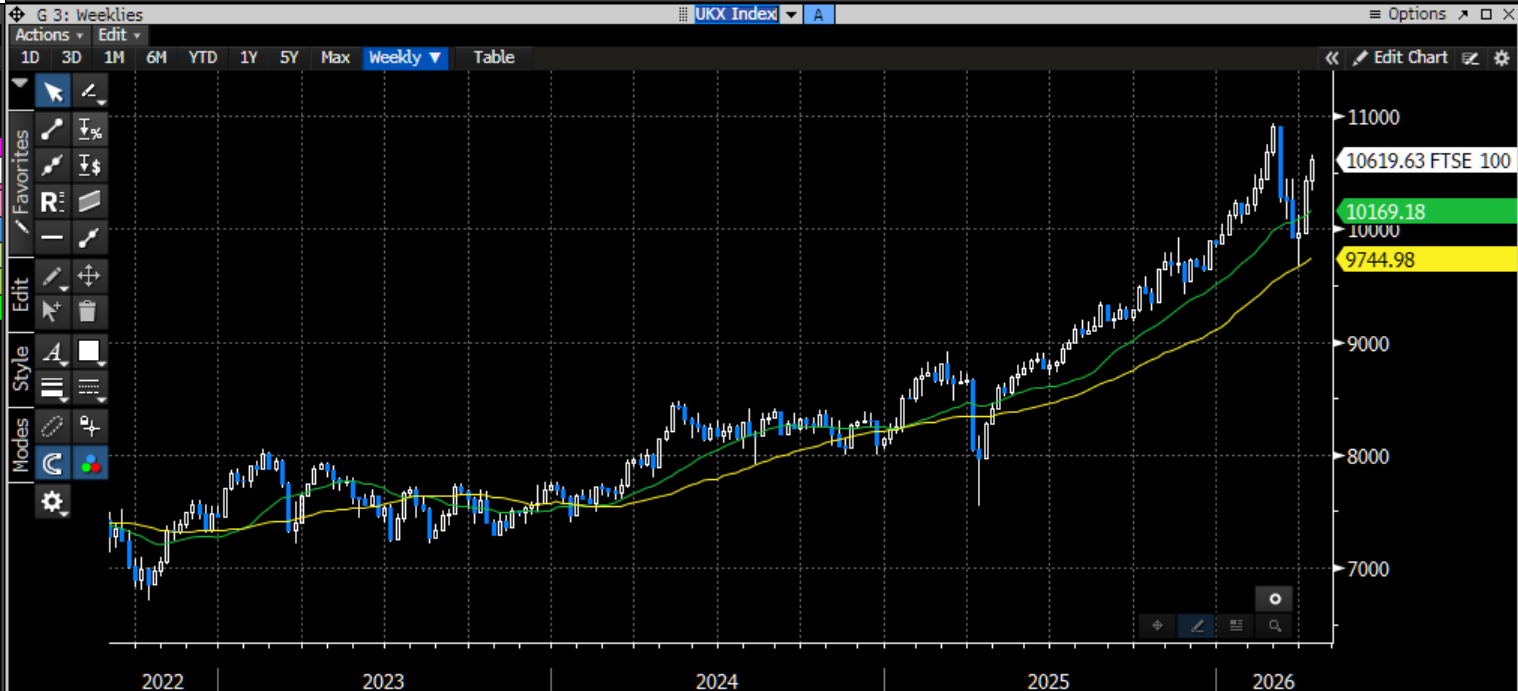
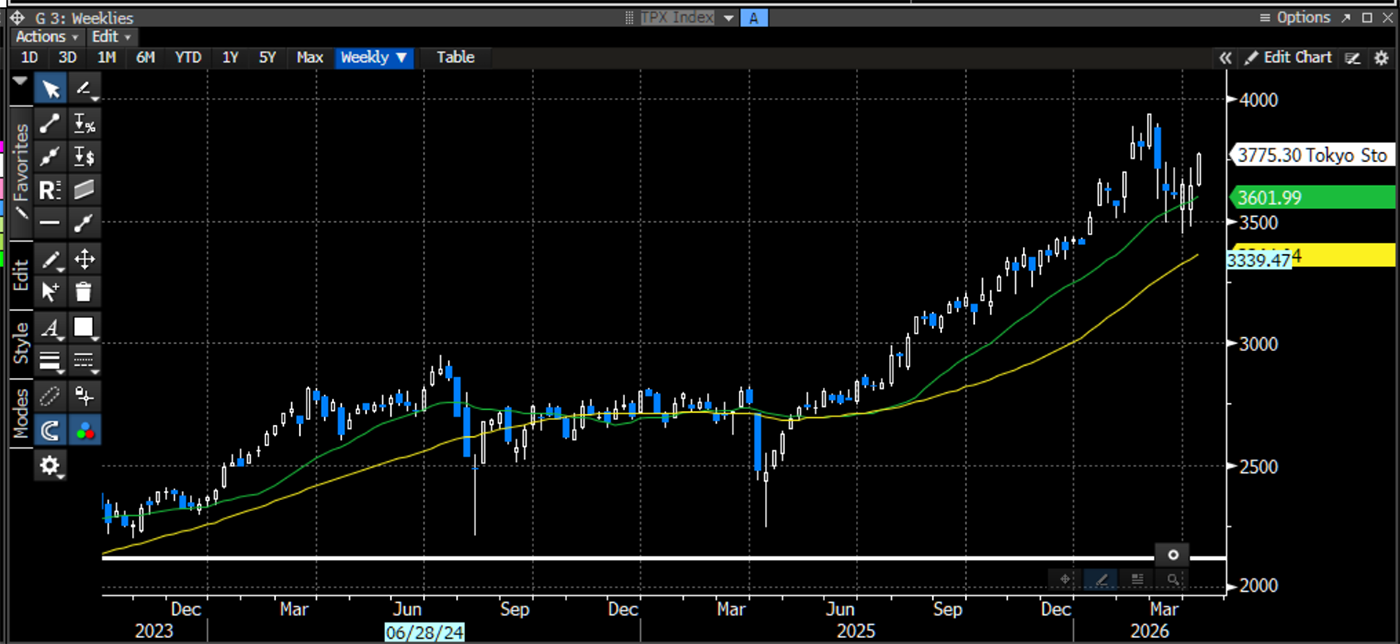
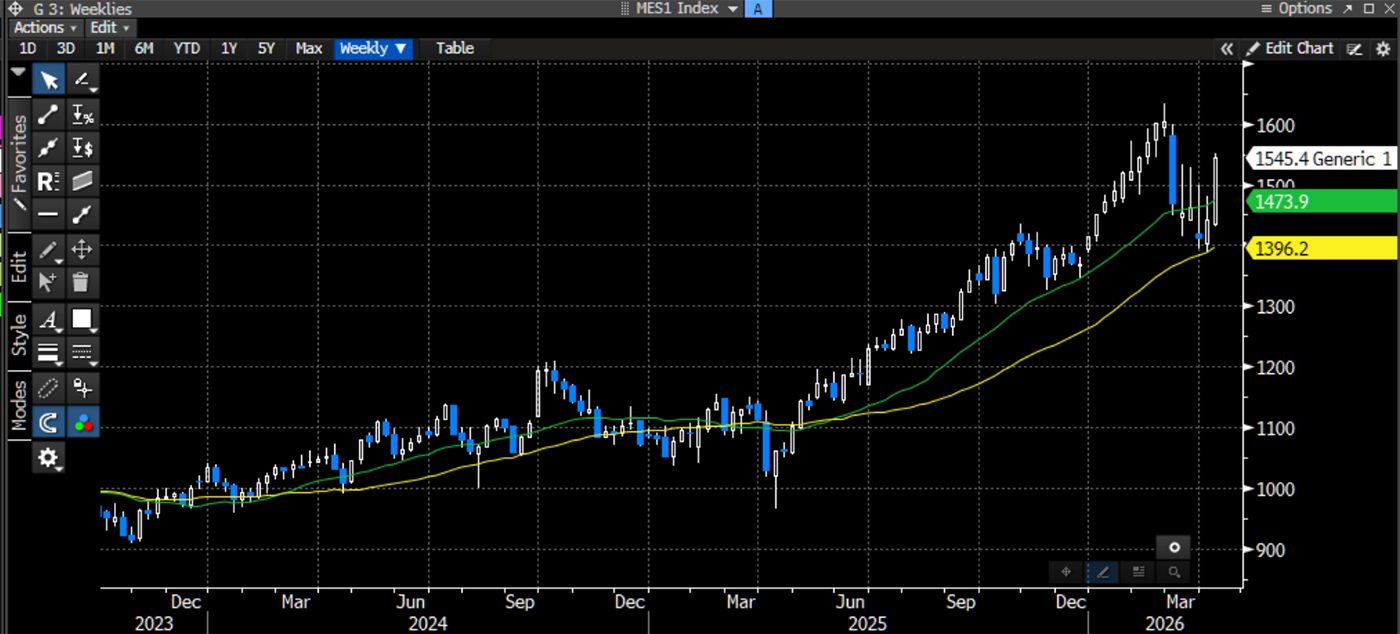
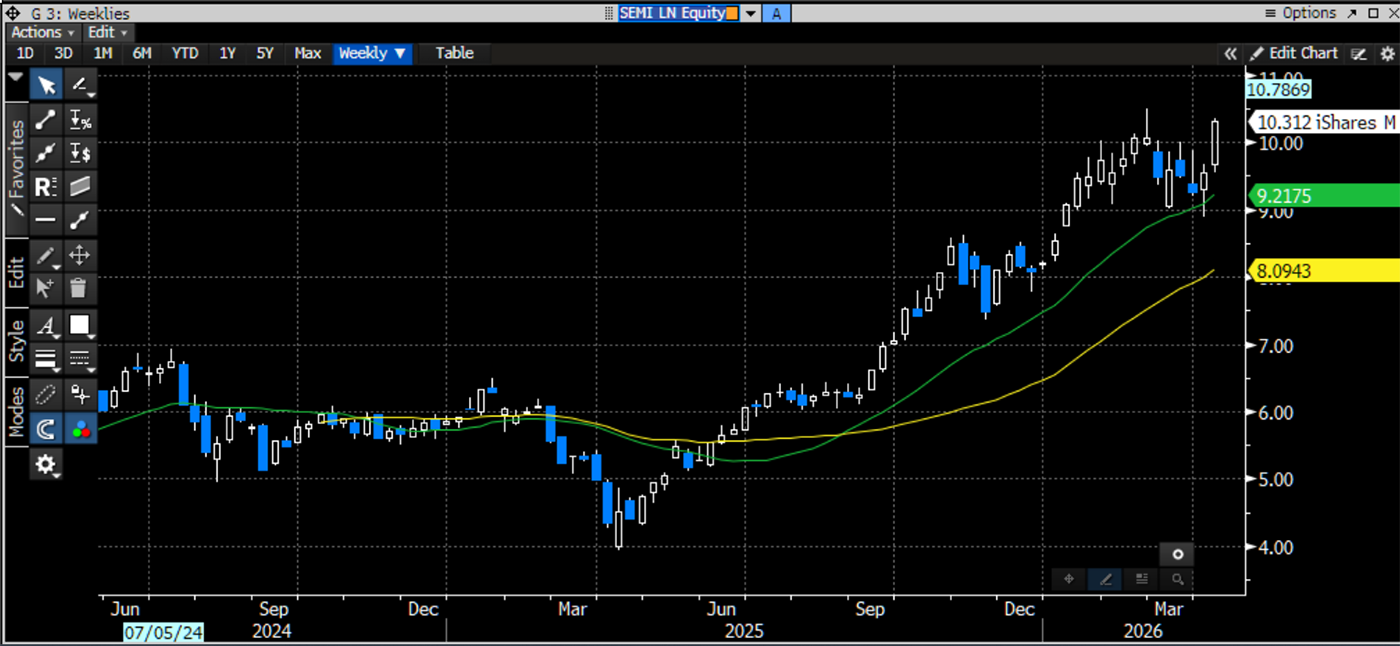
Today, we'll simply highlight a few markets whose jet streams remain intact, in the sense that they have continued to trend above their upward sloping 200-day moving averages (MAs): the UK, Japan, emerging markets and global semiconductors.
For longer-term positions, emergent trends after multi-year pullbacks are preferable, but when trading tactically, the support of a strong primary trend can help increase the hit ratio.
FTSE 100 has good bounce off the 200-day moving average
Source: Bloomberg. Past performance is not a guide to future performance.
Japan holding on to most of its performance gained since later summer 2025
Source: Bloomberg. Past performance is not a guide to future performance.
Emerging market equities reacting well to the rising 200-day MA
Source: Bloomberg. Past performance is not a guide to future performance.
Global semiconductors continuing to exhibit strong relative performance to broader indices
Source: Bloomberg. Past performance is not a guide to future performance.
Max Macmillan is head of Aberdeen’s macro investments team, managing unconstrained multi-asset funds.
The team conducts macro and technical analysis across multiple time frames, helping them manage portfolios dynamically and generate differentiated return streams. Technical analysis is used most actively for their shorter-term tactical risk taking.
The author would like to stress that technical analysis should not be understood as determining the future path of financial markets.
These articles are provided for information purposes only. Occasionally, an opinion about whether to buy or sell a specific investment may be provided by third parties. The content is not intended to be a personal recommendation to buy or sell any financial instrument or product, or to adopt any investment strategy as it is not provided based on an assessment of your investing knowledge and experience, your financial situation or your investment objectives. The value of your investments, and the income derived from them, may go down as well as up. You may not get back all the money that you invest. The investments referred to in this article may not be suitable for all investors, and if in doubt, an investor should seek advice from a qualified investment adviser.
Full performance can be found on the company or index summary page on the interactive investor website. Simply click on the company's or index name highlighted in the article.
Disclosure
We use a combination of fundamental and technical analysis in forming our view as to the valuation and prospects of an investment. Where relevant we have set out those particular matters we think are important in the above article, but further detail can be found here.
Please note that our article on this investment should not be considered to be a regular publication.
Details of all recommendations issued by ii during the previous 12-month period can be found here.
ii adheres to a strict code of conduct. Contributors may hold shares or have other interests in companies included in these portfolios, which could create a conflict of interests. Contributors intending to write about any financial instruments in which they have an interest are required to disclose such interest to ii and in the article itself. ii will at all times consider whether such interest impairs the objectivity of the recommendation.
In addition, individuals involved in the production of investment articles are subject to a personal account dealing restriction, which prevents them from placing a transaction in the specified instrument(s) for a period before and for five working days after such publication. This is to avoid personal interests conflicting with the interests of the recipients of those investment articles.