Why silver is gold’s volatile cousin
This article outlines what silver is, how it differs from gold, when and why it can underperform or outperform, while also offering a brief outlook for the precious metal.
5th March 2026 11:36
by Aberdeen Investments from Aberdeen
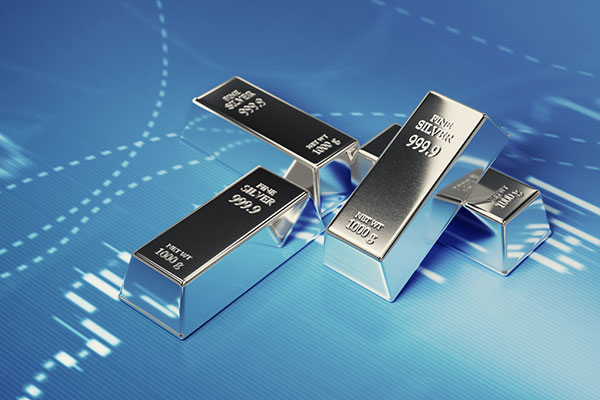
Silver occupies a distinct position within the commodities complex. While it is classified as a precious metal, it doesn’t function primarily as a monetary reserve asset like gold. Instead, its price behaviour reflects a blend of industrial demand drivers and investor participation – a combination that has earned silver its reputation as gold’s more volatile cousin.
Why family resemblance matters
Like gold, silver often attracts attention during periods of economic uncertainty. However, unlike gold, silver’s deeper ties to the real economy mean it tends to move with greater intensity. Understanding that distinction is critical to investors assessing silver’s role, risks, and behavior within a portfolio.
In this article, we outline what silver is, how it differs from gold, when and why it can underperform or outperform, examine how policy shifts in India and China intersect with ongoing structural supply before finally offering a brief outlook for the precious metal.
Industrial demand: the core driver
Silver’s demand profile is dominated by industrial usage. According to the Silver Institute’s World Silver Survey 2025, industrial demand in 2024 reached a record 680.5 million ounces (Moz), driven by electronics, photovoltaic (PV) installations, electrification, and emerging technologies, such as artificial intelligence-related hardware.
Industrial applications now account for roughly half of total silver demand – a stark contrast with gold, where industrial use plays a limited role. Silver’s exceptional electrical and thermal conductivity makes it difficult to substitute in high‑performance applications such as solar PV cells and electric vehicle (EV) electronics.
Despite higher prices and efforts in some sectors to reduce silver loadings, fabrication demand has remained resilient. This persistence reinforces silver’s structural importance across modern supply chains – and helps explain why its price often reacts more sharply to shifts in economic activity than gold’s.
How silver differs from gold
We believe the differences between silver and gold are fundamental.
- Demand composition
Gold demand is driven largely by investment, jewellery, and central bank holdings. Silver demand, by contrast, is dominated by industrial fabrication, supplemented by jewellery demand and episodic investment flows.
- Market size and volatility
Silver’s market is materially smaller than gold’s, meaning that investment flows – via exchange-traded products (ETPs), futures positioning, retail bullion demand – can have a magnified impact on price. When industrial tightness coincides with positive investor sentiment, price moves can be pronounced.
- Supply mechanisms
Approximately 70% of silver production is a by-product of base metal mining, primarily lead, zinc, and copper. This limits the responsiveness of silver supply to price signals alone, unlike gold, where production decisions are more directly linked to gold prices.
- Persistent structural deficits
One of the most significant themes in recent silver markets has been a series of multi-year supply deficits.
According to the World Silver Survey 2025, the silver market recorded a 210.5Moz deficit in 2024, the fourth consecutive annual shortfall. Projections for 2025 suggest another sizeable deficit (187.6 Moz) as supply again struggles to keep pace with demand. Cumulatively, deficits over recent years amount to more than a full year of global mine production.
These conditions reflect a fundamental imbalance: demand for silver – industrial, jewellery, investment, as well as other uses – has consistently exceeded aggregate supply from mine production and recycling. In a smaller market like silver’s, that imbalance can translate into sharper price adjustments than those typically seen in gold.
Investor participation and price sensitivity
Although silver’s fundamentals are industrial, it trades actively in financial markets, via futures, ETPs, physical coins and bars, and retail demand. In 2025, ETP holdings and speculative positioning rose sharply, signaling renewed investor interest. [1]
Because the silver market is smaller and less liquid than gold’s, investor flows can amplify price moves in both directions. This is where the volatile cousin label becomes more than a metaphor: changes in positioning that might produce modest moves in gold can generate outsized reactions in silver.
Recent volatility
Silver’s reputation as gold’s volatile cousin reflects more than colourful language. Its smaller market size, industrial demand profile, and active participation in financial markets mean that shifts in sentiment or positioning can translate into sharp price moves.
Following a period of strong gains, recent price retracements reflected reduced speculative positioning, increased profit taking, and softer risk appetite across financial markets. In a market as tightly balanced as silver’s, even temporary changes in investor demand can have an outsized short-term impact.
Looking ahead, we believe silver’s outlook remains closely tied to the balance between structural industrial demand and investor participation. While long‑term demand drivers remain intact and supply responsiveness limited, investors should expect continued volatility rather than a smooth price path.
Why deficits persist
- Inelastic mine supply
Since most silver is produced as a by-product of base metal mining, higher silver prices do not automatically lead to higher output. Decisions to expand base metal mines are driven by copper, zinc, and lead economics, not silver fundamentals alone. Over the past decade, global silver mine supply has actually fallen 8% despite rising demand.
- Limited scrap responsiveness
Scrap recycling is an important source of supply, and it increased in 2024 to a 12-year high of 193.9 Moz (million troy ounces). However, scrap growth remains constrained because much silver is used in products – such as electronics, PV modules, and industrial alloys – where recovery is technically complex or uneconomic.
This limited elasticity on both primary and secondary supply channels is a core reason deficits are not self-correcting.
Policy drivers: India and China
In late 2025, a notable structural shift emerged when the Pension Fund Regulatory and Development Authority in India approved allocations to both gold and silver exchange-traded funds (ETFs) under defined pension schemes.
This change creates an institutional demand channel that did not previously exist in a regulated, rules-based form. India is already one of the world’s largest silver-consuming markets, both industrially and culturally, and introducing pension capital into silver markets adds steady, long-term demand flows that could alter the supply/demand balance incrementally.
In China, its government implemented a new export licensing system for silver at the start of this year. While China’s share of global mined silver output is modest, its role as a major refining and trading hub means changes in export policy can influence global flows and sentiment.
Export licensing introduces administrative oversight that can act as a non-price supply constraint in markets already operating in deficit. Early perception effects alone can amplify price volatility as traders hedge against potential bottlenecks.
Accessing silver through diversified raw‑materials exposure
Some investors prefer to gain exposure to silver as part of a broader raw‑materials allocation rather than through a single‑metal investment. Diversified approaches can provide exposure to silver alongside other materials that are essential to long‑term structural themes such as electrification, renewable energy, and technological innovation.
One example is the abrdn Future Raw Materials ETF USD Acc GBP (LSE:ARAW), which provides exposure to companies involved in producing and processing materials that are critical to the energy transition and modern infrastructure.
By revenue, silver currently represents around 6% of the fund’s exposure, reflecting its importance as a key industrial input rather than a concentrated, single‑commodity position.
Final thoughts
Silver’s modern identity is defined less by its status as a precious metal and more by its role as a critical industrial input. Persistent supply constraints, combined with strong demand from sectors such as electrification, renewable energy, and electronics, help explain both silver’s long‑term relevance and its tendency toward sharp price swings.
In that sense, silver behaves much like gold’s more volatile cousin – sharing some of gold’s defensive characteristics but responding more forcefully to changes in industrial demand and market sentiment.
For investors, understanding the relationship is vital to appreciating both the opportunities and the risks silver presents within the broader commodities universe.
- Industrial dominance. Silver’s demand is driven primarily by industrial uses, with record demand exceeding 680 Moz in 2024.
- Multi-year deficits. The silver market has recorded persistent deficits, including ~210.5 Moz in 2024 and an estimated ~187.6 Moz in 2025.
- Supply constraints. Production remains largely inelastic due to by-product supply, and scrap recycling provides limited relief.
- Policy shifts. India’s pension fund approval for silver ETF allocations and China’s export-licensing regime adds structural demand and supply sensitivities.
- Investment sensitivity. Silver’s smaller market amplifies investor flows, which can magnify price moves.
[1] Bloomberg data, Silver ETF ounces held 12/31/2024 to 12/31/2025.
ii is an Aberdeen business.
Aberdeen is a global investment company that helps customers plan, save and invest for their future.
These articles are provided for information purposes only. Occasionally, an opinion about whether to buy or sell a specific investment may be provided by third parties. The content is not intended to be a personal recommendation to buy or sell any financial instrument or product, or to adopt any investment strategy as it is not provided based on an assessment of your investing knowledge and experience, your financial situation or your investment objectives. The value of your investments, and the income derived from them, may go down as well as up. You may not get back all the money that you invest. The investments referred to in this article may not be suitable for all investors, and if in doubt, an investor should seek advice from a qualified investment adviser.
Full performance can be found on the company or index summary page on the interactive investor website. Simply click on the company's or index name highlighted in the article.