easyJet bids farewell to stock market with profit plunge
An accepted takeover approach means this is the short-haul airline's last annual report as a listed company. ii's head of markets runs through the numbers.
25th November 2026 08:25
by Richard Hunter from interactive investor
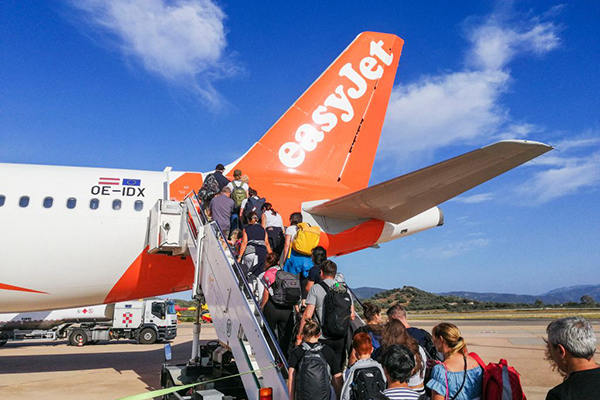
easyJet (LSE:EZJ) would have wished to be checking out flying high, but these results are unfortunately far from its finest hour.
- Our Services: SIPP Account | Stocks & Shares ISA | See all Investment Accounts
The annual report is the airline's last as a listed company following the £5.7 billion, 715p-per-share acquisition by US investment group Apollo, which is expected to complete in the first quarter next year. The 46% jump in the share price over the last 12 months (34% this year alone) is due to the takeover premium, which masks the challenges the group has been facing, as evidenced by its April profit warning.
The conflict in the Middle East has taken a heavy toll, most obviously on fuel costs, but also on demand. At the same time, the group has continued to invest in the business in terms of the fleet and, for example, opening new hubs in Milan and Rome but, taken in tandem, profitability has suffered.
- Stockwatch: can former FTSE 100 share recover after a fall of 99%?
- New broker view on Glencore and UK mining sector
Revenue for the year ended 30 September rose by 6% to £10.74 billion but was swept away by other factors. Fuel costs increased by 11% to £2.5 billion, while airline costs, which includes the likes of airport and ground handling, crew, navigation and maintenance, spiked by 12% to £5.8 billion.
In turn, pre-tax profit of £71 million was 89% lower than the previous year, itself a long haul away from the group’s previously stated medium-term aim of £1 billion. There was a slight improvement in the second half of the year as pre-tax profit of £623 million was recorded, itself down by 41% on the corresponding period, but the damage had already been done.
Despite the disappointment, easyJet has reasons to be cheerful on prospects, even if they are currently less visible. The group continues to develop the business in terms of digital capability, and a Wi-Fi partnership with Starlink is due to begin in spring 2027. The balance sheet remains in reasonable shape, with net cash of £268 million and access to liquidity of £4.4 billion, while the group has also decided not to pay a dividend for this period given the performance and the terms of the takeover.
- Investing for Christmas: ii Community’s verdict on gifting £500
- eyeQ: a good entry level for a stock with a strong story
Specifically, there have been two areas where easyJet continues to enjoy some success, and these could well be a chief reason as to why two companies were caught in a bidding war for the business.
The easyJet holidays arm has been the recent star of the show. This is a burgeoning business which seems to have come at the right time with cost-conscious consumers searching for value packages. The group has high hopes for the unit’s longer-term contribution, with a target of £450 million of pre-tax profit by 2030.
Further expansion is now planned or in train, including the introduction of new flight and hotel packages, which will include an expansion in Germany. The holidays arm saw customer numbers grow by 13% to 3.5 million, revenue by 19% to £1.7 billion and pre-tax profit by 6% to £266 million in the period.
In addition, the benefits of increasing ancillary revenues, which include customer payments for personally allocated seats, baggage and food, are in evidence. Accounting for 26% of group revenue, customers are clearly still readily prepared to pay for these extras, while also adding another string to the group’s income bow.
- Investment trusts on big discounts: which are bargains?
- Sign up to our free newsletter for investment ideas, latest news and award-winning analysis
This also chimes with the group’s value-conscious appeal and the increasing body of evidence which tends to suggest that the family holiday remains almost sacrosanct and outside of normal budgetary restraints, even given the tense geopolitical backdrop and pressure on consumer spending. For the year, revenue grew by 6% to £2.76 billion and further tweaks are planned to the offerings.
The sector has always been volatile, and in its time easyJet has flitted between the FTSE100 and FTSE250 on any number of occasions as its share price has fluctuated. Apart from its specific performance, the industry is one which has had to deal with industrial action, volcanic ash clouds, geopolitical tensions to virus outbreaks, and more recently a switch to last minute bookings which reduces earnings visibility.
The Middle East conflict has of course compounded such difficulties and despite the takeover bounce, the shares remain 42% lower than pre-pandemic levels and 57% below the peak of March 2015. Market consensus had previously been positive on prospects and it remains to be seen whether easyJet can deliver its strategic objectives in its new life away from the market.
These articles are provided for information purposes only. Occasionally, an opinion about whether to buy or sell a specific investment may be provided by third parties. The content is not intended to be a personal recommendation to buy or sell any financial instrument or product, or to adopt any investment strategy as it is not provided based on an assessment of your investing knowledge and experience, your financial situation or your investment objectives. The value of your investments, and the income derived from them, may go down as well as up. You may not get back all the money that you invest. The investments referred to in this article may not be suitable for all investors, and if in doubt, an investor should seek advice from a qualified investment adviser.
Full performance can be found on the company or index summary page on the interactive investor website. Simply click on the company's or index name highlighted in the article.