ii view: acquisition to aid Johnson Matthey revival
Buying a US provider of catalysts for power generation systems and providing exposure to growth in data centres. Buy, sell, or hold?
28th May 2026 15:45
by Keith Bowman from interactive investor
Full-year results to 31 March
- Revenues up 14% to £12.57 billion
- Adjusted operating profit from continuing operations up 6% to £340 million
- Final dividend of 55p per share
- Total dividend for the year unchanged at 77p per share
- Net debt of £880 million, up from £810 million a year ago
Guidance:
- Expects single digit percentage growth in adjusted operating profit for the year ahead to 31 March 2027 - excludes Catalyst Technologies and Cormetech businesses.
Chief executive Liam Condon said:
“In May 2025, we set out our strategy to transform Johnson Matthey into a focused, lean and cash generative group. The significant increase in cash generation shows our strategy is working.
"We also made progress in the year on decisive portfolio changes that will reshape the company for years to come and drive sustainable value creation.
"We are on track to achieve our medium-term targets and deliver enhanced shareholder returns.”
- Invest with ii: SIPP Account | Stocks & Shares ISA | See all Investment Accounts
ii round-up:
Johnson Matthey today detailed progress under an ongoing transformation programme, with the maker of pollution reduction products also expanding its clean air business via an acquisition.
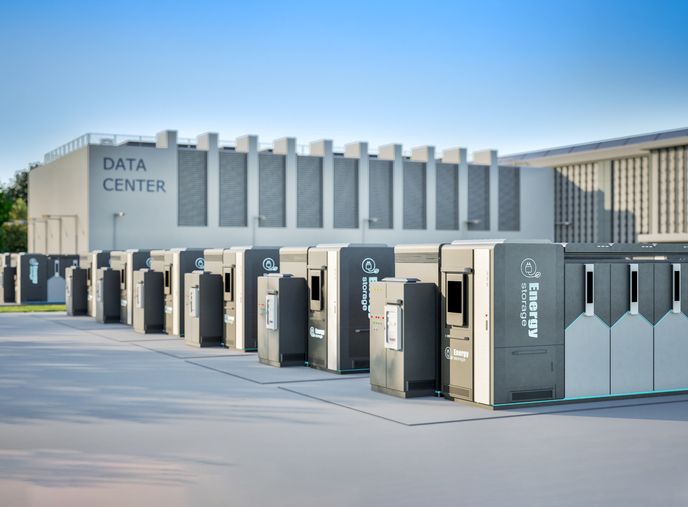
Adjusted operating profit for the year to late March rose 6% year-over-year to £340 million, driven largely by cost savings. That’s in line with management’s prior guidance. US company Cormetech is being purchased for up to $460 million. Cormetech orders have quadrupled in the last five years, aided by the supply of pollution reduction products to power systems fuelling data centres.
Shares in the FTSE 250 company fell 1% in post results trading having come into these latest results up by around a quarter over the last year. The FTSE 250 index is up 11% over that time.
JMAT’s operations are focused on Clean Air, making vehicle exhaust catalytic converter pollution reduction units; Platinum Group Metals (PGMs), recycling scrapped exhausts for their platinum to resupply; and Hydrogen Technologies, which makes components for fuel cells and electrolysers.
Johnson Matthey’s annual free cash flow of £164 million improved from the prior year’s £64 million. Management views the metric as a key health indicator.
A final dividend of 55p per share, payable to eligible shareholders on 4 August, leaves the total dividend for the year unchanged at 77p per share.
Management forecasts single digit percentage growth in adjusted operating profit for the year ahead to late March 2027, which is expected to prove second-half weighted.
The group’s AGM is scheduled for 16 July.
ii view:
Started in 1817, Johnson Matthey today employs around 10,000 people. Clean Air generated most profits over this latest financial year at £307 million. That was followed by PGM at £119 million, with Hydrogen Technologies losing £19 million. Geographically, major group markets include the UK, the USA, China and Germany.
For investors, the sale of the catalyst technologies business along with previous sales of battery materials and medical devices divisions now leaves Johnson Matthey with less product diversity. The broad move towards electric vehicles and renewable energy will reduce demand for emission reducing clean air products. The hydrogen business remains loss making, while forecast price/earnings (PE) ratio above the three-year average may suggest the shares are not obviously cheap.
- Don’t miss the next big IPO: get the latest IPO news and updates straight to your inbox
- L&G, Shell, BP and HSBC head £10bn FTSE 100 dividend payday
- Where the experts are taking risk, and holding back
On the upside, cost savings and efficiencies continue to be pursued. A rejig of the group’s business portfolio continues, with the core Clean Air division now bolstered by a US acquisition. The sale price of £1.32 billion achieved for the catalyst technologies business was above City hopes, with around £1 billion being returned to shareholders, while a global energy transition could yet see the Hydrogen business benefit.
On balance, a portfolio of fewer energy transition businesses offers lower potential future growth excitement. That said, a need for pollution reduction products is unlikely to vanish any time soon, with a prospective dividend yield of around 3.5% likely to keep investors interested.
Positives:
- Reduced capital expenditure
- Hydrogen technology opportunities
Negatives:
- Expected demand fall for catalytic converters
- Subject to currency headwinds
The average rating of stock market analysts:
Strong hold
These articles are provided for information purposes only. Occasionally, an opinion about whether to buy or sell a specific investment may be provided by third parties. The content is not intended to be a personal recommendation to buy or sell any financial instrument or product, or to adopt any investment strategy as it is not provided based on an assessment of your investing knowledge and experience, your financial situation or your investment objectives. The value of your investments, and the income derived from them, may go down as well as up. You may not get back all the money that you invest. The investments referred to in this article may not be suitable for all investors, and if in doubt, an investor should seek advice from a qualified investment adviser.
Full performance can be found on the company or index summary page on the interactive investor website. Simply click on the company's or index name highlighted in the article.