ii Top 50 Fund Index: Q1 2026
Discover the top funds for ii investors
Our latest ii Top 50 Fund Index ranks the most-popular funds, investment trusts and exchange-traded funds (ETFs) in each quarter.

Important information: As investment values can go down as well as up, you may not get back all the money you invest. Currency changes affect international investments, and this can decrease their value in sterling. If you’re unsure if an investment account is right for you, please speak to an authorised financial adviser. Tax treatment depends on your individual circumstances and may be subject to change in the future. Please note images displayed are for illustrative purposes only.
What is the ii Top 50 Fund Index?
Each quarter we take a deep dive into the types of funds, investment trusts and exchange-traded funds (ETFs) that are capturing the attention of interactive investor customers.
Our league table highlights the top 50 most-bought collective investments, shows how the rankings have changed, and highlights key trends.
The index is based on the number of purchases made by interactive investor customers over a three-month period (with the latest edition covering 1 January 2026 to 31 March 2026). The data is for real-time trades, which excludes regular investing.
Investors broaden their horizons
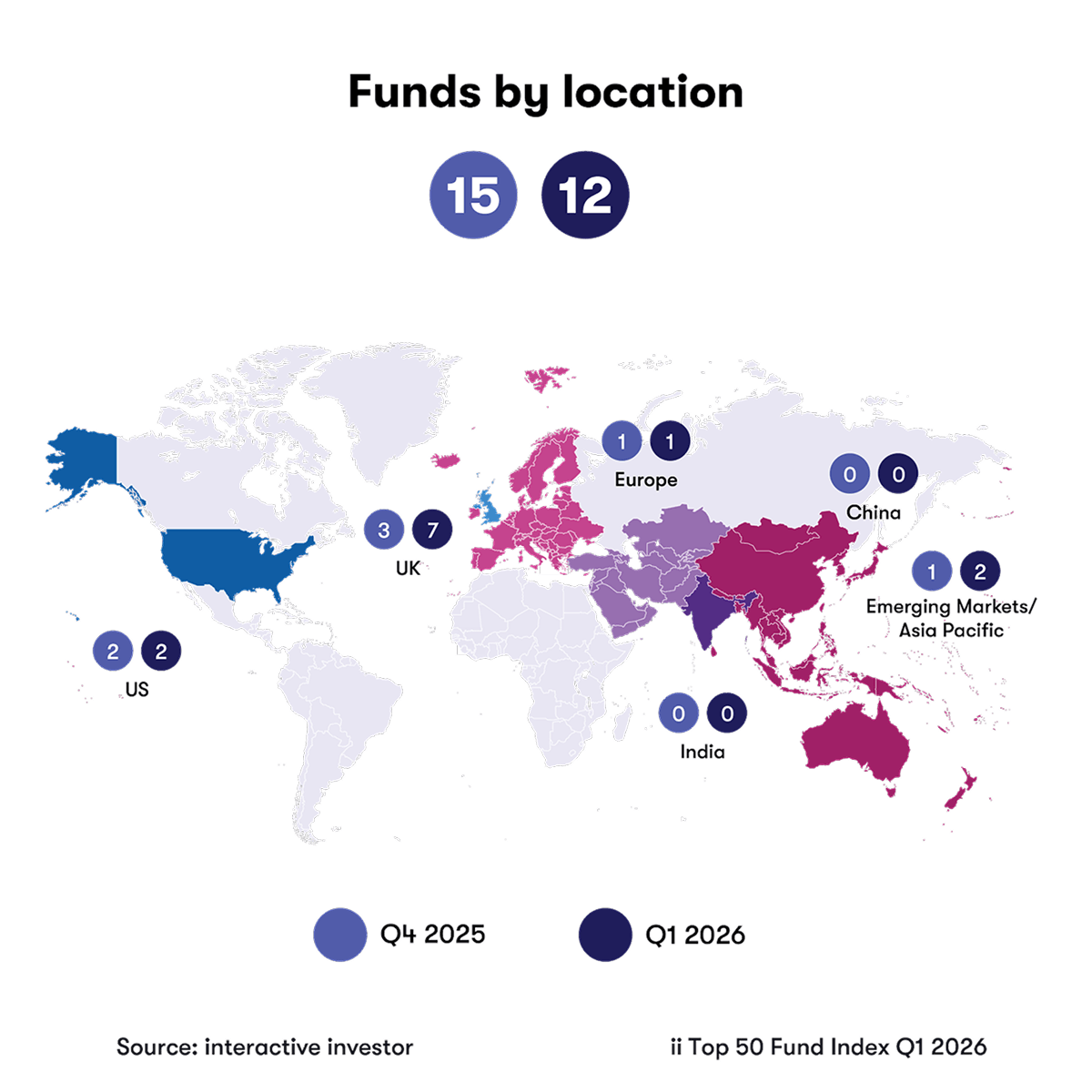
In the two and a half years since we started this quarterly index, the number of global funds has dropped to its lowest level, falling from 15 to 12 at the end of March. This could reflect concerns over the heavy weighting to the US, with a typical global tracker fund or ETF allocating over 70% to the country.
The concentrated nature of US stock market performance over recent years, which has been heavily influenced by the world’s biggest businesses, the so-called Magnificent Seven, may also be giving investors pause for thought.
Investors seeking out themes as satellite holdings
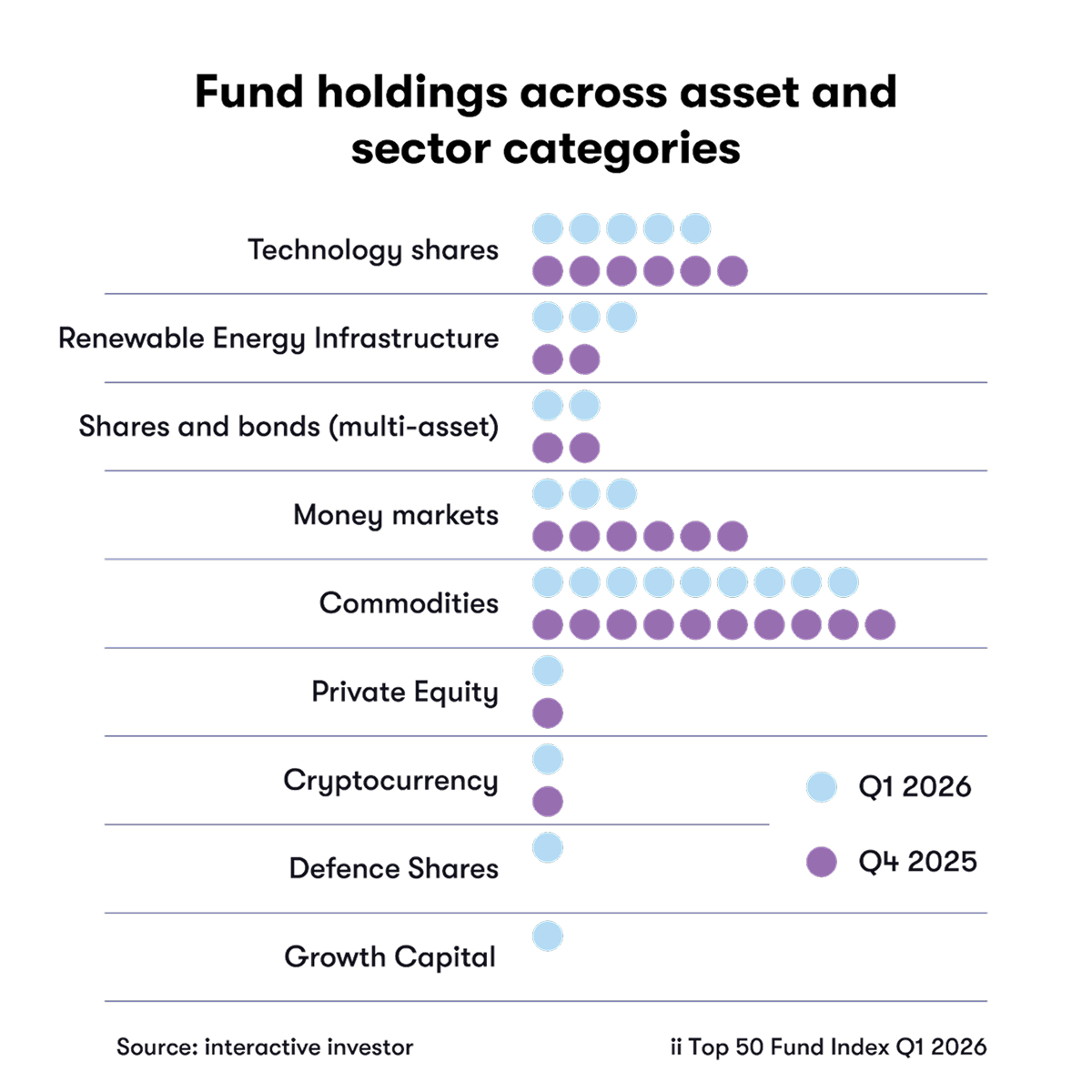
While there are various ways to build a portfolio, one useful strategy is the core and satellite approach. Core holdings, such as multi-asset funds or those investing in global shares, are among the contenders as such approaches can, in theory, work for the long term as they shouldn’t give you any nasty surprises. As a rough rule of thumb, core holdings could collectively comprise around 70% of a portfolio.
The remaining 30% is where investors can consider being more adventurous by seeking out higher-risk funds in pursuit of higher rewards. Among the options are funds that invest in themes, which investors are showing a preference for at present, with commodities, technology and renewable energy infrastructure proving particularly popular.
Investors focus on UK large company plays
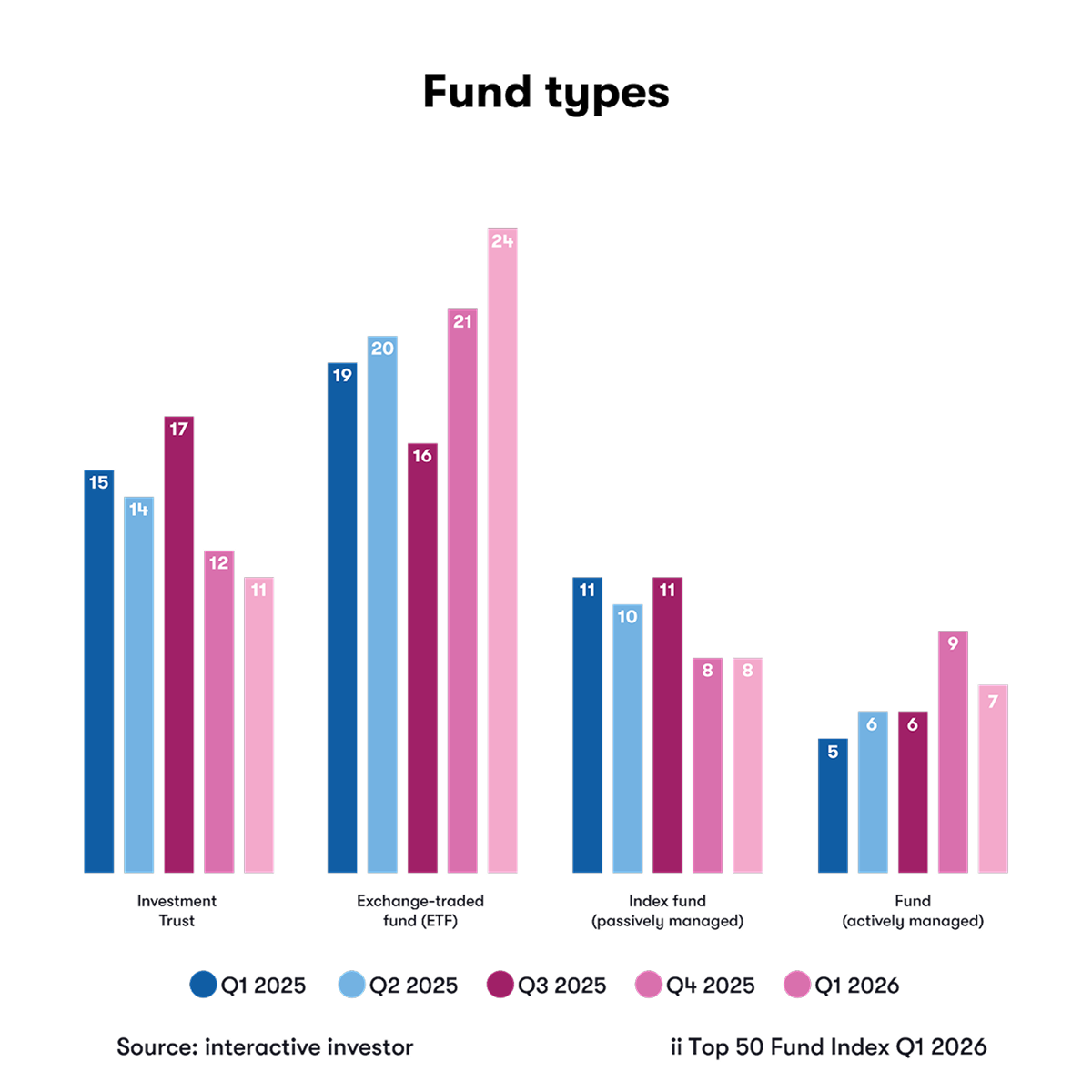
A key trend in the first quarter of 2026 was increased demand for funds investing in the UK. In terms of how investors gained exposure, three of the four new UK entrants are passively managed, meaning they seek to replicate the return of a certain part of the UK stock market.
Read more original research and reporting

ii SIPP Index
The ii SIPP Index reveals how interactive investor SIPP pension savers invest during their working life and in retirement.

Great British Retirement Survey
One of the largest retirement surveys of its kind, with research conducted for ii by Opinium Research.

2025 Investment Outlook
Our experts analyse the major talking points for investors and share their investment ideas for the future.

ii Index
Our ii Index reveals how our very own investors are navigating today’s market. Discover the key trends and insights.

Get in touch
If you would like to speak to one of our spokespeople or if you would like bespoke content from our expert writers, please contact:
Saffron Wainwright
PR Manager
Email: saffron.wainwright@ii.co.uk