Berkeley Group: little light at the end of the housing tunnel
Despite nursing the smallest share price loss in the housebuilding sector so far in 2026, there's little in this update to inspires confidence near-term. ii's head of markets has the details.
11th September 2026 08:28
by Richard Hunter from interactive investor
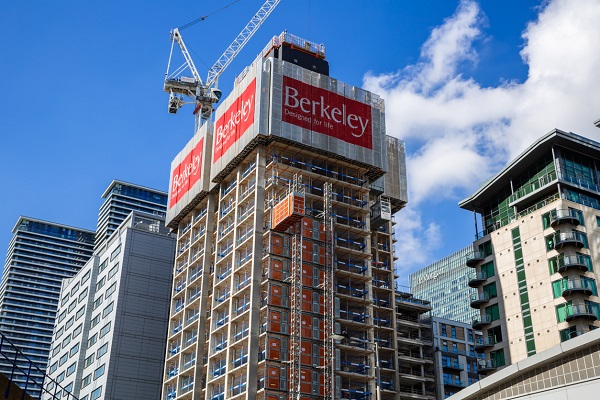
There are scant details within this update for the period 1 May to 31 August, although the backdrop clearly remains challenging, which gives Berkeley Group Holdings (The) (LSE:BKG) another opportunity for a rallying call to the Government for stamp duty and planning reform.
- Our Services: SIPP Account | Stocks & Shares ISA | See all Investment Accounts
Stamp duty is the particular focus of Berkeley’s lament. The group has suggested to the powers that be that stamp duty land tax (SDLT) be reduced to 1% for first time buyers and downsizers, alongside the removal of the 5% investor surcharge. It then quotes the Office for Budget Responsibility’s own historic estimate that for every 1% reduction in SDLT, there is an increase of up to 6% on transactions.
This is in addition to Berkeley’s previously stated exasperation with the time required to complete an apartment building in London through acquisition, planning, consultation and clearance which now takes eight years, whereas 10 years ago it was five.
- Buy, hold, or sell? The City’s view on six housebuilder shares
- Share Sleuth: new holding halves the cash pile
In the meantime, there seems little light at the end of the housing tunnel. The conflict in the Middle East is a general inflationary drag, which has led to the containment of trading and housing market activity. The group notes that it is receiving “good and stable” levels of enquiries, but that customers without an immediate need to move remain cautious to commit. There is then the additional complication of some buyers holding back until the outcome of next month’s Budget becomes clear.
Berkeley nonetheless remains committed to its target of £1.4 billion of pre-tax profit over a four-year period, with profits for this year skewed towards the first half subject to the timing of completions. At the full-year results in June, there was some disappointment that the group had halted land acquisitions for the time being, due to the view that the required return on investment could not be reached given a continuous increase in the tax and regulatory burden on residential development.
- Upgrade for hot sector amid ‘clear evidence of a cyclical recovery’
- Sector Screener: prospects for this top sector and a FTSE 100 giant
As such, the company is concentrating on its existing land holdings and those in the pipeline which number over 50,000 and 11,000 respectively, which also underpins some visibility on future earnings. The expected future gross profit on this bank is some £6.4 billion, which again provides a wall of insurance.
More positively, looking through the fragility of sentiment in the near-term, the group is confident that longer-term prospects are intact. London remains undersupplied in terms of housing and this is compounding as developments slow.
For potential buyers, there has been a period of strong wage growth and limited property inflation, coupled with adequate mortgage availability, while the current pressure on interest rates is likely to subside in time. This comes alongside the fact that Berkeley has been a highly regarded company for some considerable time, with its focus on long-term strategy a particular strength.
The current “Berkeley 2035” strategy represents a marathon, not a sprint. It has a number of strands, with the headlines being projected growth in the Return on Capital Employed, further investment in the group’s recently launched “Build to Rent” platform (“Berkeley Living”) and an ongoing focus on shareholder returns.
- Seven tips to boost your pension and cut your tax bill
- Sign up to our free newsletter for investment ideas, latest news and award-winning analysis
Berkeley’s conservative approach also resulted in expected net cash of £250 million for the half year, leading to a robust balance sheet which should enable the continuation of such shareholder returns over the coming years, currently skewed towards share buybacks in the absence of a dividend payment. In the year so far, the group has completed £60 million of its current share buyback programme which brings the cumulative total to £171 million, ahead of the run rate required to meet Berkeley’s stated objective of £640 million between 2025 and 2030.
The share price has inevitably been impacted by the dour sentiment around the sector, having fallen by 9% over the last year as compared to a gain of 10% for the wider FTSE250, to which it was relegated in June. The price is also 44% below the pre-pandemic highs of January 2020, overriding the group’s strategic nous and unwavering focus on a longer-term strategy.
Indeed, overall there is little new news within the update, such that the market consensus of the shares as a hold will likely remain in place until there are some signs of the green shoots of recovery.
These articles are provided for information purposes only. Occasionally, an opinion about whether to buy or sell a specific investment may be provided by third parties. The content is not intended to be a personal recommendation to buy or sell any financial instrument or product, or to adopt any investment strategy as it is not provided based on an assessment of your investing knowledge and experience, your financial situation or your investment objectives. The value of your investments, and the income derived from them, may go down as well as up. You may not get back all the money that you invest. The investments referred to in this article may not be suitable for all investors, and if in doubt, an investor should seek advice from a qualified investment adviser.
Full performance can be found on the company or index summary page on the interactive investor website. Simply click on the company's or index name highlighted in the article.