Emerging growth in evidence at Standard Chartered
There's clearly promise in these annual results, but there are some misses too which have not been well received given the recent share price rally. ii's head of markets talks through the figures.
24th February 2026 08:25
by Richard Hunter from interactive investor
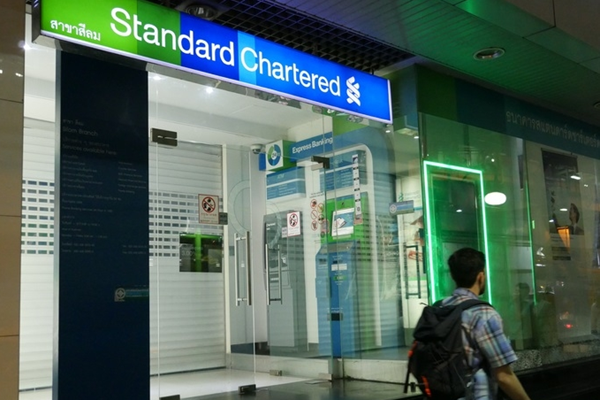
Standard Chartered (LSE:STAN) reported a strong underlying performance, with the Wealth Solutions business on which it places so much strategic store enjoying a strong year following its record third quarter.
- Our Services: SIPP Account | Stocks & Shares ISA | See all Investment Accounts
Underlying operating income of $20.9 billion (£15.5 billion) was 6% higher than the previous year, while underlying pre-tax profit saw growth of 18% to $7.9 billion. Both were in line or marginally shy of estimates, reflecting higher expectations given the group’s increasingly strong run of late.
Lower interest rates and some margin compression took some of the shine from Net Interest Income (NII) which nonetheless rose by 1% to $11.2 billion. Non NII income was rather more impressive, with a gain of 13% to $9.7 billion, driven largely by the units where the next leg of growth will inevitably come, namely Wealth Solutions, Global Banking and Global Markets.
Indeed, the Wealth Solutions business is fast becoming a jewel in the crown for Standard. Operating income growth of 24% to $3.1 billion included net new money of $52 billion through 275,000 new clients. The third quarter represented a record and is proving to be a vindication of the group’s strategy. Indeed, Standard previously stated that it was now aiming for $200 billion of net new money in Wealth Solutions over the next five years. If achieved, this stretching target would clearly represent the next level of growth.
- Insider: heavy buying at ‘one of most exciting’ UK growth stories
- 10 hottest ISA shares, funds and trusts
Despite the headwinds of its exposure to China and the real estate sector in particular, where its presence has been something of a double-edged sword, the group’s general exposure to Asia has offset any immediate concerns. Indeed, Standard previously highlighted that there were particular pockets of optimism throughout the region, such as the movement of capital away from oil in the Middle East and the inexorable economic growth in India, while the Wealth business is clearly reaping the rewards of targeting the affluent sector in the relevant regions.
The Global Banking unit was another star performer, with 15% operating income growth to $2.2 billion, including a 26% spike in the Capital Markets & Advisory business where increased Merger & Acquisition income boosted revenues. Global Markets also grew income by 12% to $3.9 billion, while loans and deposits for the group overall increased by 5% and 12% respectively compared to the corresponding period.
As expected, the key metrics revealed a bank which remains in good shape, with the capital cushion, or CET1 ratio of 14.1% stable and comfortably in excess of the group’s target range of between 13% and 14%. The cost/income ratio improved marginally to 59.1% against a previous 59.9%, while the Return on Tangible Equity (ROTE) of 14.7% from 11.7% was boosted by improved overall profitability. Indeed, the number is comfortably higher than the group’s 13% target and was achieved one year ahead of plan.
- The Analyst: defence – how to play the new tech sector
- Shares for the future: second chance for Decision Engine reject?
The numbers were echoed by a statement of management confidence in prospects, where outlook guidance for operating income growth was confirmed at the lower part of a range of between 5% and 7% in the coming year, and ROTE in excess of 12% and NII broadly flat.
Perhaps more notable was a 65% increase to the dividend, which takes the projected yield to an improved but relatively pedestrian 2.4%, and a further share buyback programme of $1.5 billion, which is in addition to the $2.8 billion already announced this year. That moves the group towards the previously guided commitment to return $8 billion to shareholders between 2024 and 2026.
It has been a long slog for Standard, although the share price has finally recaptured its 2010 highs. After some years in the doldrums having once been the darling of the UK banking sector, Standard finds itself in the midst of a revival.
- 10 steps to generate a tax-efficient retirement income
- Sign up to our free newsletter for investment ideas, latest news and award-winning analysis
Prior to this update, the shares had risen by 53% over the last year, as compared to a rise of 23% for the wider FTSE100 index, and by 186% over the last two years. Shareholder returns, cost management and a sector rerating have all played their part. The challenge for the group now is to maintain the momentum and capitalise on the significant opportunities which the Asian region could provide over the medium- to longer-term. The group will provide a strategic update in May.
After such a stellar price run, the shares do not look obviously cheap and Standard will need to deliver on its projections for the next leg of growth in order to build on a market consensus which currently stands at a hold, albeit a strong one.
These articles are provided for information purposes only. Occasionally, an opinion about whether to buy or sell a specific investment may be provided by third parties. The content is not intended to be a personal recommendation to buy or sell any financial instrument or product, or to adopt any investment strategy as it is not provided based on an assessment of your investing knowledge and experience, your financial situation or your investment objectives. The value of your investments, and the income derived from them, may go down as well as up. You may not get back all the money that you invest. The investments referred to in this article may not be suitable for all investors, and if in doubt, an investor should seek advice from a qualified investment adviser.
Full performance can be found on the company or index summary page on the interactive investor website. Simply click on the company's or index name highlighted in the article.