eyeQ: have easyJet shares finally bottomed?
Experts at eyeQ use AI and their own smart machine to analyse macro conditions and generate actionable trading signals. It says a lot of bad news is already in the airline’s price.
21st May 2026 10:10
by Huw Roberts from eyeQ

An easyJet plane at Gatwick airport . Photo: Andrew Aitchison/In pictures via Getty Images.
“Our signals are crafted through macro-valuation, trend analysis, and meticulous back-testing. This combination ensures a comprehensive evaluation of an asset's value, market conditions, and historical performance.” eyeQ
- Discover: eyeQ analysis explained | eyeQ: our smart machine in action | Glossary
easyJet
Macro Relevance: 74%
Model Value: 354.62p
Fair Value Gap: -0.17% discount to model value
Data correct as at 21 May 2026. Please click glossary for explanation of terms. Long-term strategic model.
Chancellor Rachel Reeves is due to set out a package of measures to help consumers weather the cost-of-living crisis. Energy costs, food prices, potentially higher mortgage rates. There’s a growing list of threats for UK spending patterns.
For airlines such as easyJet, cautious consumers tend to delay booking their trips until closer to departure. That was evident in the easyJet half-year report just released where the company stated that flights for the second half of 2026 are only 58% sold. This trend of booking later and later is having a clear impact on sales and creates a highly uncertain environment.
The market reacted by pushing the share price 3% lower. Remember, the stock is already down over 30% in 2026 thanks to the conflict in Iran and last month’s profit warning.
At first glance, the macro picture is pretty dull. The stock is trading bang in line with macro conditions. No fair value gap means no immediate opportunity for either the bulls or the bears.
But two observations are worth making. For the first time in a long time, macro matters. A 74% macro relevance figure means big-picture stuff is having a clear impact on the stock.
Second, the de-rating of the stock around Iran was brutal. The spike in oil prices, inflation and impact on credit conditions meant eyeQ model value fell 31% in March alone.
But what’s interesting now is that macro momentum appears to have stabilised at the lows. Model, value has been moving sideways around the 350p level for nearly eight weeks now.
Together, the picture is one that suggests a lot of the bad news is in the price. We don’t yet have a bullish catalyst - from macro or the company - but sometimes knowing we’ve bottomed is valuable information in itself.
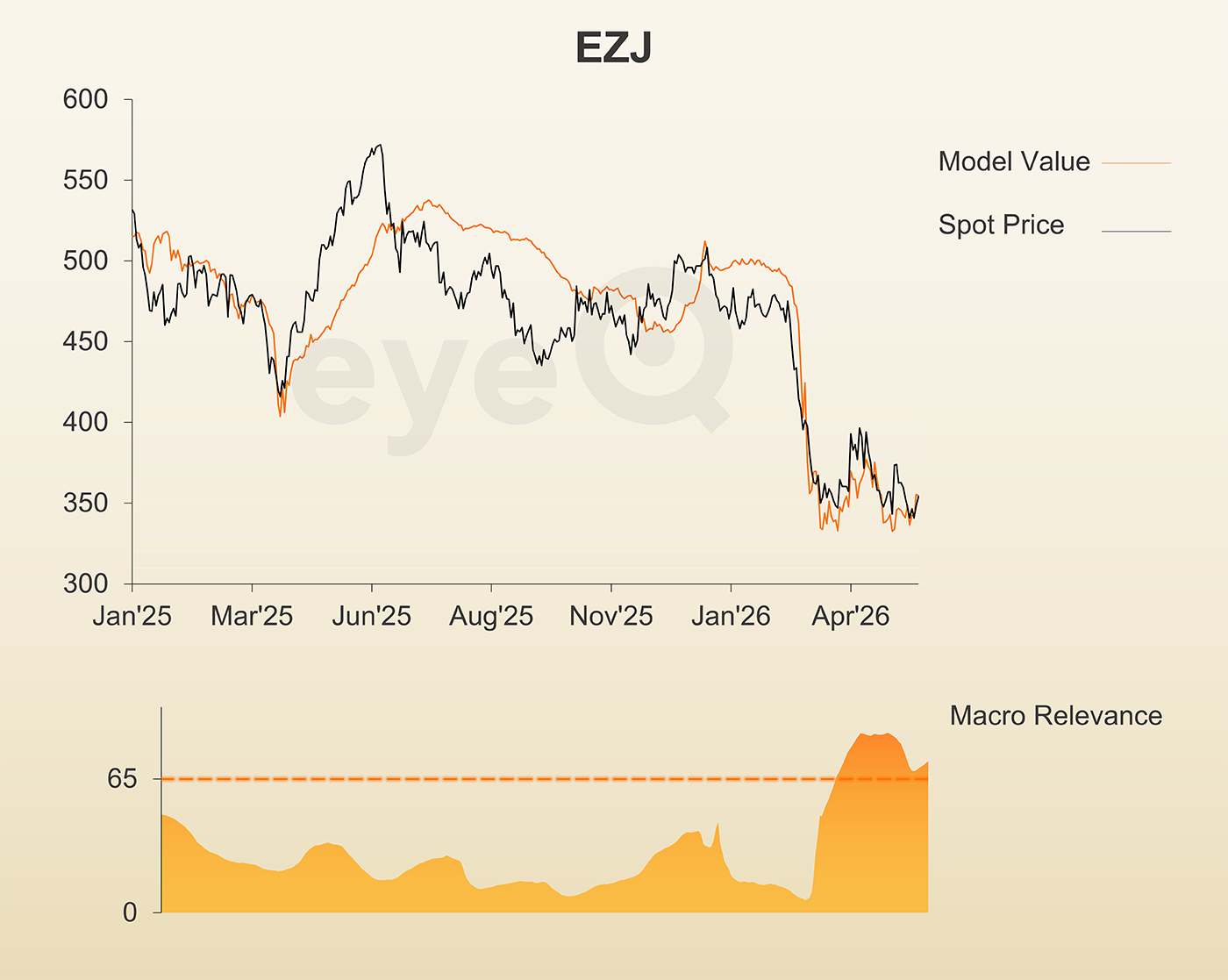
Source: eyeQ. Past performance is not a guide to future performance.
Useful terminology:
Model value
Where our smart machine calculates that any stock market index, single stock or exchange-traded fund (ETF) should be priced (the fair value) given the overall macroeconomic environment.
Model (macro) relevance
How confident we are in the model value. The higher the number the better! Above 65% means the macro environment is critical, so any valuation signals carry strong weight. Below 65%, we deem that something other than macro is driving the price.
Fair Value Gap (FVG)
The difference between our model value (fair value) and where the price currently is. A positive Fair Value Gap means the security is above the model value, which we refer to as “rich”. A negative FVG means that it's cheap. The bigger the FVG, the bigger the dislocation and therefore a better entry level for trades.
Long Term model
This model looks at share prices over the last 12 months, captures the company’s relationship with growth, inflation, currency shifts, central bank policy etc and calculates our key results - model value, model relevance, Fair Value Gap.
These third-party research articles are provided by eyeQ (Quant Insight). interactive investor does not make any representation as to the completeness, accuracy or timeliness of the information provided, nor do we accept any liability for any losses, costs, liabilities or expenses that may arise directly or indirectly from your use of, or reliance on, the information (except where we have acted negligently, fraudulently or in wilful default in relation to the production or distribution of the information).
The value of your investments may go down as well as up. You may not get back all the money that you invest.
Equity research is provided for information purposes only. Neither eyeQ (Quant Insight) nor interactive investor have considered your personal circumstances, and the information provided should not be considered a personal recommendation. If you are in any doubt as to the action you should take, please consult an authorised financial adviser.
Disclosure
We use a combination of fundamental and technical analysis in forming our view as to the valuation and prospects of an investment. Where relevant we have set out those particular matters we think are important in the above article, but further detail can be found here.
Please note that our article on this investment should not be considered to be a regular publication.
Details of all recommendations issued by ii during the previous 12-month period can be found here.
ii adheres to a strict code of conduct. Contributors may hold shares or have other interests in companies included in these portfolios, which could create a conflict of interests. Contributors intending to write about any financial instruments in which they have an interest are required to disclose such interest to ii and in the article itself. ii will at all times consider whether such interest impairs the objectivity of the recommendation.
In addition, individuals involved in the production of investment articles are subject to a personal account dealing restriction, which prevents them from placing a transaction in the specified instrument(s) for a period before and for five working days after such publication. This is to avoid personal interests conflicting with the interests of the recipients of those investment articles.