JD Sports reduces profit target alongside Q3 results
Its share price is still higher than it was at the start of 2026, but the numbers make for difficult reading. ii's head of market explains why.
19th November 2026 08:27
by Richard Hunter from interactive investor
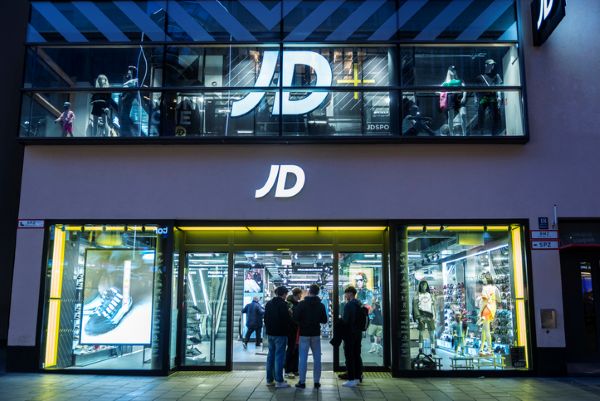
JD Sports Fashion (LSE:JD.) enters the crucial festive trading period on the wrong foot, with slowing sales momentum weighing on the outlook.
- Our Services: SIPP Account | Stocks & Shares ISA | See all Investment Accounts
There is a downgrade to guidance for the full year which, although marginal, has put investors on alert once more. Earlier in the year JD reduced the adjusted pre-tax profit range to £700-800 million, from a previous £750-850 million. This range has now been narrowed at the higher end to stand at £700-750 million, which in any event promises to be significantly lower than the £852 million recorded last year. More reassuringly, the free cash flow range of £460-520 million for the year remains unchanged.
The group has sacrificed some margin with promotional activity of its own in an attempt to stem the sales decline, and has needed to lower prices in the third quarter in some areas to remain competitive.
- What to do after copper mining stocks plunge
- Government mulling worker pensions that mimic final salary
While understandable, these measures will be a major driver for the narrowed guidance even as the group upgraded its e-commerce capabilities, improved its global supply chain and automated one of its larger distribution centres. Even so, the highly promotional market has required more concentrated spend, although this has shown some signs of limited success.
Its strategy remains intact, but the delivery is proving to be a stumbling block. Group sales are dominated by footwear (60% of the total) and apparel (30%), whereas by region North America (37%) and Europe (34%) are its largest markets. JD has strengthened its presence in these countries with relatively recent purchases, namely the £900 million acquisition of US retailer Hibbett and a £450 million takeover of French company Courir.
- FTSE 100 shares round-up: big profits and hefty dividends
- Stockwatch: this FTSE 250 share remains on my buy list
Numbers for the quarter make for difficult reading, with group like-for-like (LFL) sales down by 2.6% in the 13 weeks to 31 October, albeit an improvement from the 3.1% decline of the second quarter. In Europe, LFL sales fell by 2.7%, partly due to civil unrest, especially in France, affecting footfall, while the lesser contributing regions, the UK (24% of group sales) and Asia Pacific (5%) dipped by 2.6% and 5.3% respectively. The UK decline of 2.6% compared to a gain of 2.2% in the previous quarter, where replica football kit sales were stronger given the World Cup competition.
However, the situation in its largest market of North America is of some concern, where weaker consumer sentiment and the loss of brand heat at key supplier Nike have played a part. This comes after some signs of life in the first quarter, where the sales decline seemed to be stabilising, but was then stained by a 6% decline in the second quarter, although this improved to a fall of 1.3% in the last three months.
- UK funds: stockpicking that stands out from the crowd
- Experts predict another great year for stock markets in 2027
More broadly, JD has no direct exposure in the Middle East but second-round effects such as the inflationary impact are in evidence. Lower-income shoppers are under pressure due to rising energy costs and any cost-of-living demands on individual budgets, particularly in its core younger market.
More positively, Sportswear continues to take share within apparel due to rising participation in athletics, particularly among higher-income consumers who tend to have a greater propensity to spend regardless of the economic backdrop.
- What to hold alongside a global tracker fund
- Sign up to our free newsletter for investment ideas, latest news and award-winning analysis
Despite the more obvious woes, the shares have had a new lease of life over the last six months, as investors have apparently warmed to the group’s operational efficiencies, digital growth and an extremely undemanding valuation in historic terms.
This leaves the shares ahead by 22% over the last year, as compared to a rise of 11% for the wider FTSE100, although the price remains lower by 32% over the last three years and 49% below the most recent peak achieved in February 2023.
While the rally does not necessarily mirror the current group performance, the lower price has enabled some investors to see the level as an entry point and the market consensus of the shares as a cautious buy reflects some guarded optimism.
These articles are provided for information purposes only. Occasionally, an opinion about whether to buy or sell a specific investment may be provided by third parties. The content is not intended to be a personal recommendation to buy or sell any financial instrument or product, or to adopt any investment strategy as it is not provided based on an assessment of your investing knowledge and experience, your financial situation or your investment objectives. The value of your investments, and the income derived from them, may go down as well as up. You may not get back all the money that you invest. The investments referred to in this article may not be suitable for all investors, and if in doubt, an investor should seek advice from a qualified investment adviser.
Full performance can be found on the company or index summary page on the interactive investor website. Simply click on the company's or index name highlighted in the article.