Trading Strategies: are Rio Tinto shares worth buying now?
Stock markets are volatile right now, but this FTSE 100 company has attracted the attention of analyst Robert Stephens. Here’s what he thinks of the mining giant’s investment potential.
29th April 2026 10:34
by Robert Stephens from interactive investor
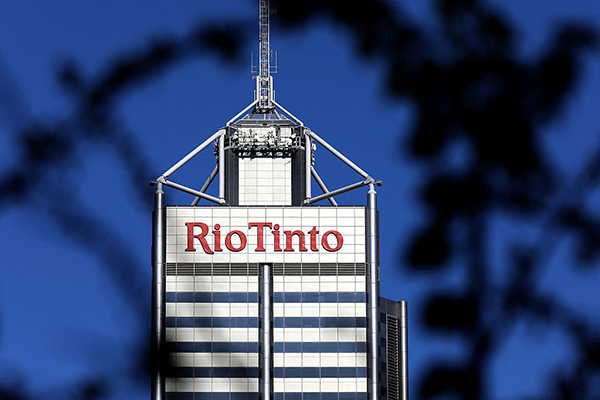
Rio Tinto’s headquarters in Perth, Western Australia. Photo by Antony Dickson/AFP via Getty Images.
Life as a stock market investor feels particularly precarious at present. After all, the near-term outlook for the world economy, and therefore the stock market, is extremely uncertain.
War in Iran has prompted a spike in oil and gas prices that is likely to contribute to a higher-than-expected inflation rate across developed economies. In fact, inflation in the UK rose by 30 basis points to 3.3% in March, thereby seemingly dashing the Bank of England’s previous forecasts of a return to its 2% inflation target in April.
- Invest with ii: SIPP Account | Stocks & Shares ISA | See all Investment Accounts
Previously expected interest rate cuts in the US and the UK, meanwhile, are likely to be put on hold as central banks reassess the outlook for inflation. Their decisions on monetary policy could have a material impact on the economy’s performance, as well as the stock market’s future return, with interest rate rises remaining a possibility depending on how geopolitical risk in the Middle East evolves.
Indeed, the International Monetary Fund (IMF) recently responded to the increasingly opaque outlook for inflation and interest rates by downgrading its global GDP forecasts. Previously, it expected global economic growth of 3.3% in 2026. Now, though, it anticipates that global GDP growth will amount to 3.1% in the current year.
Exiting the stock market
At such a time, many stock market investors may decide that exiting their holdings is a logical move. Doing so could, after all, avoid potential losses in the near term that cannot currently be ruled out given the fluidity of the geopolitical and economic outlook.
Such investors may be further encouraged to sell their FTSE 100 holdings following the index’s recent performance. It has substantially recovered from its initial fall following the commencement of war in Iran. Indeed, despite significant risks facing the world economy, it currently trades within 5% of its level from the end of February.
Value for money
Although selling stocks now would mean avoiding a period of potentially high volatility, it could also mean missing out on what remains a highly favourable long-term outlook for the FTSE 100 index.
Crucially, the UK’s large-cap index offers relatively good value for money. Its earnings multiple of 16.9, for example, is lower than the price/earnings (PE) ratios of several other major indices. It compares favourably to both the S&P 500 and the DAX, for example, with them having earnings multiples of 29 and 18.1, respectively.
Furthermore, several FTSE 100 members have PE ratios which are substantially lower than that of the wider index. This suggests there is scope for material upward reratings, and thereby sizeable long-term capital gains, among several index incumbents. It also means they offer a margin of safety that may help to support their share price performance during a period of near-term elevated uncertainty.
Fundamental strength
In many cases, moreover, such companies are fundamentally sound and therefore offer good value for money. For example, they may have solid balance sheets and strong competitive positions versus sector peers. These attributes may allow them to successfully overcome an uncertain near-term outlook for the world economy, as well as deliver brisk profit growth in the coming years.
They may also be in a strong position to capitalise on a period of heightened economic uncertainty to boost their bottom-line prospects. For example, they may be able to engage in M&A activity at a time when asset prices are at a relatively low ebb.
Growth potential
Such companies, of course, are unlikely to face perennially challenging operating conditions. The world economy and the FTSE 100 have excellent track records of overcoming even their most challenging periods. Although they are both cyclical and typically experience intermittent periods of decline, they have always subsequently returned to positive growth.
- Broad commodity exposure vs silver and gold funds: which is best?
- Three ways to build an ISA portfolio from scratch
The FTSE 100, moreover, has always reached new record highs following its previous declines. Even though it could experience heightened volatility in the short run given geopolitical and economic risks, it is likely to rise to higher levels over the coming years.
A low market valuation
Performance (%) | |||||||
Company | Price | Market cap (m) | Since Iran war began | Year to date | One year | Forward dividend yield (%) | Forward PE |
Rio Tinto | 7319p | £119,019 | -0.2 | 22.1 | 61.0 | 5.0 | 11.6 |
Source: ShareScope, 29 April 2026. Past performance is not a guide to future performance.
As a result, the FTSE 100 index’s risk/reward opportunity appears to be favourable on a long-term view. This could mean that holding onto stocks or buying them, rather than selling them, is a logical move. Indeed, mining company Rio Tinto Ordinary Shares (LSE:RIO) is an example of a stock that could prove to be a worthwhile purchase given its long-term return potential.
Having initially fallen by 15% within three weeks of the commencement of war in Iran, the firm’s shares have subsequently recovered. Indeed, they currently trade at a very similar level to that recorded at the end of February. Still, the FTSE 100 member trades on a PE ratio of 15, which is 11% below the index’s earnings multiple, despite its recent buoyant share price performance. The forecast rating is even more attractive at less than 12 times earnings. This suggests there is scope for an upward rerating that could equate to capital growth for investors.
Earnings growth potential
Indeed, the company’s shares appear to offer good value for money based on its sound fundamentals and attractive long-term growth prospects. Its financial position, for example, is relatively robust. It has a net debt-to-equity ratio of just 22%, while net interest costs were covered 8.9 times by operating profits in its latest financial year. Both figures suggest it has the financial means to overcome a period of potentially higher inflation, tighter monetary policy and slower economic growth.
- Pensions and IHT: the countdown to new tax rules has started
- Sign up to our free newsletter for investment ideas, latest news and award-winning analysis
Furthermore, Rio Tinto’s earnings growth prospects indicate that it may be undervalued at its current price level. Over the next two financial years, for instance, it is forecast to post an annualised rise in earnings per share of 12%. Its financial performance is set to be boosted by recently implemented annualised productivity benefits of $650 million (£481 million), as well as an anticipated 3% annualised increase in copper equivalent production through to the 2030 financial year.
Underlying trends
Clearly, the company’s future financial performance is heavily linked to the prices of the commodities it produces. Although they are heavily dependent on the state of the world economy, which contributes to the firm’s status as a highly cyclical business that could mean volatile profits, their long-term outlook remains upbeat.
A key reason for this is Rio Tinto’s focus on commodities that are likely to form a key part of the energy transition in future years. They include iron ore, copper and lithium that are used extensively in renewable energy infrastructure and electric vehicles, for example. This should mean that while there are inevitable fluctuations in their demand and price depending on the prevailing economic outlook, their underlying growth could prove to be relatively robust over the long run.
Risk/reward ratio
Clearly, Rio Tinto’s share price is likely to experience significant volatility in future due to its reliance on demand for, and the prices of, a handful of commodities. Given ongoing uncertainty surrounding inflation, interest rates and global GDP growth, as well as its recent share price surge, this may lead some investors to question the stock’s long-term appeal.
However, with a relatively modest market valuation, sound finances and a strategy that focuses on commodities which are likely to experience strong underlying demand, the company appears to offer a favourable risk/reward opportunity. When combined with its upbeat earnings growth prospects, it could prove to be a worthwhile purchase over the coming years.
Robert Stephens is a freelance contributor and not a direct employee of interactive investor.
These articles are provided for information purposes only. Occasionally, an opinion about whether to buy or sell a specific investment may be provided by third parties. The content is not intended to be a personal recommendation to buy or sell any financial instrument or product, or to adopt any investment strategy as it is not provided based on an assessment of your investing knowledge and experience, your financial situation or your investment objectives. The value of your investments, and the income derived from them, may go down as well as up. You may not get back all the money that you invest. The investments referred to in this article may not be suitable for all investors, and if in doubt, an investor should seek advice from a qualified investment adviser.
Full performance can be found on the company or index summary page on the interactive investor website. Simply click on the company's or index name highlighted in the article.
Disclosure
We use a combination of fundamental and technical analysis in forming our view as to the valuation and prospects of an investment. Where relevant we have set out those particular matters we think are important in the above article, but further detail can be found here.
Please note that our article on this investment should not be considered to be a regular publication.
Details of all recommendations issued by ii during the previous 12-month period can be found here.
ii adheres to a strict code of conduct. Contributors may hold shares or have other interests in companies included in these portfolios, which could create a conflict of interests. Contributors intending to write about any financial instruments in which they have an interest are required to disclose such interest to ii and in the article itself. ii will at all times consider whether such interest impairs the objectivity of the recommendation.
In addition, individuals involved in the production of investment articles are subject to a personal account dealing restriction, which prevents them from placing a transaction in the specified instrument(s) for a period before and for five working days after such publication. This is to avoid personal interests conflicting with the interests of the recipients of those investment articles.