ii view: P&G price rises offset weak demand
Shares in this consumer goods giant underperformed US indices last year but what will 2026 bring? We assess prospects.
22nd January 2026 15:57
by Keith Bowman from interactive investor
Second-quarter results to 31 December
- Net sales up 1% to $22.2 billion
- Core earnings unchanged at $1.88 per share
- Quarterly dividend unchanged from Q1 at $1.0568 per share
Guidance:
- Continues to expect full-year sales growth of between flat and up 5%
- Continues to expect adjusted earnings per share growth of between flat and up 4%
Executive Shailesh Jejurikar said:
“We have confidence in our plans to deliver stronger results in the second half of the fiscal year. We remain committed to our integrated growth strategy and are excited by the opportunity ahead to reinvent P&G and create the CPG [consumer packaged goods] company of the future, delivering long-term balanced top- and bottom-line growth and value creation.”
- Invest with ii: Buy International Shares | Most-traded US Stocks | Top UK Shares
ii round-up:
Household goods giant Procter & Gamble Co (NYSE:PG) today maintained hopes for growth in annual sales and earnings, but reported falling product volumes in what remains a tough consumer environment.
Third-quarter revenue to late December rose 1% to $22.21 billion, with higher selling prices countering reduced demand for items including razors and baby nappies. Earnings per share stripped of restructuring costs were flat versus a year ago at $1.88 per share. Wall Street had expected outcomes of $22.28 billion and $1.86 per share respectively.
Shares in the Dow Jones company rose 2% in US trading having come into these latest results down 15% in 2025. That’s similar to US rival Colgate-Palmolive Co (NYSE:CL) but in contrast to a 13% gain for the Dow Jones index over the last year.
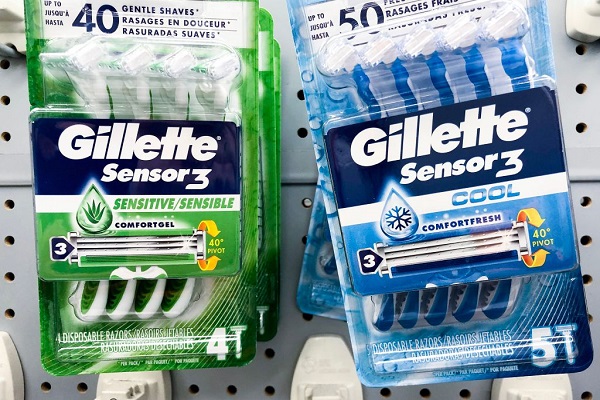
Baby, Feminine & Family Care related volumes, including brands such as Pampers and Bounty tissues, fell 5% year-over-year. Grooming related volumes, including brands Braun and Gillette, fell 2%.
More favourably, Beauty related volumes, taking in brands Head & Shoulders, Pantene, and Olay skincare, rose 3%. Demand for Fabric & Home Care products was flat.
P&G continues to expect full-year sales growth of up to 5%, pushing growth in adjusted earnings per share of up to 4%.
A quarterly dividend payment of $1.0568 per share is unchanged from the prior quarter. P&G returned $4.8 billion of cash to shareowners via $2.5 billion of dividend payments and $2.3 billion of share repurchases during this latest quarter.
Third-quarter results are likely to be announced mid-to-late April.
ii view:
Tracing its history back to 1839, P&G today employs more than 105,000 people across 70 countries. Fabric and Home Care generated most sales during its last financial year to late June at 36%. That was followed by Baby, Feminine & Family Care at 24%, Beauty at 18%, Healthcare 14%, and Grooming 8%.
Geographically, North America makes most sales at 52%. Then comes Europe at 22%, Asia Pacific, China and Latin America all at 7% each, and India, the Middle East and Africa a balance of 5%. Global competitors include Unilever (LSE:ULVR) and L'Oreal SA (EURONEXT:OR).
For investors, a period of rising prices pressuring disposable consumer income may continue to see shoppers seek cheaper supermarket own brands, or even online alternatives such those available from Amazon.com Inc (NASDAQ:AMZN). Volatility in raw material costs given ongoing global trade and geopolitical tensions should not be ignored. Sizeable sales overseas leave currency headwinds a potential feature, while the impact of product chemicals and packaging on the environment continues to warrant consideration.
- The shares attracting fund managers at start of 2026
- eyeQ: sell US tech, buy Europe?
- Watch our ii expert tips’ videos for 2026
On the upside, P&G’s extensive range of household goods feature regularly on shopping lists across the globe. Wide geographical diversity should help positives for one region counter challenges for another. Management initiatives to sharpen productivity and reduce costs are ongoing, while more than 65 years of consecutive annual dividend increases leaves the shares on a forecast dividend yield of close to 3%.
For now, and despite ongoing risks, this giant of the consumer goods sector looks to remain worthy of its place in many diversified investment portfolios.
Positives:
- Product and geographical diversity
- Progressive dividend policy
Negatives:
- Uncertain economic outlook
- Currency movements can hinder performance
The average rating of stock market analysts:
Buy
These articles are provided for information purposes only. Occasionally, an opinion about whether to buy or sell a specific investment may be provided by third parties. The content is not intended to be a personal recommendation to buy or sell any financial instrument or product, or to adopt any investment strategy as it is not provided based on an assessment of your investing knowledge and experience, your financial situation or your investment objectives. The value of your investments, and the income derived from them, may go down as well as up. You may not get back all the money that you invest. The investments referred to in this article may not be suitable for all investors, and if in doubt, an investor should seek advice from a qualified investment adviser.
Full performance can be found on the company or index summary page on the interactive investor website. Simply click on the company's or index name highlighted in the article.