Sainsbury's punished for results miss and war warning
Recently close to fresh multi-year highs, these annual results from the grocery chain have not impressed. ii's head of markets explains why.
23rd April 2026 08:31
by Richard Hunter from interactive investor
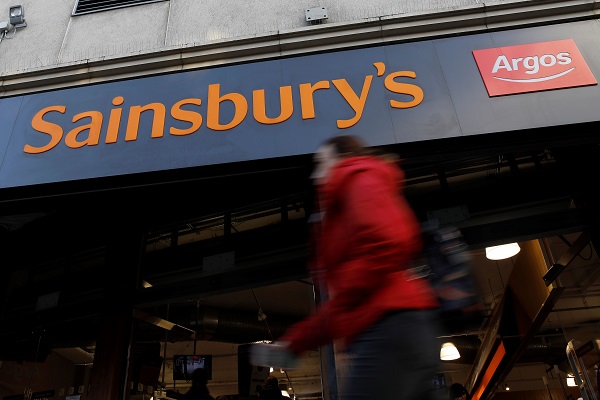
There is more than a tinge of disappointment accompanying annual results from Sainsbury (J) (LSE:SBRY), which came up against higher expectations leading into the numbers, and this is quite apart from any impact of the current Middle Eastern conflict.
- Our Services: SIPP Account | Stocks & Shares ISA | See all Investment Accounts
The numbers are solid, as perhaps had been expected, but are shy of some of the loftier estimates being attached to the group. Revenues excluding fuel rose by 4.9% to £25.9 billion in the 52 weeks ended 28 February, but retail underlying profit fell by 1.1% to £1.025 billion, marginally lower than the £1.03 billion which had been pencilled in.
Similarly, underlying pre-tax profit of £718 million, while up by 1.3% year on year, was lower than the £730 million which had been expected. Sainsbury's highlighted that significant operating cost inflation and investment in value to keep prices lower for consumers were the main drivers of any lighter numbers.
- Where to invest in Q2 2026? Four experts have their say
- Sector Screener: should you buy easyJet and IHG shares now?
Nonetheless, underneath the bonnet there are some signs of further progress. Grocery remains central to the group’s efforts, accounting for 72% of overall sales, and revenues grew by 5.2% over the year to £24.26 billion, with the likes of the group’s Aldi Price Match and Your Nectar Prices proving popular. Indeed, the company estimates that over the current three-year strategic period Nectar will provide incremental profit of £100 million. The group is already ahead of plan with the target, which would be a significant bonus given the ferocity of competition which the sector attracts.
The Taste the Difference range also continues to fire ahead, with the group adding around 600 new products over the year, with the range as a whole enjoying an increase of 16% in sales and ahead of the group’s £2 billion target. Customers are also clearly enjoying the benefit of the premium range as well as the lower end in terms of price, with the group pointing out that 69% of customers shopped both Aldi Price Match and Taste the Difference products in the same trolley.
- Winners and losers: defence stocks lead FTSE 100 retreat
- UK bank sector Q1 results preview: forecasts, targets and top picks
Other highlights were groceries online sales, which spiked by 13% and fresh food overall which rose given the group’s additional focus on healthier choices. At the same time, Sainsbury's is also reaping the benefit of its varied offering which provides a wide choice for customers, continuing to invest in new stores, revamping existing ones and driving innovative investment into new technology related improvements, including the use of AI and customer-predictive tools.
Argos remains a work in progress after some years in the doldrums on reduced discretionary spend. Sales eked out a gain of 0.7% to £4.1 billion for the year, with an increase of 3.7% in volumes offsetting average selling prices which were 3% lower. The Christmas and Black Friday period turned out to be a disappointment as previously announced by the company, where a tough promotional market resulting in lower prices, a weak gaming market and subdued consumer confidence took their toll. Accounting for 16% of group revenues, the unit remains something of a thorn in the side for the group as a whole, although Sainsbury's seems committed for the time being, taking “determined action to accelerate the transformation of Argos” including a wish to improve the customer proposition.
These results cover the year to the end of February and therefore contain no elements whatsoever of the conflict in the Middle East. In terms of the current situation, Sainsbury's is understandably cautious and vague on the outlook, with the only meaningful change being conservative guidance relating to this year for underlying operating profit in a range of £975 million and £1.075 billion, which leaves some room for manoeuvre depending on the eventual outcome of the war. Retail cash flow is again expected to exceed £500 million, which again is not a stretching target compared to this year’s number.
- Pensions and IHT: the countdown to new tax rules has started
- Sign up to our free newsletter for investment ideas, latest news and award-winning analysis
Other opposing factors are also at play. General Merchandise saw sales fall by 3.2%, partly as a result of the decision to allocate more space for food sales. More positively, shareholder returns remain in focus with an additional tranche of £200 million planned for a share buyback programme, while the previous payment of a special dividend lifts the current yield to a punchy (if temporary) 7%, underneath which an ordinary yield of 3.9% is nonetheless attractive.
Prior to the steep fall at the open, the shares had added 34% over the last year, as compared to a gain of 25% for the wider FTSE100, and this run had led to the expectation of stronger progress. When the current dust has settled, it remains to be seen whether the market consensus of the shares as a buy stays in place, or whether this update has shaken investor confidence, marking a move towards a more conservative general view.
These articles are provided for information purposes only. Occasionally, an opinion about whether to buy or sell a specific investment may be provided by third parties. The content is not intended to be a personal recommendation to buy or sell any financial instrument or product, or to adopt any investment strategy as it is not provided based on an assessment of your investing knowledge and experience, your financial situation or your investment objectives. The value of your investments, and the income derived from them, may go down as well as up. You may not get back all the money that you invest. The investments referred to in this article may not be suitable for all investors, and if in doubt, an investor should seek advice from a qualified investment adviser.
Full performance can be found on the company or index summary page on the interactive investor website. Simply click on the company's or index name highlighted in the article.