Is commodity market flashing warning signal for equities?
Metal prices and the cost of oil have rocketed, but the industry’s reaction has been puzzling. Analyst John Ficenec explains what’s happened and what his next move will be.
22nd May 2026 15:18
by John Ficenec from interactive investor

Experts in the global commodity industry are not taking advantage of record high prices to invest for the long term. They are hoarding cash and I think that could have important implications for investor portfolios into the second half of the year. Far from making for the exits, this looks like an opportunity to reposition.
- Invest with ii: SIPP Account | Stocks & Shares ISA | See all Investment Accounts
Why is nobody investing for the future?
With commodity prices hitting record highs this year it is becoming increasingly odd that nobody is pushing to increase production. In normal circumstances those producing iron, copper, oil and gas would want to take advantage of higher prices by ramping up output, but there is little evidence of that taking place.
The companies with years of experience of commodity markets, and a much closer view of customer demand, seem unwilling to spend on increasing production. When it comes to voting with their cold hard cash, they appear happy to raise money and reduce debts while higher prices persist. That suggests they don’t believe there is long-term support for higher prices.
Oil, oil everywhere but no new wells in sight
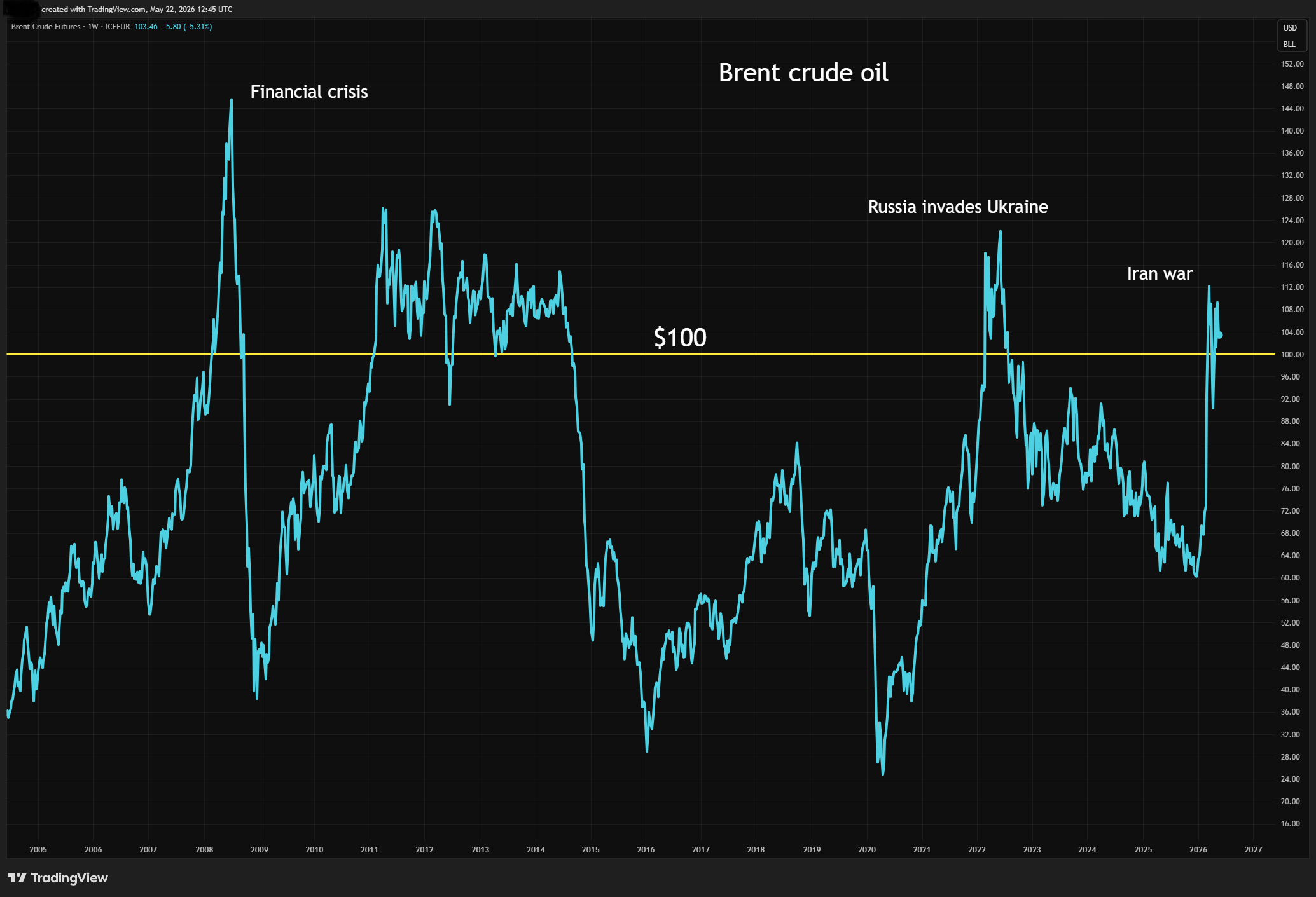
One particularly interesting case is that of the oil industry where we’ve had $100+ prices since the end of February when strikes against Iran began. The shale patch in the US has seen considerable consolidation in the past decade but it is still characterised by a good range in operators from the super majors Exxon Mobil Corp and Chevron Corp, through listed mid-tier, right down to privately owned drillers. That is to say it would be very difficult to control the market across the shale industry. If prices rise you would expect people to break ranks and pump more oil.
- City reacts to BT’s new dividend policy
- Trading Strategies: is BAE Systems overvalued after 270% rally?
Little if anything is happening across the oil patch, just tumbleweed and no new wells. The latest count of US active oil wells completed by oil services group Baker Hughes was 549 in May. That was only three more wells than the start of the year, and 25 fewer than the same stage a year earlier. Putting it in perspective, the last time oil spiked to over $100 a barrel in May 2022 after Russia invaded Ukraine, the US rig count jumped to 719 by May, up from 600 at the start of that year. Incredibly, there was a bigger increase in drilling activity in Europe this year with four new wells during the first three months of 2026.
Source: TradingView
The Baker Hughes rig count is used as a key indicator to gain an idea of demand for oil. The rigs are needed to either drill new wells, or to install new equipment to frack old wells, both of which will increase oil output. The standoff between producers and customers suggests that producers don’t believe high prices are here to stay. It is understandable that oil producers don’t want to get burnt - they were caught out last time in 2022 as the oil price slumped from highs of $125 in June that year to around $70 just nine months later.
The US oil industry seems to be viewing this as a short-term opportunity to grab the cash and repair the balance sheet. There are still painful memories from 2014, when the US rig count started the year around 1,800 and the oil price collapsed from $110 to $45 that year. The wave of bankruptcies and failures that hit the sector goes some way to explaining current behaviour.
Gold miners hold firm
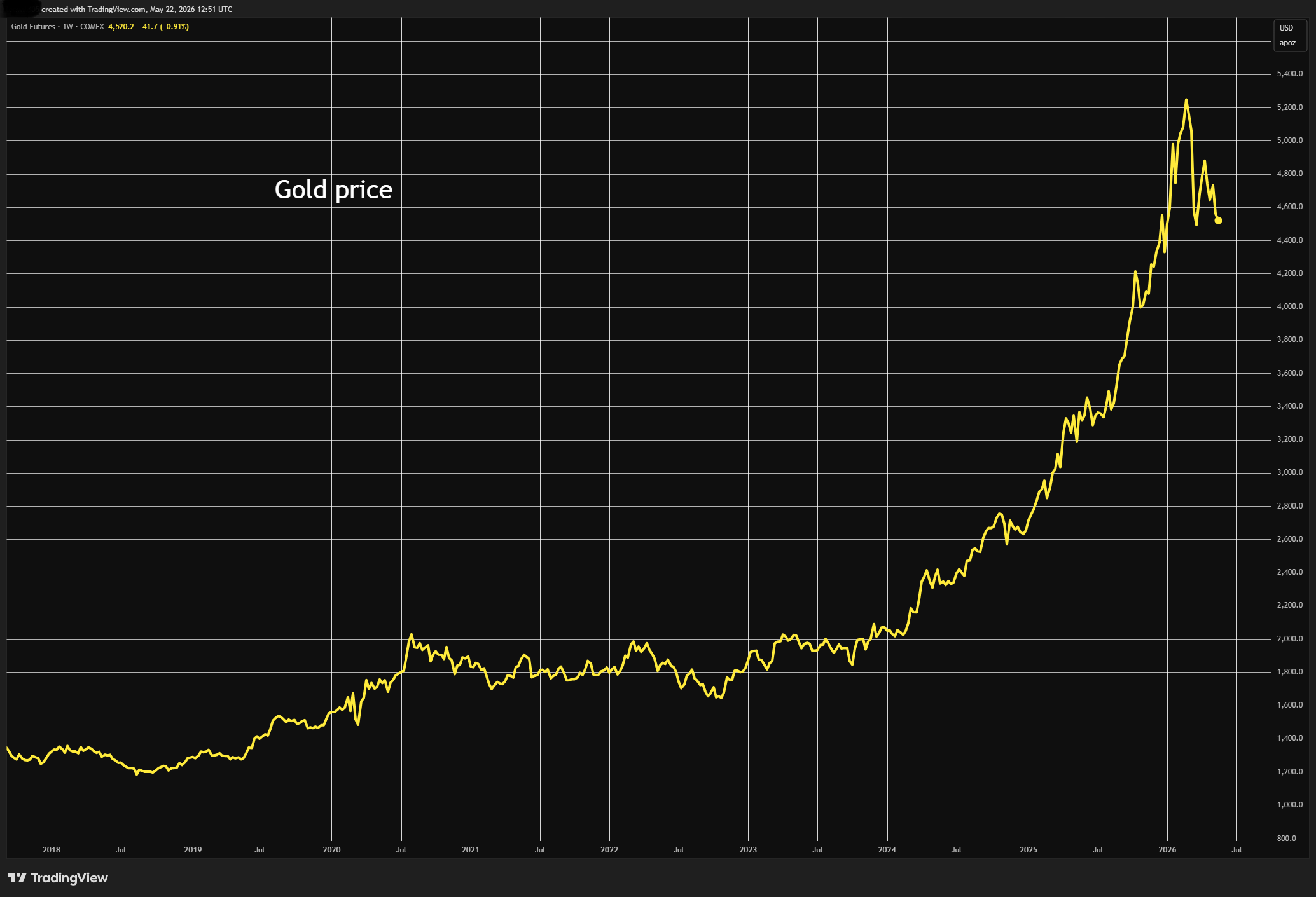
The gold industry is showing the same dynamics, as despite the gold price soaring there is hardly any more of the precious metal coming out of the ground. At the end of 2023 when the gold price had spent the entire year hovering at $2,000 per ounce, there was 3,644 tonnes produced by mines, according to figures from the World Gold Council.
- Sign up to our free newsletter for investment ideas, latest news and award-winning analysis
- Tax burden on pensioners surges: how to cut your bill
Fast forward to the end of 2025 when the price of gold had more than doubled to around $4,400 per ounce, and mine output that year had only increased by 0.7%, or 27 tonnes, to 3,671 tonnes. So far in the first quarter of this year, when the gold price hit an all-time-high of $5,589 per ounce, mine production was 884 tonnes, only 5% higher than the 843 tonnes mined in the first quarter of 2023 with gold at around $2,000.
Source: TradingView. Past performance is not a guide to future performance.
So, it’s the same picture across different sectors of the commodity industry. Producers are not increasing output, or investing in new exploration and capacity. It is true that the mining industry cannot just flick a switch and increase production given projects often take years to be developed. But for the characteristics to be so similar across multiple different minerals creates a stronger argument.
Big iron ore miners such as Rio Tinto Ordinary Shares are digging less iron ore out of the ground now than they were a decade ago. The FTSE 100 listed miner reported 336.6 million tonnes last year, compared to a record 340 million tonnes in 2015.
The largest copper miner in the world, the Chilean state-owned Codelco, has just shocked the market by revealing it overstated last year’s production figures. The revised numbers have shown it produced the lowest level of copper since 1998. That is against a backdrop of copper prices remaining close to the record of $14,527 per tonne reached in January this year.
AI can’t explain everything
It is true that a huge acceleration in demand from chip makers to supply new data centres has caused shortages of metals required for electronics like gold, silver and copper. So, part of the record prices can be explained by specific market dynamics. However, the AI boom can’t really explain the run up in prices across all commodities.
- How to make early retirement a possibility
- Five AIM shares trading at a discount
- Stockwatch: time to climb aboard this latest uptrend?
A further window into what is happening was provided by the pump manufacturer Weir Group when they updated the market on progress last month. The FTSE 100 engineer makes pumps that can shift water, and be used to process slurry to greatly increase the production and efficiency of mines.
While the part of the business that provides aftermarket care and parts showed steady growth, sales of new equipment actually fell during the first three months of the year. This suggests that miners are quite happy to run their existing equipment into the ground to exploit record prices, but are loathe to dig into their pockets and buy new equipment or expand existing mines.
Sell in May and go away?
Commodity producers, who have the closest view of demand for materials essential to the functioning of the global economy, are carpet bagging. Does this mean a crash is coming? I don’t think that is the message here, but there could be a shift or rotation in markets, something that was already underway at the start of this year.
I wouldn’t be selling and going away at all. I might be tempted to take some profits across the commodity sector from miners and oil majors. But the real opportunity would be a shift back into the real economy at home. If commodity prices do begin to retreat, then it would be a boon to the beleaguered UK economy that could help some of the more bombed-out sectors recover.
I’d be looking around some of the discounts and low ratings in the pubs and leisure sector, also retailers who would benefit from households having a few more pennies in their pockets.
Looking across the smaller and mid-cap UK stocks there are so many trading on incredibly low ratings I’d be quite happy to tuck away for the long term. So, this summer will be busier than usual, spent looking for bargains.
John Ficenec is a freelance contributor and not a direct employee of interactive investor.
These articles are provided for information purposes only. Occasionally, an opinion about whether to buy or sell a specific investment may be provided by third parties. The content is not intended to be a personal recommendation to buy or sell any financial instrument or product, or to adopt any investment strategy as it is not provided based on an assessment of your investing knowledge and experience, your financial situation or your investment objectives. The value of your investments, and the income derived from them, may go down as well as up. You may not get back all the money that you invest. The investments referred to in this article may not be suitable for all investors, and if in doubt, an investor should seek advice from a qualified investment adviser.
Full performance can be found on the company or index summary page on the interactive investor website. Simply click on the company's or index name highlighted in the article.
Disclosure
We use a combination of fundamental and technical analysis in forming our view as to the valuation and prospects of an investment. Where relevant we have set out those particular matters we think are important in the above article, but further detail can be found here.
Please note that our article on this investment should not be considered to be a regular publication.
Details of all recommendations issued by ii during the previous 12-month period can be found here.
ii adheres to a strict code of conduct. Contributors may hold shares or have other interests in companies included in these portfolios, which could create a conflict of interests. Contributors intending to write about any financial instruments in which they have an interest are required to disclose such interest to ii and in the article itself. ii will at all times consider whether such interest impairs the objectivity of the recommendation.
In addition, individuals involved in the production of investment articles are subject to a personal account dealing restriction, which prevents them from placing a transaction in the specified instrument(s) for a period before and for five working days after such publication. This is to avoid personal interests conflicting with the interests of the recipients of those investment articles.