Market snapshot: Hey crude, don’t make it bad
With oil prices up again following President Trump’s threat to blockade the Strait of Hormuz, ii’s head of markets looks at investor reaction to this and other news.
13th April 2026 08:25
by Richard Hunter from interactive investor
The failure of weekend negotiations has dragged markets back to the theme of recent weeks, with only the US dollar and the oil price escaping fresh falls.
- Invest with ii: Open an ISA | ISA Investment Ideas | ISA Offers & Cashback
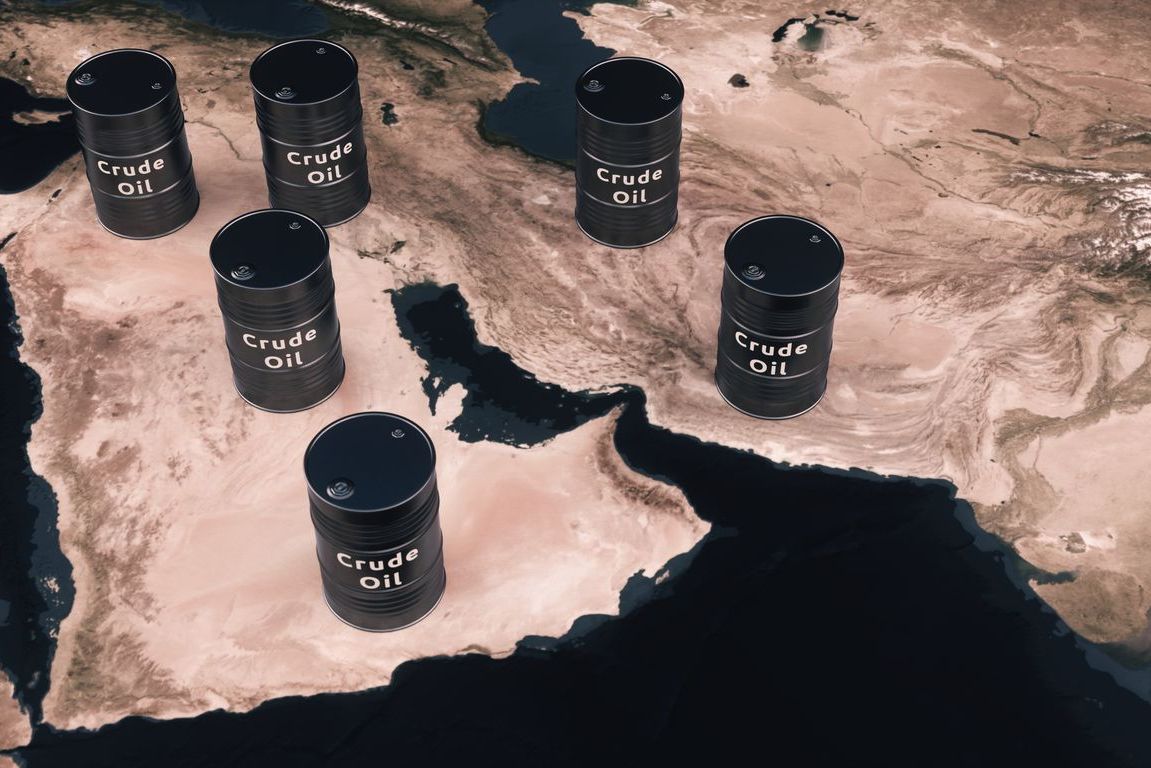
The announcement of a US blockade of the Strait of Hormuz effective today, an apparent refusal by Iran to abandon their nuclear ambitions and the likelihood of a renewed conflict, led to another surge in the oil price, as a 7% rise lifted the level once more above $100 per barrel.
Inflationary concerns are therefore back on the table, and other commodities such as fertiliser also rose on supply concerns. It now remains to be seen whether the US President’s latest threats will be enforced, with the muted market reaction thus far implying that it could turn out to be a negotiation tactic.
- Shares for the future: new score for riskier FTSE 250 stock
- Stockwatch: why I’m upgrading this mid-cap share to buy
The Consumer Price Index report on Friday was more instructive than the previous day’s Personal Consumption Expenditures index, since it covered March and therefore contained an element of the early impact of the conflict. While core inflation, which excludes volatile energy and food prices, rose by just 0.2% for the month and in line with estimates, the headline number rose by 3.3% on an annual basis, including a jump of 10.9% in energy prices, with a subsequent consumer survey revealing expectations of a 4.8% rise over the next year.
The fresh pressure on prices followed a mixed session at the end of the week, with many traders unwilling to take positions ahead of the weekend negotiations, which proved a wise move given the fruitless outcome.
At present, and unsurprisingly, Dow futures are heading lower, with losses of between 0.5% and 1% across the board. The main indices had ended the week as a whole higher, levelling some of the losses inflicted by the tentacles of the conflict. In the year to date, the Dow Jones is now down by just 0.3%, while the S&P500 and Nasdaq have eased by 0.4% and 1.5% respectively.
- ii Tech Focus: Intel, Samsung, Broadcom, Netflix
- Week Ahead: Tesco, Barratt Redrow, Imperial Brands, Rentokil
Quite apart from any developments emanating from the Middle East, this week sees the start of the US quarterly earnings season in earnest. The banks are the centre of attention, with updates from the likes of The Goldman Sachs Group Inc (NYSE:GS), Citigroup Inc (NYSE:C), JPMorgan Chase & Co (NYSE:JPM) and Bank of America Corp (NYSE:BAC). Guidance comments will be scrutinised for their use as a canary in the coal mine, indicating whether the consumer is beginning to feel any financial pressure as a result of the conflict and the subdued outlook which has resulted. There is also an update due from Netflix Inc (NASDAQ:NFLX), which will provide some colour as to whether the reluctant recovery in shares of the “Magnificent Seven” has any justification.
Asian markets slipped overnight, but losses were contained compared to some of the sharp declines of recent weeks. Sentiment was helped by the announcement from Beijing that it had agreed 10 initiatives aimed at promoting “peaceful development of cross-strait relations” with Taiwan, which provided some brief relief from the geopolitical tensions elsewhere.
- Five ways to hit the 2026-27 tax year running
- Sign up to our free newsletter for investment ideas, latest news and award-winning analysis
The FTSE100 was weaker at the open, although the offset of inevitable price rises in the oil majors BP (LSE:BP.) and Shell (LSE:SHEL) cushioned some of the blow. A broker downgrade to Associated British Foods (LSE:ABF) on concerns about prospects for its Primark business weighed on its share price, while Fresnillo (LSE:FRES) and Endeavour Mining (LSE:EDV) tracked the gold price lower. International Consolidated Airlines Group SA (LSE:IAG) fell foul of a double whammy, with another broker downgrade accompanying the fresh spike in the oil price.
As with most global peers, the main UK indices will remain rangebound until there is some evidence of a sustained solution to the Middle Eastern impasse. Even so, it will not have gone unnoticed that the UK was gaining attention and appreciation as an investment goal, which in turn could leave the main indices well placed to benefit from a return to the animal spirits which investors had been displaying. In the meantime, the FTSE100 remains in a relatively strong position, posting a gain of 6.1% in the year so far despite the opening weakness.
These articles are provided for information purposes only. Occasionally, an opinion about whether to buy or sell a specific investment may be provided by third parties. The content is not intended to be a personal recommendation to buy or sell any financial instrument or product, or to adopt any investment strategy as it is not provided based on an assessment of your investing knowledge and experience, your financial situation or your investment objectives. The value of your investments, and the income derived from them, may go down as well as up. You may not get back all the money that you invest. The investments referred to in this article may not be suitable for all investors, and if in doubt, an investor should seek advice from a qualified investment adviser.
Full performance can be found on the company or index summary page on the interactive investor website. Simply click on the company's or index name highlighted in the article.